Three Independent Trips to Indonesia: Volcanoes, Islands, and Mistakes to Avoid
Climbing to a sulfurous crater after midnight in a gas mask, taking a speedboat around Komodo to look for manta rays, and looking out to sea from Nusa Penida’s cliffs. Here are the routes, pacing, actual costs, and lessons from three trips, to save you some trouble.
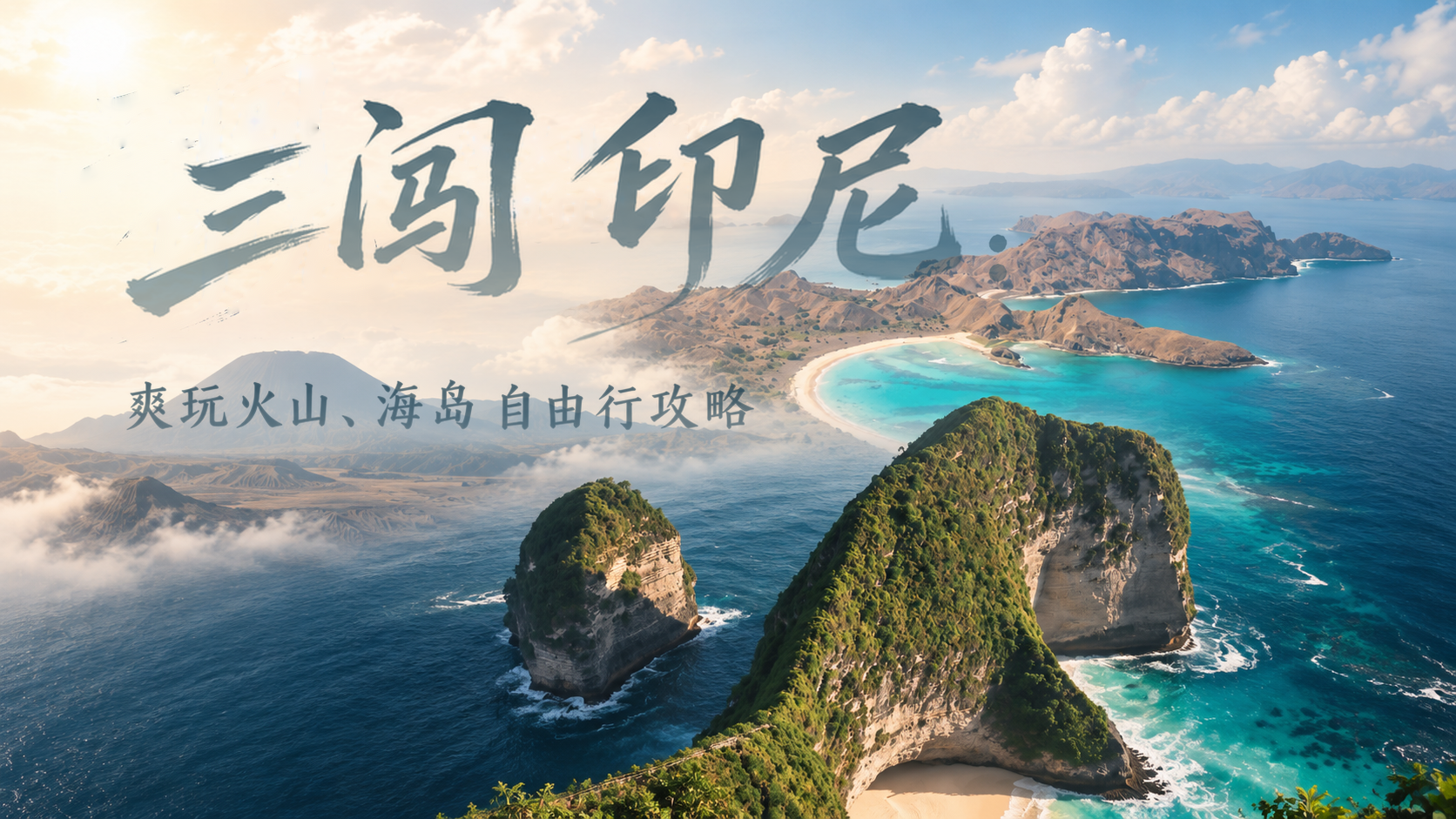
I’ve been to Indonesia three times. The first trip combined East Java’s two volcanoes with a boat trip around Komodo; the second took me to Nusa Penida and Lombok; the third brought me back to Bali and Nusa Penida.
Online, you’ll often see posts warning people away from Indonesia as though it were an ordeal. In fact, you can turn Komodo or Nusa Penida into either a nonstop endurance trip or a relaxed holiday. It comes down to where you choose to go and how much time you leave yourself.
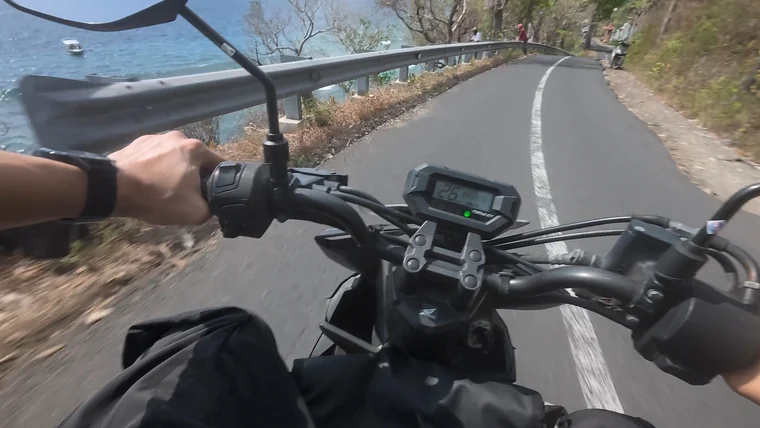
A lot of complaints about Nusa Penida come down to its rudimentary infrastructure: narrow, winding concrete roads through the hills. Two hours of being bounced around in a stuffy car with several other people can easily leave you carsick and irritable. But if you can ride a motorcycle, exploring the island with the sea breeze in your face is a lot of fun; even the rough roads don’t spoil the mood much.
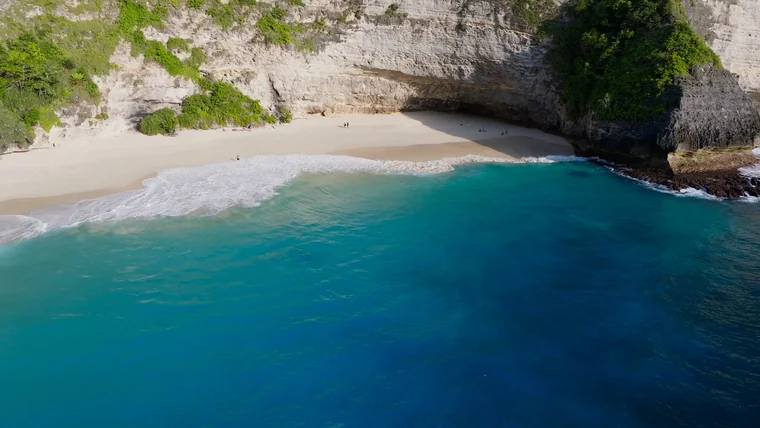
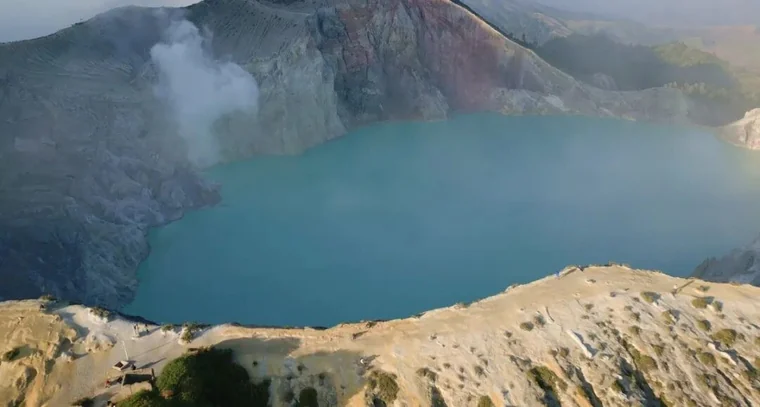
Climbing an active volcano in the small hours, breathing sulfurous acidic fumes in the cold wind, or scrambling down the Kelingking cliffs on all fours is physically exhausting. Some scenery really does take effort to reach. But when you’re standing on a crater rim looking down at an emerald-green sulfuric acid lake giving off white vapor, or watching deep-blue waves crash against the cliffs from above, the effort feels well worth it.
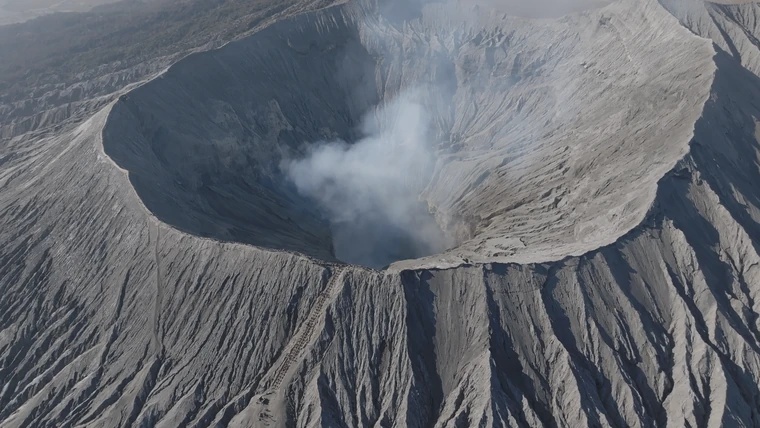
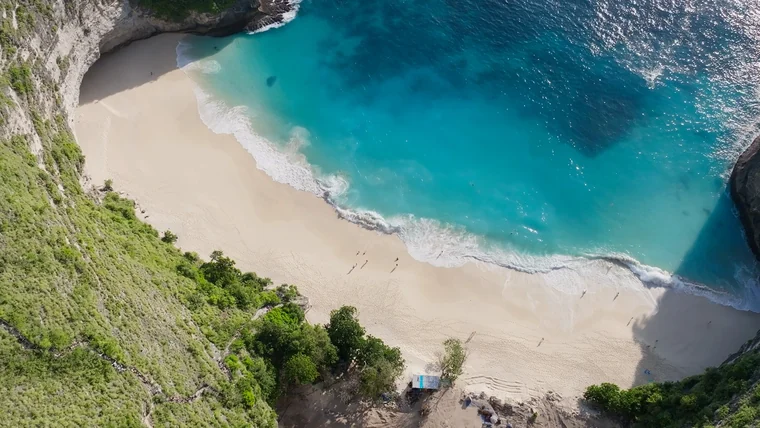
Indonesia has extraordinary scenery, but getting between its islands takes time and money. The easiest mistake is wanting everything and cramming every place you hope to see into one itinerary, only to spend the entire trip rushing from place to place.
Below are the route choices, transport connections, things to do in each area, actual costs, and mistakes to avoid from those three trips, for reference.
 First Trip
Two Volcanoes and Komodo Island-Hopping
East Java’s active volcanoes · prehistoric-looking dragons · pink beaches
 Second Trip
Nusa Penida’s Sea Cliffs and Lombok
Dinosaur-shaped coastal cliffs · southern-bay downtime
 Third Trip
Exploring Bali and Returning to the Offshore Islands
Lovina dolphins · Ubud rice terraces · clifftop fire dance
Route Planning: Allow Three to Four Days per Area
The most important part of planning Indonesia is deciding what you actually want to see, rather than trying to fit every volcano and island into one trip. Whether it’s East Java’s two volcanoes, a boat trip around Komodo, Nusa Penida, or Lombok, give each area three to four days so the pace doesn’t fall apart.
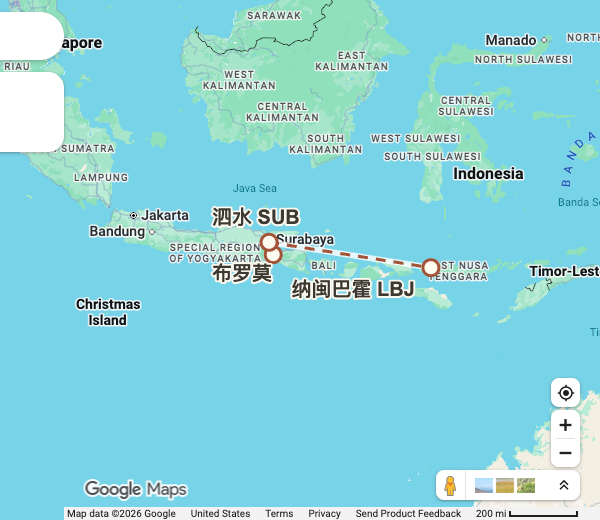
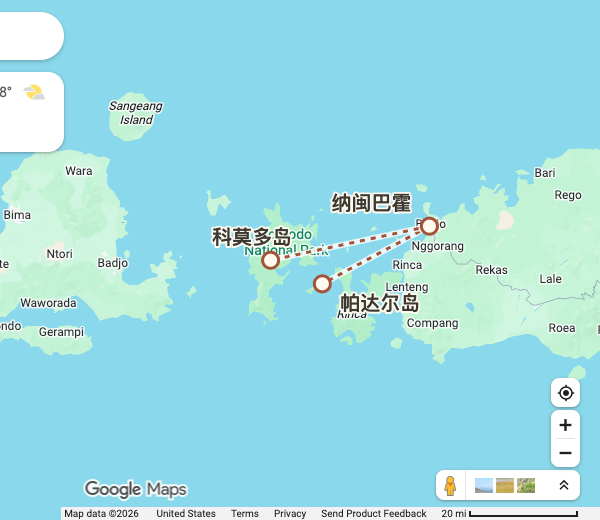
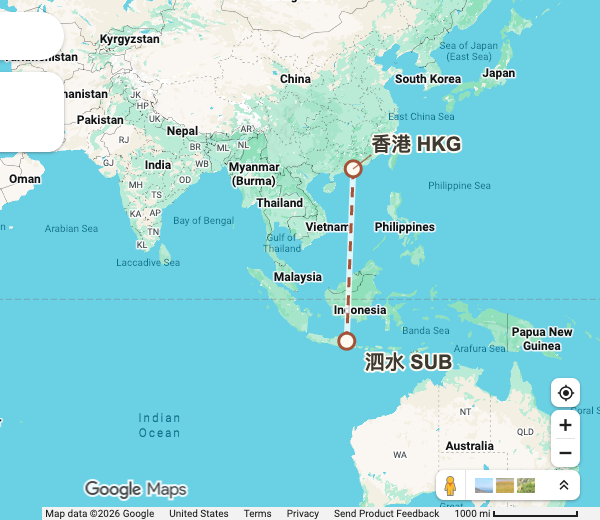
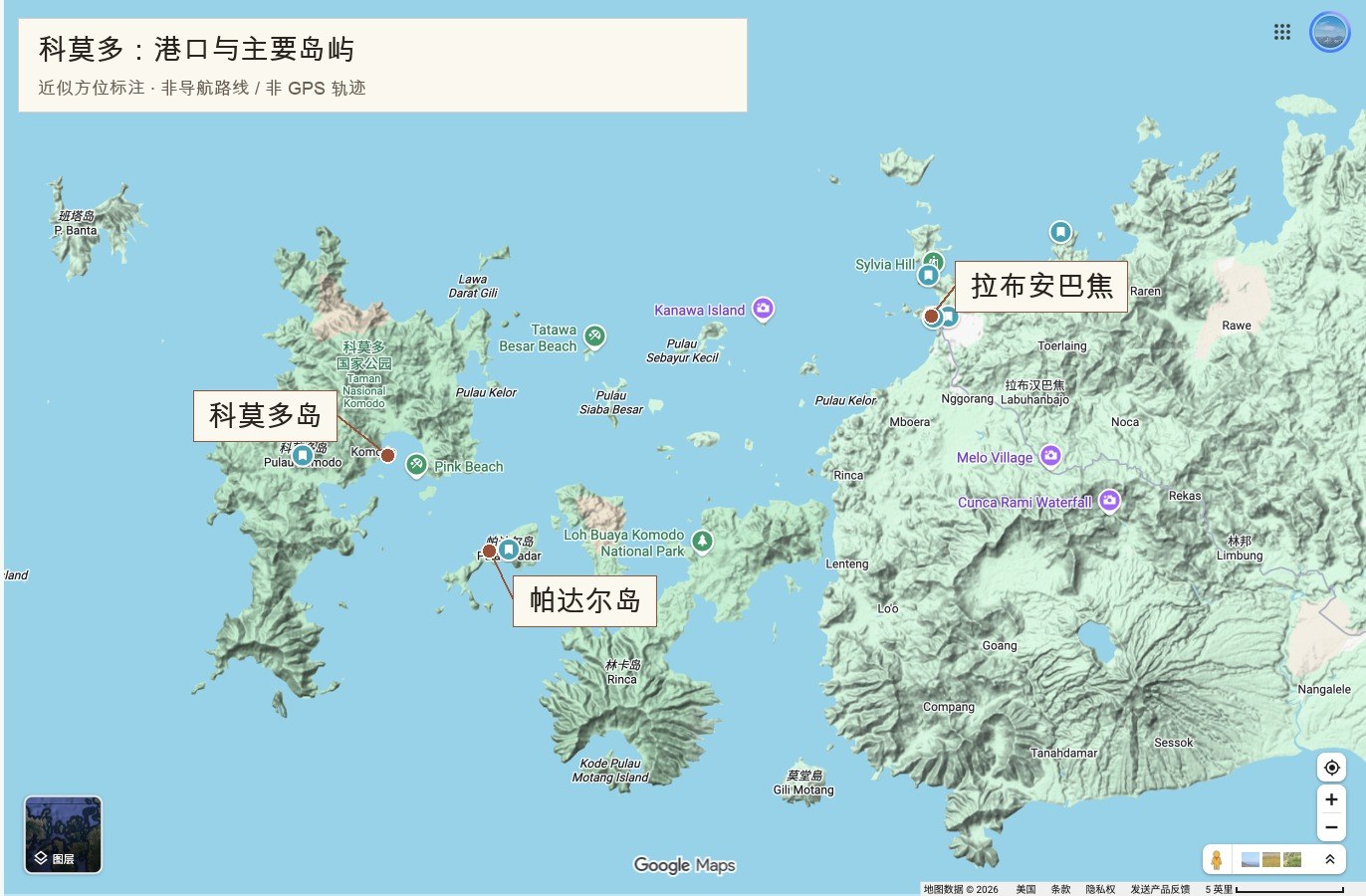
When planning their first trip, many people look at the map, see islands that seem close together, and want to link them all up. But inter-island travel in Indonesia takes much longer than you might imagine. Komodo trips start from Labuan Bajo (LBJ) on Flores, and after landing you still need a chartered speedboat to get out to the islands. Nusa Penida has no airport; you reach it by fast boat from a port on Bali. Plan around straight-line distances and you’ll spend most of your energy waiting for flights and boats.
To avoid unnecessary detours, start with where to fly: if you’re going for active volcanoes and Komodo dragons, focus on Surabaya (SUB) and Labuan Bajo (LBJ); for cliffs, surfing, and island downtime, look directly at Bali (DPS) and Lombok (LOP).
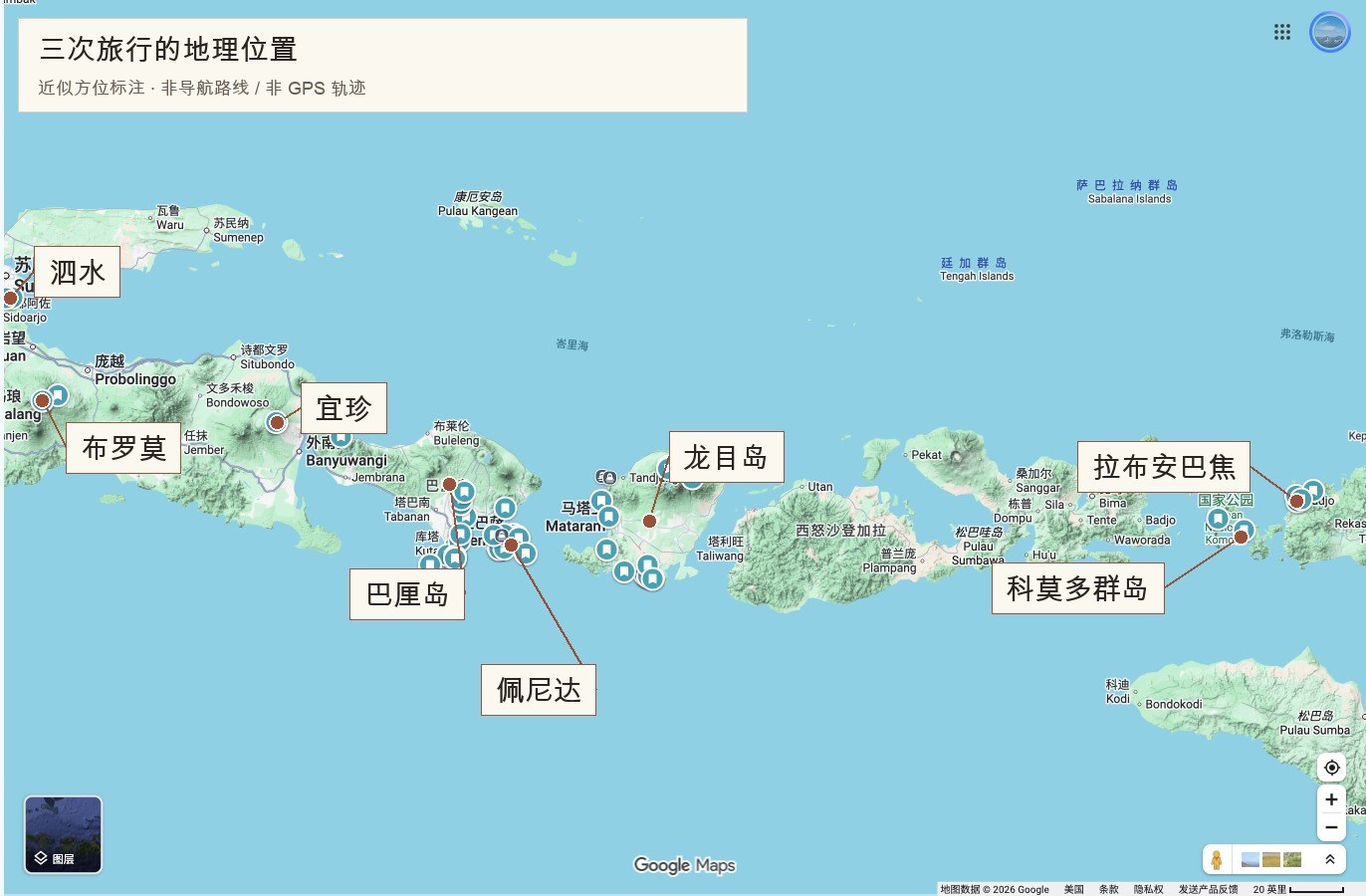
For a first trip to Indonesia, I suggest choosing one main route based on your interests:
- Volcanoes + Komodo (allow 7–8 days): for energetic travelers drawn to landscapes and wildlife. Climb active volcanoes in the small hours, then take speedboats out to see wild dragons during the day. This route has the most striking scenery.
- Bali + Nusa Penida (allow 5–7 days): combines cliffs, rice terraces, beaches, and relaxation. Tourism is well developed overall, with the best balance of transport and pacing.
- Bali + Nusa Penida + Lombok (allow 8–10 days): an islands-only route. See Nusa Penida’s sheer cliffs, then watch the sea and surf on Lombok’s south coast. Suits people who want to slow down and spend time by the water.
If you have only six or seven days, cut an island from the plan. Whatever you do, don’t squeeze the buffer before your flight home.
First Trip: Four People, Six Days, at a Punishing Pace
This trip began when the four of us snapped up Cathay Pacific promotional return fares from Hong Kong to Surabaya for about RMB 1,700. We planned an extreme itinerary with no room for error: we didn’t even book a hotel for the first night, heading straight from Surabaya airport to Ijen by car overnight. That approach was physically draining, and we spent the following days pushing through exhaustion. I strongly advise against copying it.
Land in Surabaya; take a private airport pickup and drive overnight to Ijen
No hotel booked (overnight in the car)
Extremely tiring. We hadn’t slept well on the plane and went straight into a night hike, which was hard on the heart and lungs in the small hours. I strongly recommend sleeping a night in Surabaya or Banyuwangi
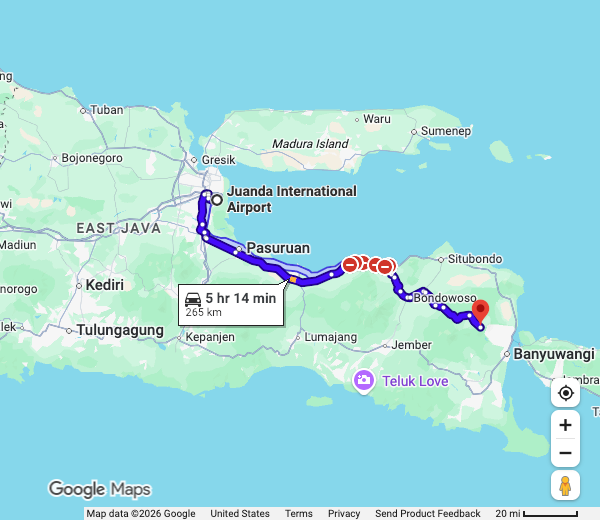
Hike Ijen before dawn, then take a long drive to Bromo after descending
Guesthouse at the foot of Bromo
Java’s two-way roads often have just one lane in each direction and plenty of heavy trucks. A 6–7-hour drive is exhausting; catch up on sleep as soon as you check in
Take a jeep into Bromo before dawn for sunrise and the Sea of Sand, then rush back to Surabaya to fly to Labuan Bajo
Labuan Bajo town
Traffic on the way down nearly made us miss the flight. We ran through the airport and boarded at the last moment. Allow a 5–6-hour buffer when catching a flight
One-day island-hopping trip in Komodo National Park by chartered speedboat
Labuan Bajo town
Padar’s three-bay panorama, Pink Beach, dragons, and snorkeling for mantas: incredible scenery. Without water shoes, wading on and off the boat is bound to be rough on your feet
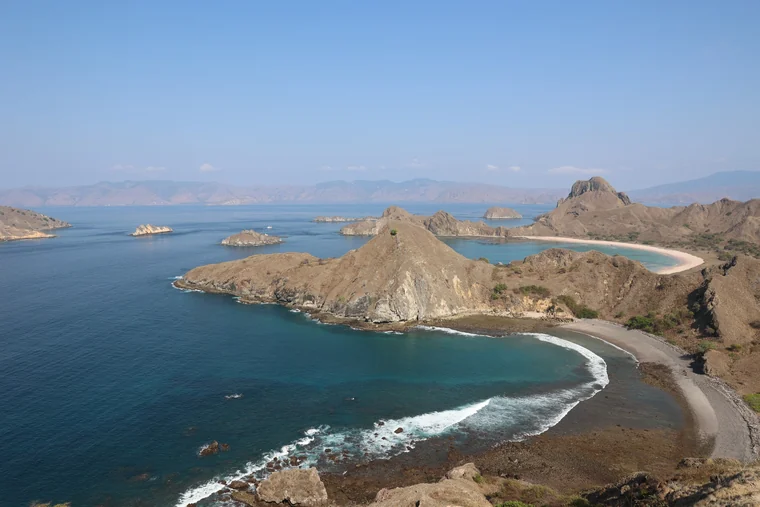
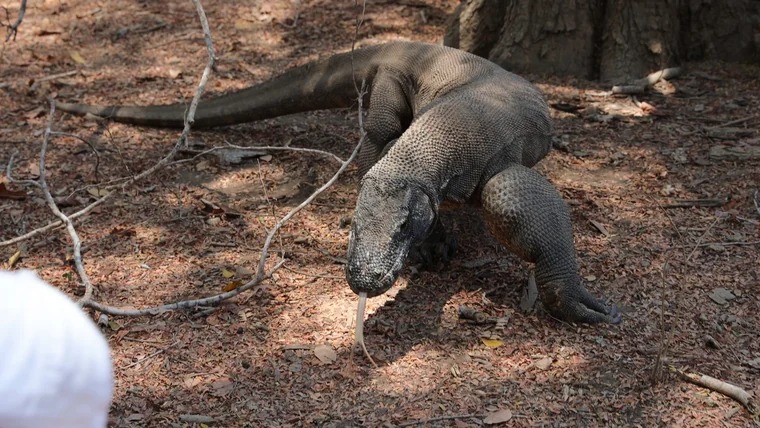
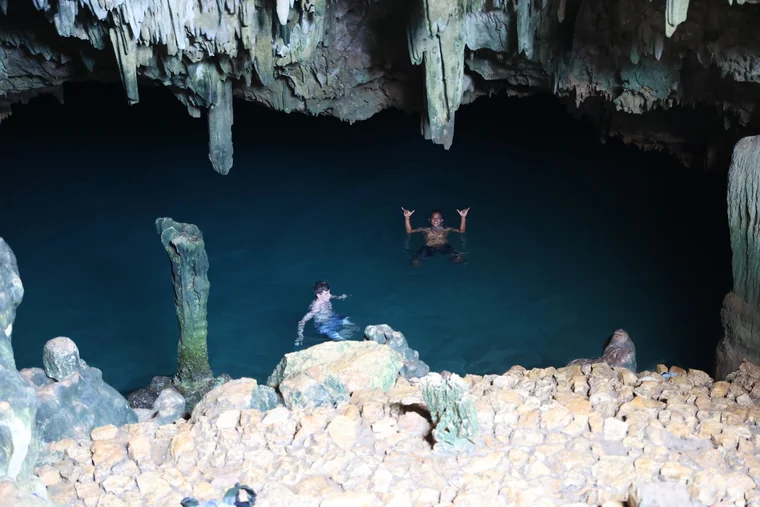
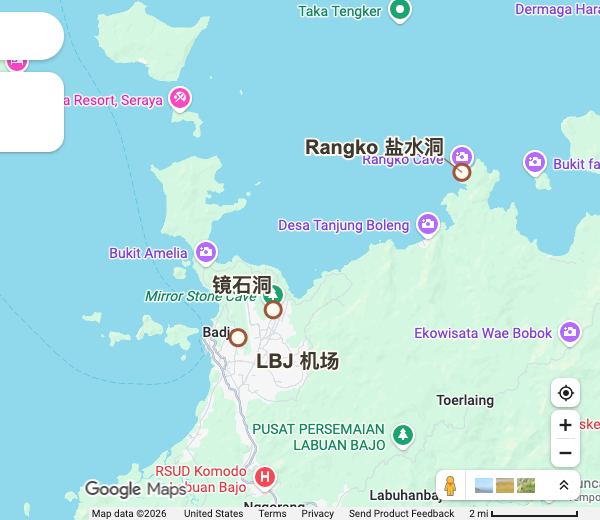
Visit land-based sights: Mirror Cave and Rangko Cave; fly back to Surabaya in the evening
Hotel near Surabaya airport
Floating in the cave’s highly saline seawater was a good experience. If you’re flying that day, confirm luggage arrangements and the return time with your driver in advance
Fly home to China from Surabaya with a connection
Arrive in China and rest
The itinerary was too packed, and we spent the second half running on fumes. I strongly advise against planning it this way
Looking back, we absolutely should have booked a hotel in Surabaya or Banyuwangi for the first day, had a full night’s sleep, and gone into the mountains during the day after that. We would have been in much better shape. If you’re flying to an island on the day you descend from Bromo, allow plenty of time for traffic on the mountain roads.
Another detail that can trip you up is the time difference. Java (Surabaya, Ijen, and Bromo) is on UTC+7, one hour behind Beijing; Bali, Lombok, and Labuan Bajo are on UTC+8, the same time as Beijing. When checking flight or boat schedules and arranging pickup times with drivers, make sure you know which place’s local time is being used. Don’t rely on instinct and end up a whole hour out.
Second and Third Trips: Separate the Islands for a Gentler Pace
On our second trip, we changed strategy and focused on unwinding on the islands: October 2–4 on Nusa Penida, then October 4–6 on Lombok. The islands are neighbors, but their landscapes and pace are completely different. We gave Nusa Penida’s east and west sides a day each, then focused on watching the waves on Lombok’s south coast. The whole experience went much more smoothly.
For our third trip, to Bali in early May, we arranged a private car to pick us up in Sanur at around 3 a.m. on May 1, take us north to Lovina to see dolphins, and drop us in Ubud around midday to rest. Nusa Penida was scheduled for May 2–4, but traffic made us late on the morning of the 2nd, and we missed our booked early fast boat. We had to buy new tickets at the port for available seats. Road conditions and weather are often the biggest uncertainties when moving between islands.
East Java’s Two Volcanoes: Planning Ijen and Bromo
Food, Drink, and Accommodation in This Area →
If East Java is your first stop, these two active volcanoes will be the trip’s biggest physical challenge. Ijen means a night hike for the emerald crater lake; Bromo means crossing the Sea of Sand in a four-wheel-drive jeep for sunrise. Get the order and pace wrong, and you can be exhausted from start to finish.
Ijen: Night Hike and Crater Lake
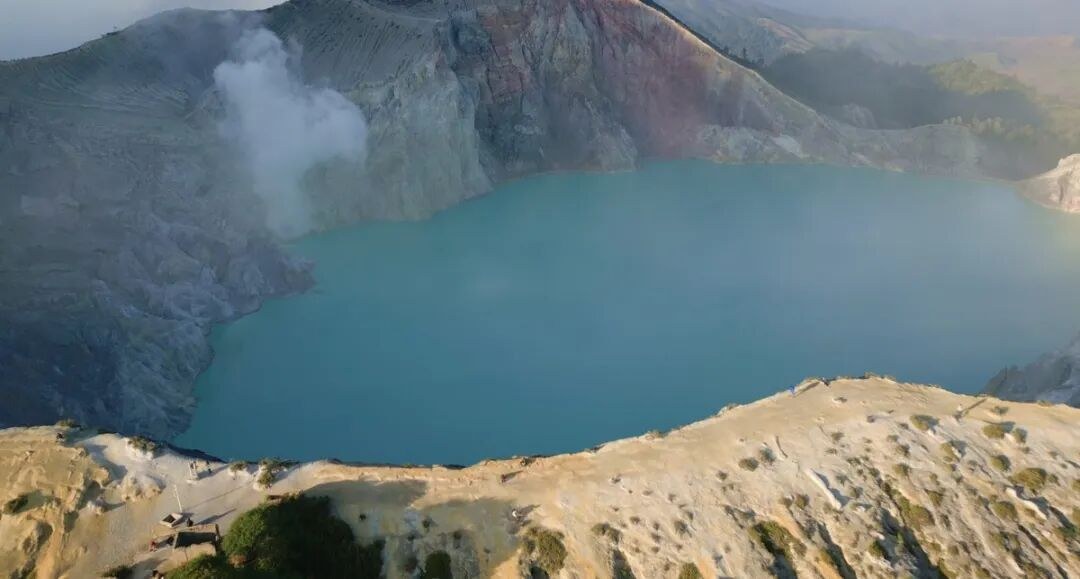
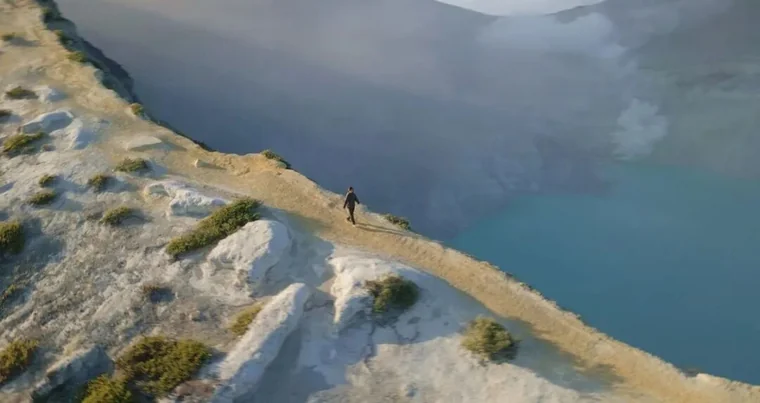
The crater lake glows coolly at daybreak. The effort of the night was worth it.
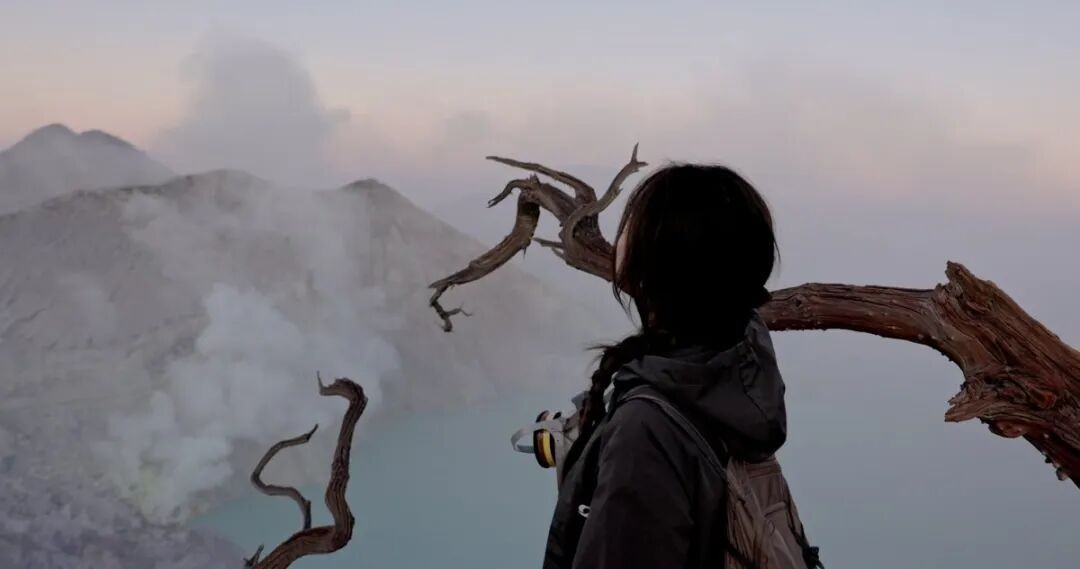 Sulfur fumes at the crater rim
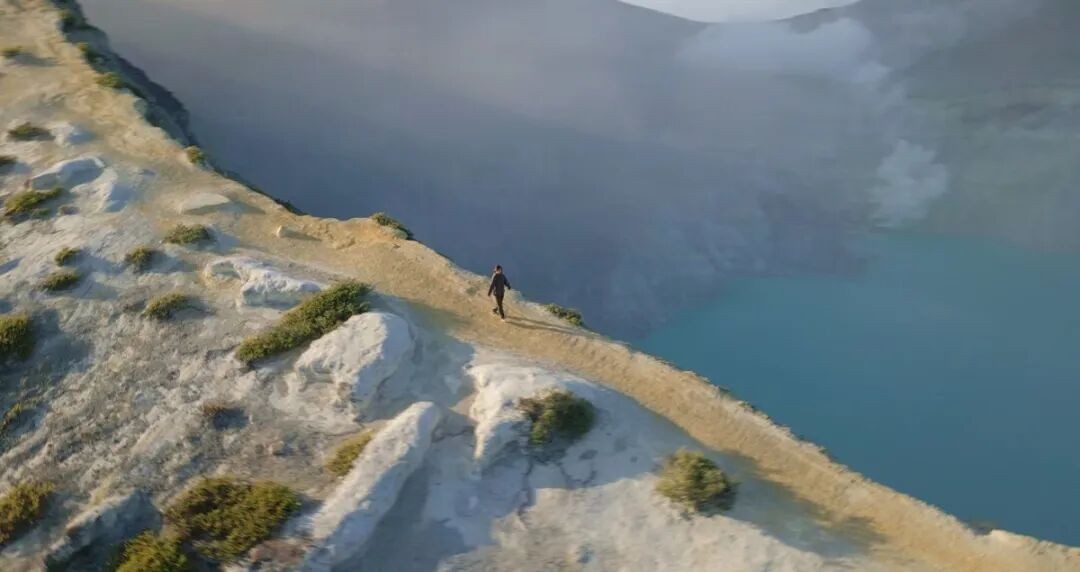 The crater from the ridge
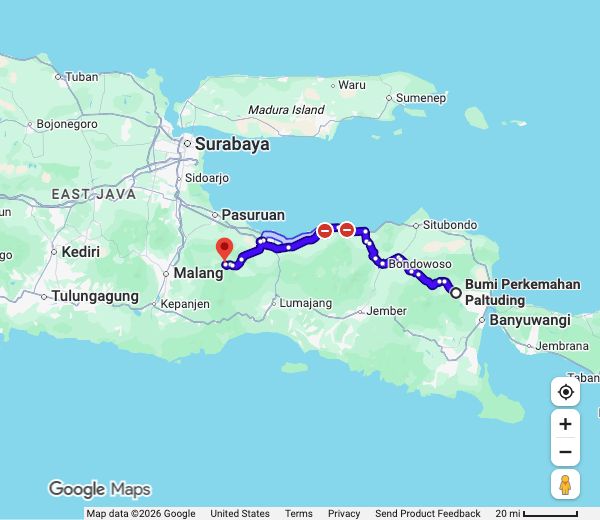
Enter Ijen (Kawah Ijen) via the Paltuding trailhead. The main sight is the emerald-turquoise crater lake after daybreak.
Many guides hype the blue fire to the skies, and plenty of people land and head straight up the mountain without sleeping. But climbing for more than two hours in strong winds on trails over 2,000 meters above sea level is genuinely hard on your heart and lungs if you haven’t slept enough. The safest plan is to stay in Banyuwangi or somewhere along the approach the evening before, get four or five solid hours of sleep in the first half of the night, and have your driver pick you up at 2 a.m.
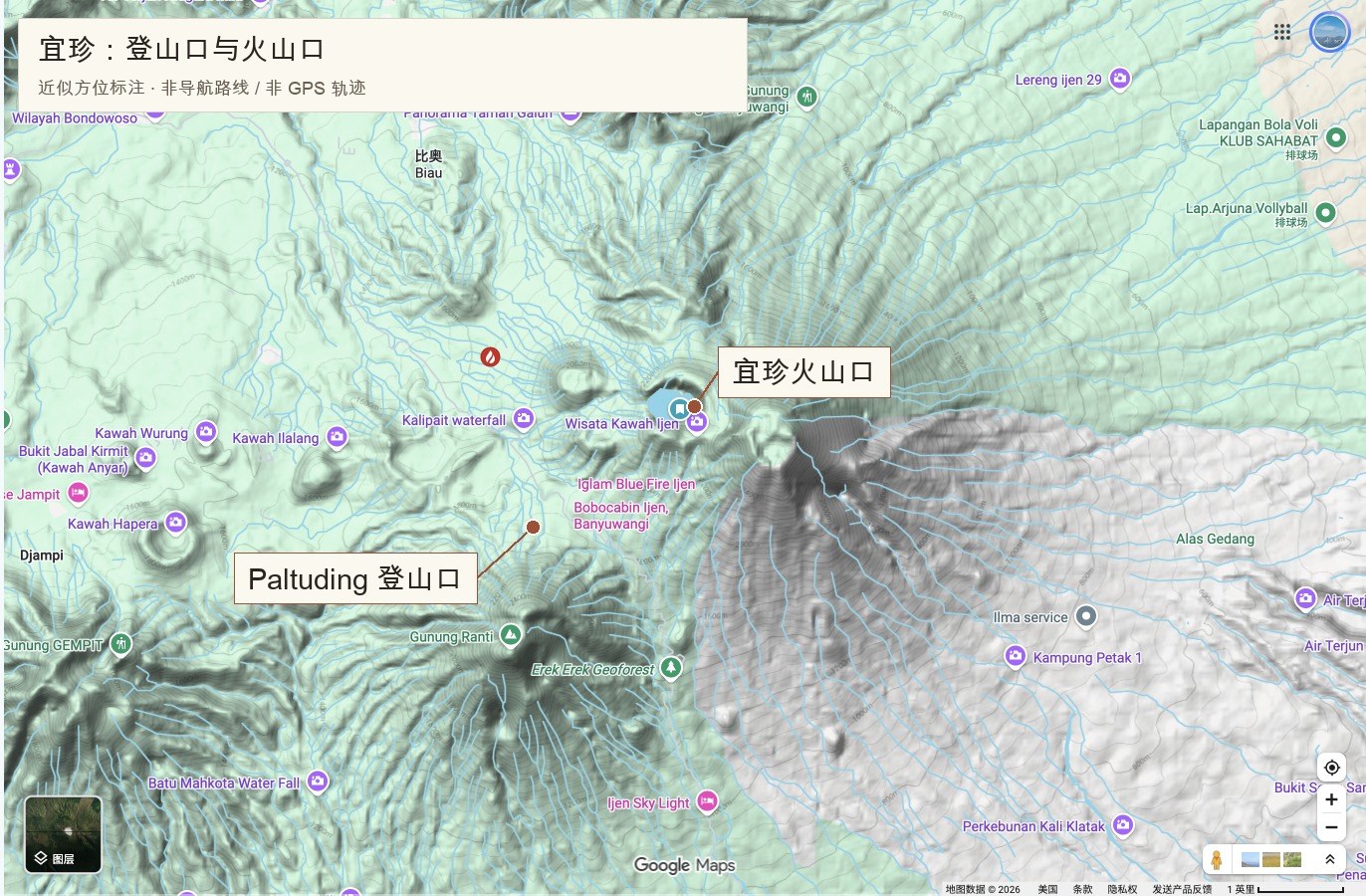
The usual schedule: pickup from your accommodation around 2 a.m., then hike from Paltuding to reach the rim before daybreak and look down at the sulfuric acid lake. Descend for breakfast and catch up on sleep, then transfer to Bromo by chartered car around midday.
There are two pieces of kit you must take seriously: First, a proper gas mask with two chemical filter cartridges. The crater’s sulfurous acidic fumes are intense; a change in wind can leave you choking, with tears and a streaming nose. Ordinary medical or activated-carbon masks are useless. When booking your car, be sure to ask whether the local operator provides a reliable mask. Second, a warm, windproof jacket and hard-wearing hiking shoes with good grip. Summit temperatures in the small hours often drop to around 10°C, and the cold wind can quickly leave you chilled. Loose dirt and stones cover the trail, and slippery soles make the climb much harder. If you really can’t keep walking, local miners have wooden handcarts, nicknamed “sulfur taxis,” that can take you to the summit if you agree on the price beforehand.
As for the blue fire at the bottom of the crater, visibility depends heavily on wind direction and gas releases. For safety, the park has long since put up a cordon strictly prohibiting descent into the crater. Once daylight arrives, the view from the rim of that cool, emerald-green sulfuric acid lake giving off white vapor is already spectacular enough. There’s no need to break the rules and risk going down to the bottom.
Local operators usually arrange Ijen tickets for you. If you want to check in advance yourself, see the official platform AyoKeTamanNasional; when the operator sends your ticket, just check the date and the Romanized spelling of your name.
Bromo: Sunrise and a Jeep across the Sea of Sand
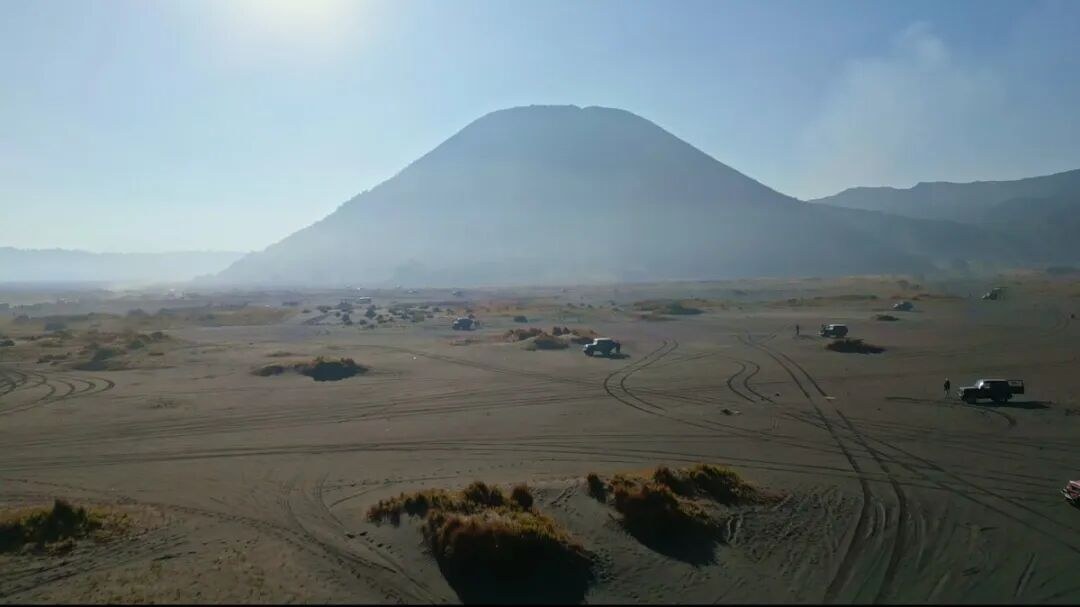
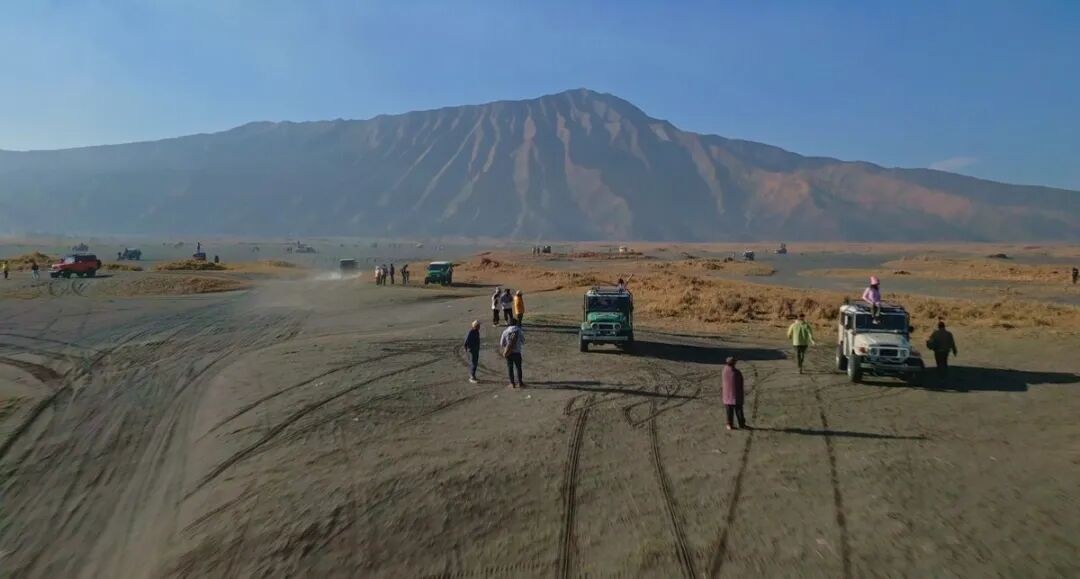
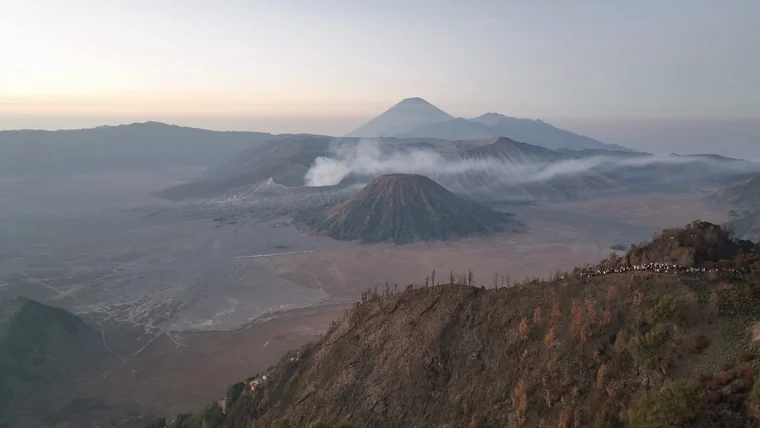
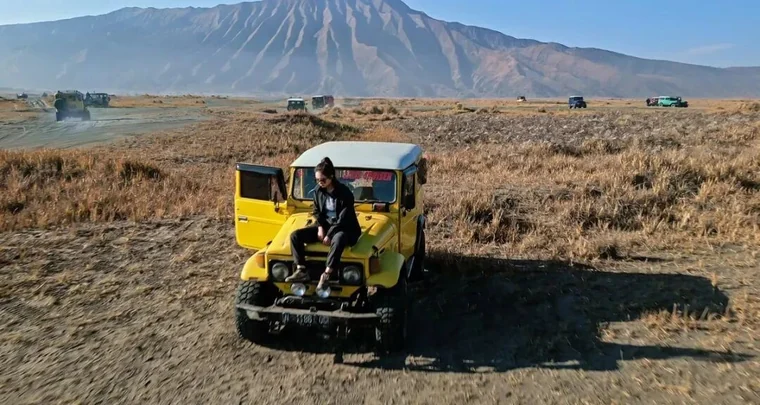
A jeep through the Sea of Sand at dawn, and the roar of an active volcano up close.
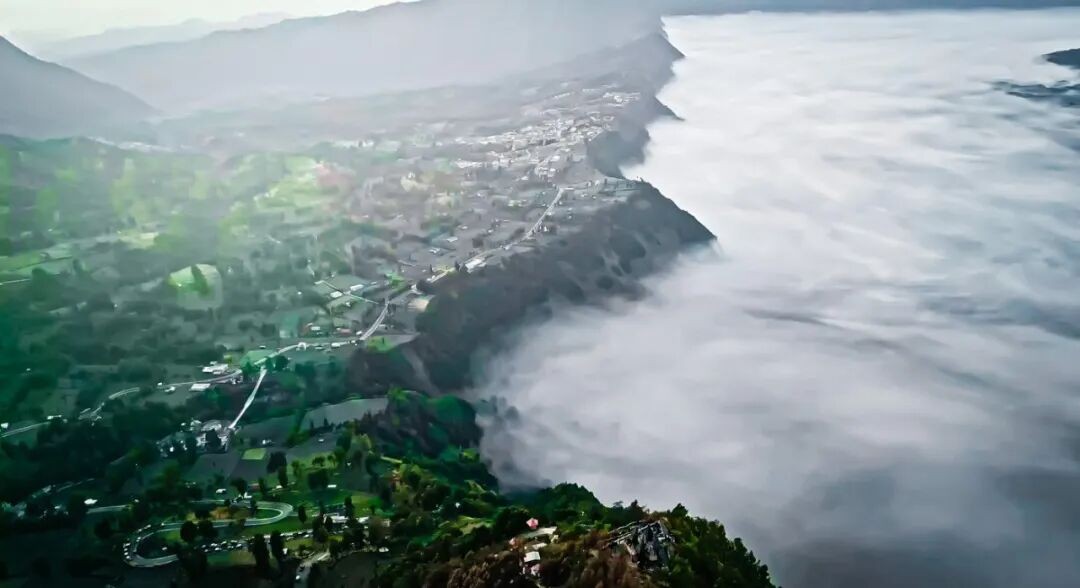 Foothills and a sea of clouds
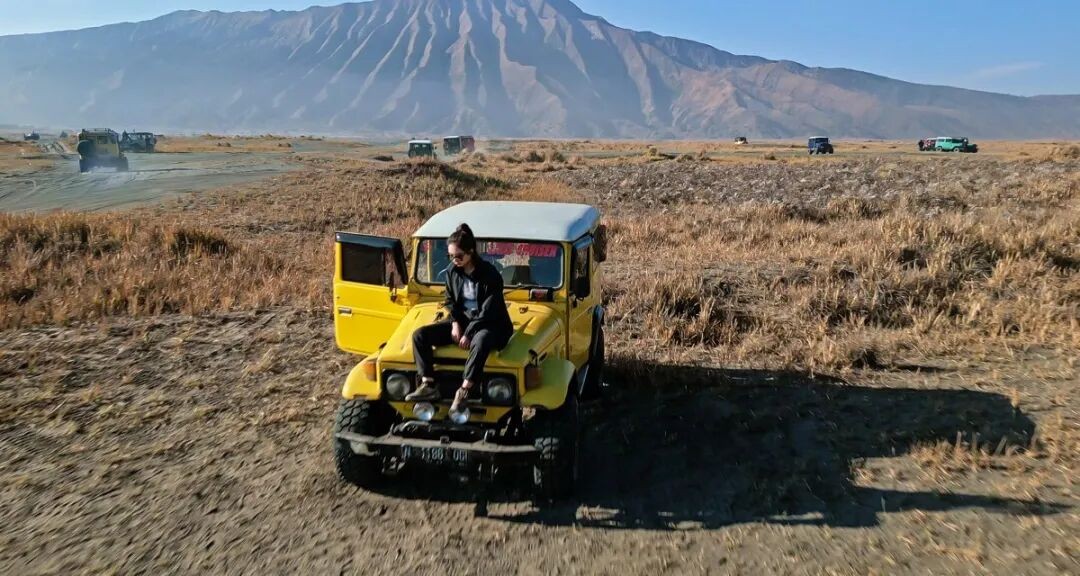 Yellow jeep in the Sea of Sand
Bromo is completely different from Ijen: most of the journey is covered in a four-wheel-drive jeep.
The classic schedule is to cross the sandy basin by jeep in the small hours, reach a viewpoint, and wait for sunrise; after daybreak, descend into the Sea of Sand to see the crater up close. Sunrise viewpoints such as King Kong Hill are some distance from the volcano itself, and drivers usually choose exactly where to stop based on road conditions that day.
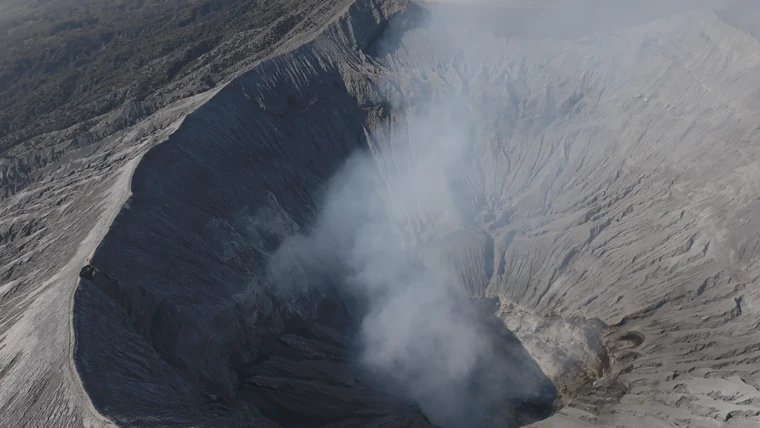

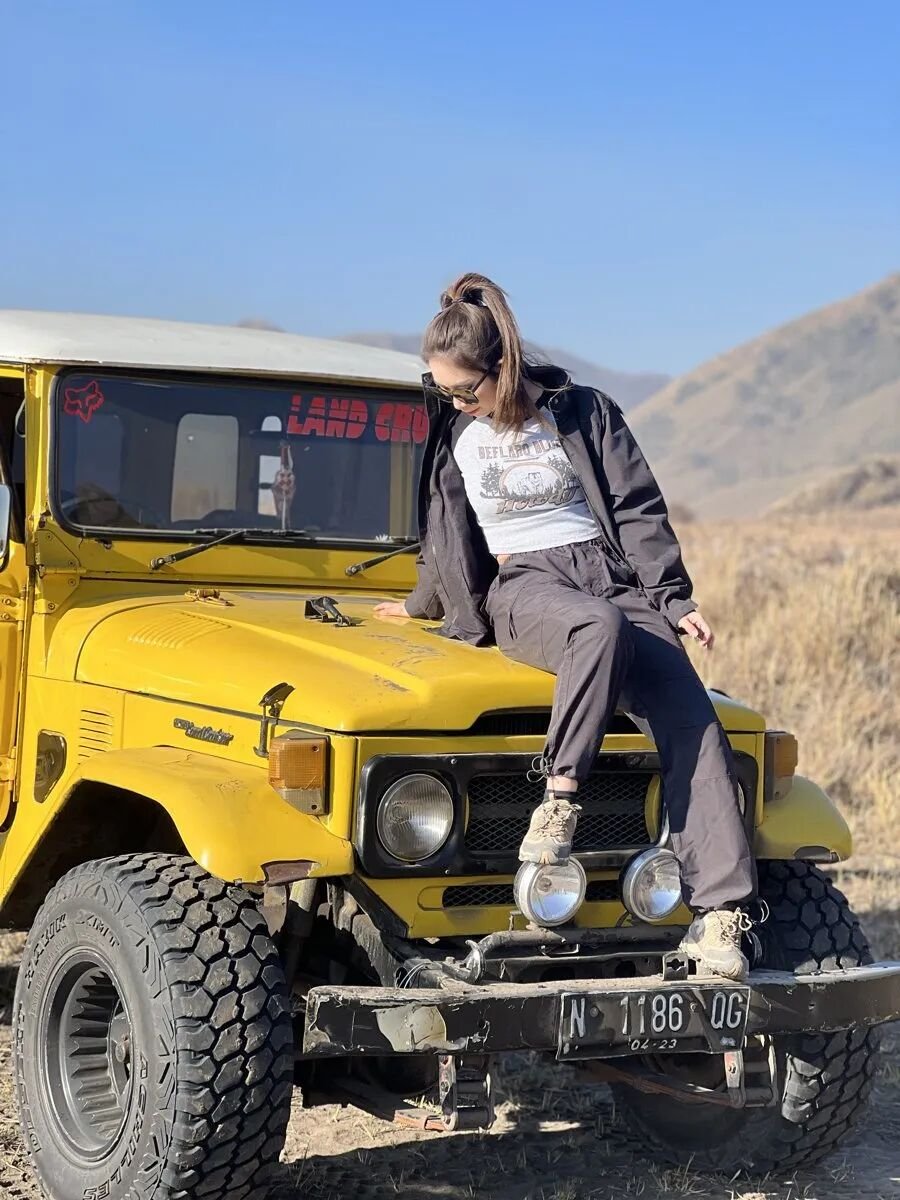
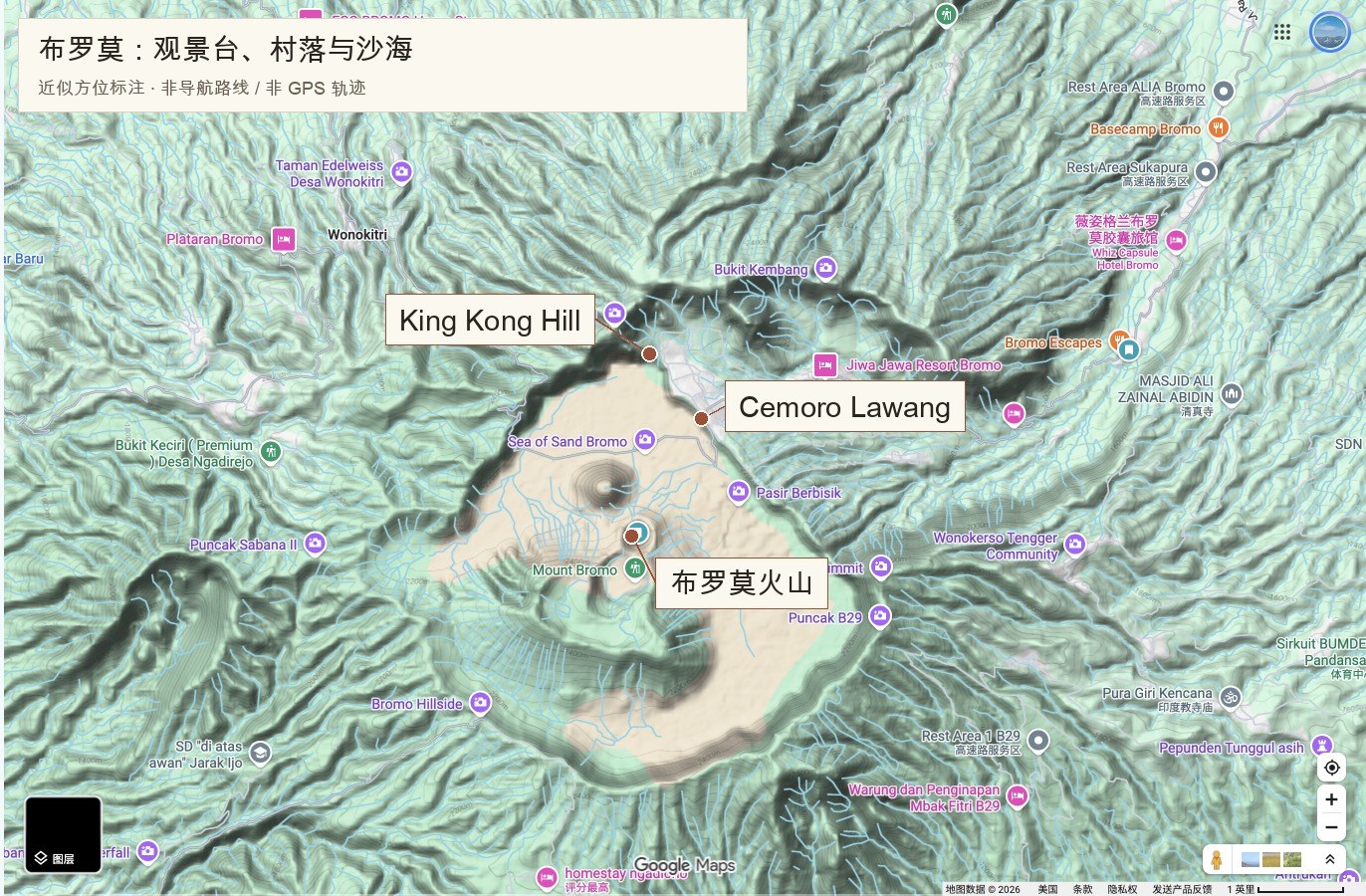
The usual schedule: leave by jeep around 3 a.m., head to a viewpoint for sunrise over the clouds, then ride down into the black Sea of Sand after daybreak to look up at the crater and its fumes. Return to your accommodation around 8 or 9 a.m. for breakfast and a wash, then check out and move on.
A few practical details make a direct difference at Bromo: First, where to stay. I recommend Cemoro Lawang or Wonotoro, villages right by the edge of the Sea of Sand and closest to the jeep departure points, so you don’t have extra winding mountain roads to deal with before dawn. Second, a safe distance from the crater. According to the national park authority’s (TNBTS Official Website) standing guidance, safety cordons remain in place around Pura Luhur Poten below the crater. The view from the sandy plain looking up at the volcanic cone billowing white fumes is already excellent. If the summit stairs are closed during volcanic activity, never blindly climb over the cordon. Third, traffic when heading down to catch a flight. Navigation may show only three hours from Bromo to Surabaya airport, but the way out is all narrow mountain roads, often with heavy trucks. Weekends and the morning rush can easily bring traffic jams. We nearly missed our flight and had to sprint through the airport to reach the gate at the last moment. If you have an international departure or connecting flight that day, allow at least 5 to 6 hours for travel and security, or simply spend an extra night near Surabaya airport. Finally, booking a local operator. When booking a “Bromo + Ijen, 3 days and 2 nights” private tour through a platform or local agent, put every inclusion in writing: private transport throughout, fuel and tolls, Bromo’s four-wheel-drive jeep, both entrance tickets, an Ijen guide and suitable gas mask, and accommodation along the way. Don’t just chase a low online quote and get hit with extra charges under all sorts of headings when you arrive.
Komodo: Speedboat Island-Hopping and Dragons
Food, Drink, and Accommodation in This Area →
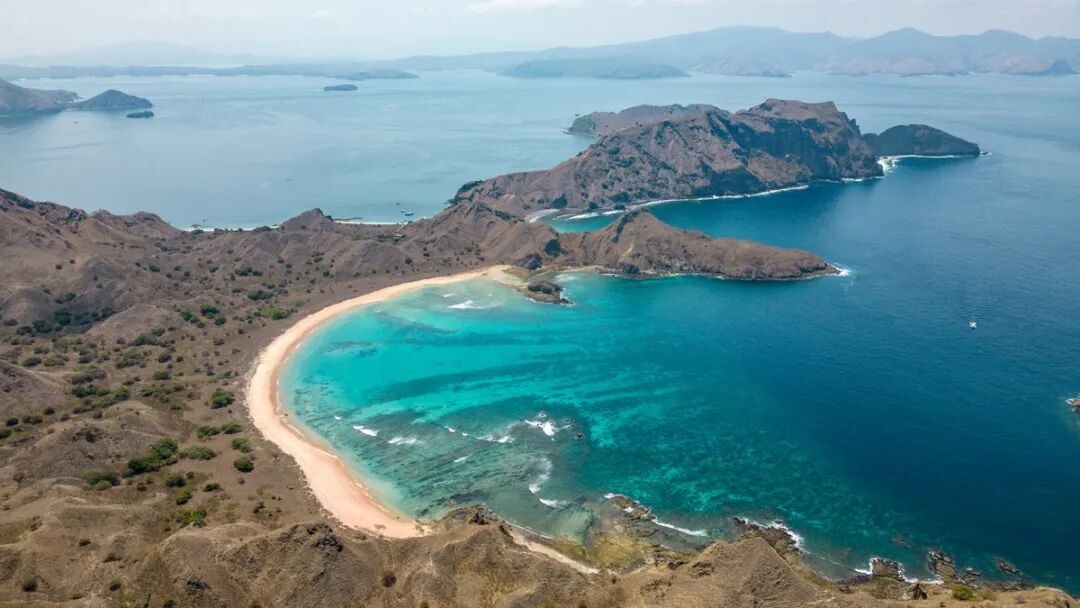
Traveling between pink beaches and offshore islands in search of wild Komodo dragons.
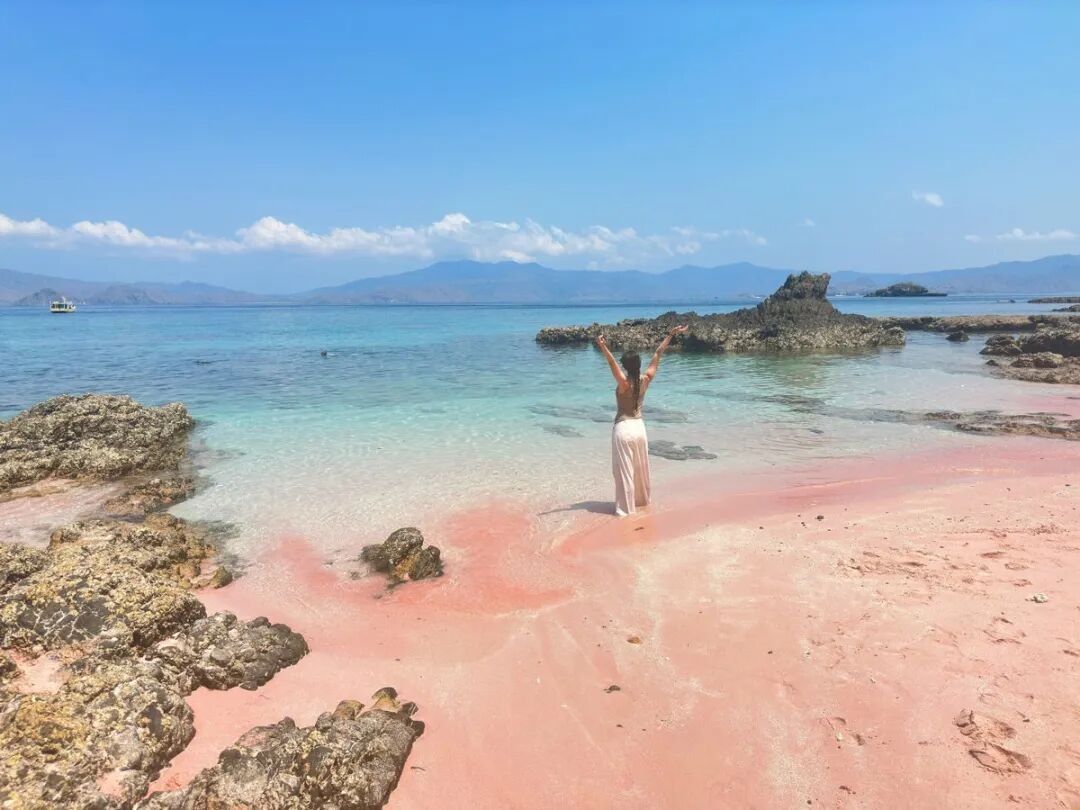 Pink Beach
If you’re going to Komodo after the volcanoes, you usually return to Surabaya or Bali for a domestic flight to Labuan Bajo on Flores (airport code LBJ). It’s a complete change of scenery, from inland active volcanoes straight to tropical islands. I suggest booking in the town center or near the harbor so you can walk to the early-morning boat meeting point.
For a first visit, three days and two nights is the most comfortable pace: fly in on day one, settle in and watch the sunset; charter a speedboat for a full day of island-hopping on day two; visit caves near town on day three, then fly back to Bali or Surabaya in the afternoon. If you have more time and want a liveaboard, check how many nights you’ll actually spend on board and what time it docks on the last day, to avoid a clash with your onward flight.
One-Day Speedboat Island-Hopping
A one-day speedboat trip usually covers 4 to 6 stops. The pace is brisk, but the scenery is superb:
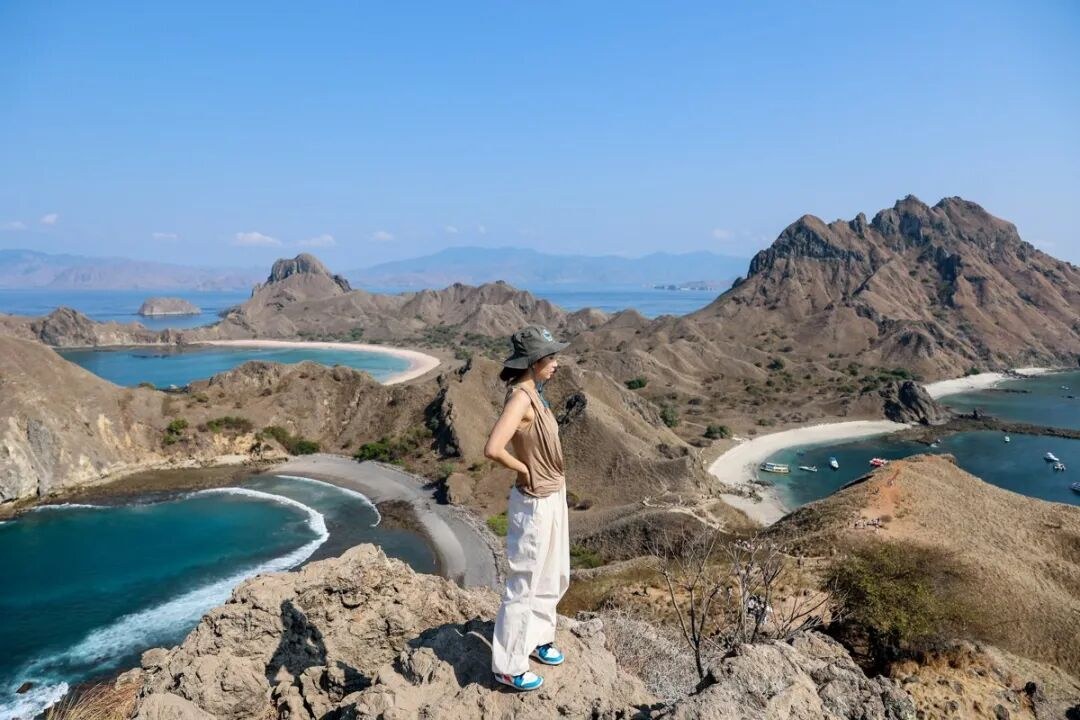
- Padar Island: Komodo’s most photogenic spot. After the speedboat lands, climb wooden steps in the blazing sun for more than 20 minutes to reach the ridge. It’s tiring, but the moment you reach the top, three curved bays—black, white, and pink—come into view together, with layer upon layer of blue water. All three black, white, and pink bays lie below you. It really is beautiful. There’s no shelter at all on the summit, so it’s fiercely sunny. Bring plenty of water and sun protection.
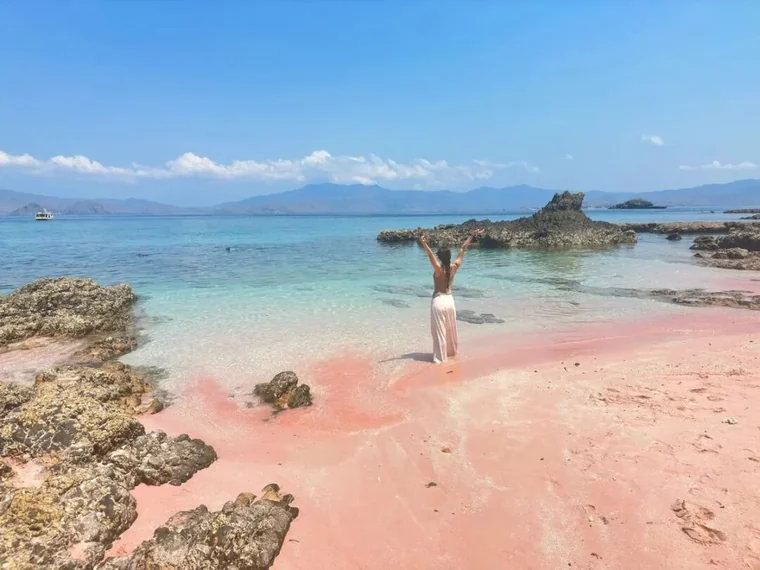
- Pink Beach: the sand really is pink; up close, it’s full of finely crushed red coral. The water is clear as glass, with large stretches of living coral just offshore. When snorkeling, watch carefully where you put your feet so you don’t step on it.
- Komodo Island: Seeing the Dragons: where you see these prehistoric-looking beasts. A national park ranger carrying a large Y-shaped wooden pole must accompany your group, and you must stick strictly to the designated route. Dragons resting in the shade look like huge logs, but they can sprint extremely fast over short distances, and their saliva is highly venomous. Never leave the group on your own, let alone crouch beside one for a selfie.
- Taka Makassar and Manta Point: Taka Makassar is a pure-white sandbar that emerges only at low tide, like a crescent moon floating in the deep-blue sea. Manta Point is nearby. Finding large manta rays depends entirely on sea conditions and luck. When the currents are right, slipping into the sea to swim with these “giant devil rays” is something you’ll remember for life. If the current is too strong, keep your life jacket on and listen to the crew. Don’t force it.
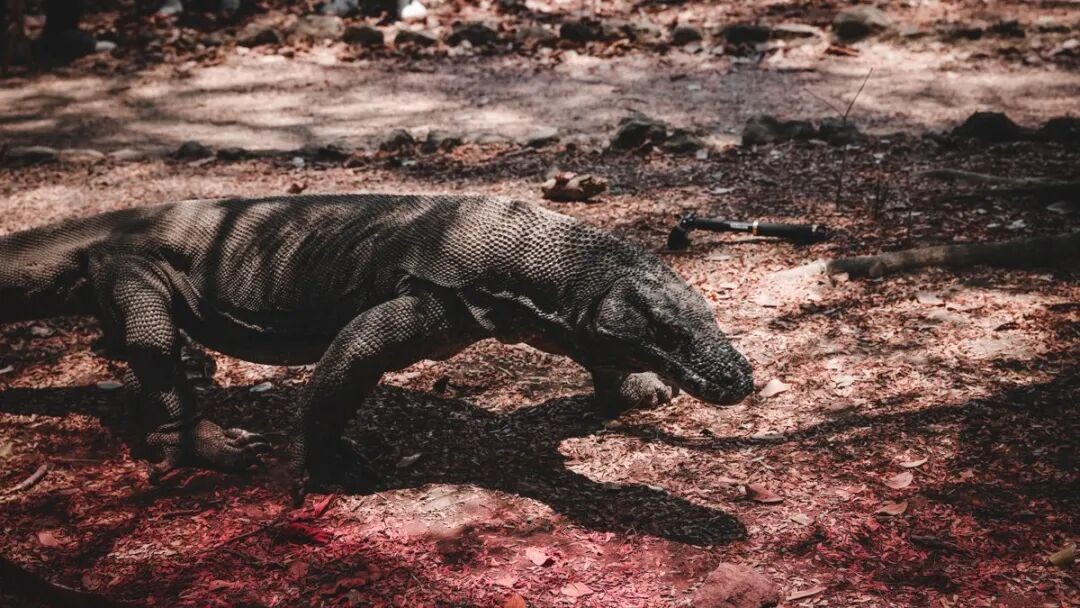 Komodo Dragon
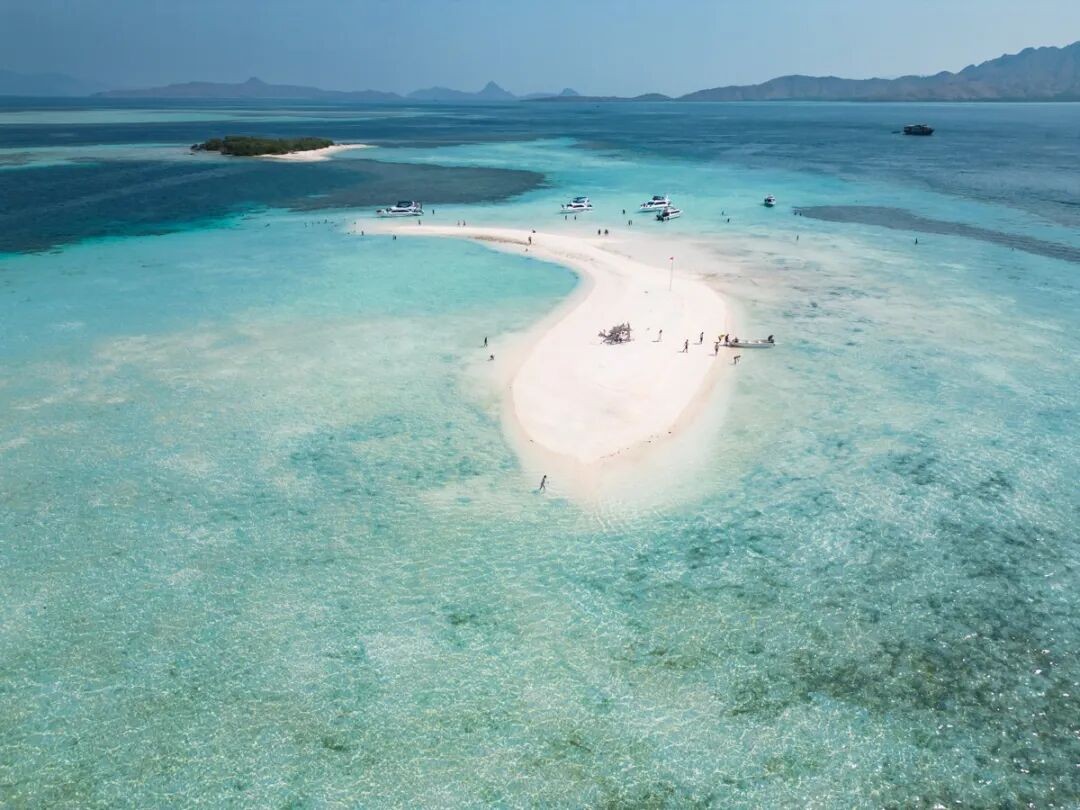 Shallow-Water Sandbar
One piece of kit can be a lifesaver on an island-hopping trip: hard-soled water shoes. Many of Komodo’s shallow beach landings have no proper pier; speedboats stop just offshore and everyone has to wade on and off. The shallows are full of sharp dead coral and submerged rocks. Ordinary flip-flops can get swept away or slip, while bare feet are easily cut and left bleeding. Proper water shoes with thick, durable soles work both for wading over broken coral and for climbing Padar’s steps. I also recommend a long-sleeved, two-piece rash suit for physical sun protection and protection from plankton, scrapes, and bumps in the water.
When booking a speedboat, search directly for Komodo one day speedboat. Before paying, confirm a few details with the operator: shared or private boat, maximum passenger capacity, the exact islands included, and whether hotel transfers, lunch, and snorkeling equipment are covered. Most importantly, ask whether the **Komodo National Park Fee** is included. This per-person island-entry charge is not cheap. If it’s excluded, ask how much Indonesian rupiah cash to bring on boarding day.
Land-Based Options near Labuan Bajo: Mirror Cave and Rangko Cave
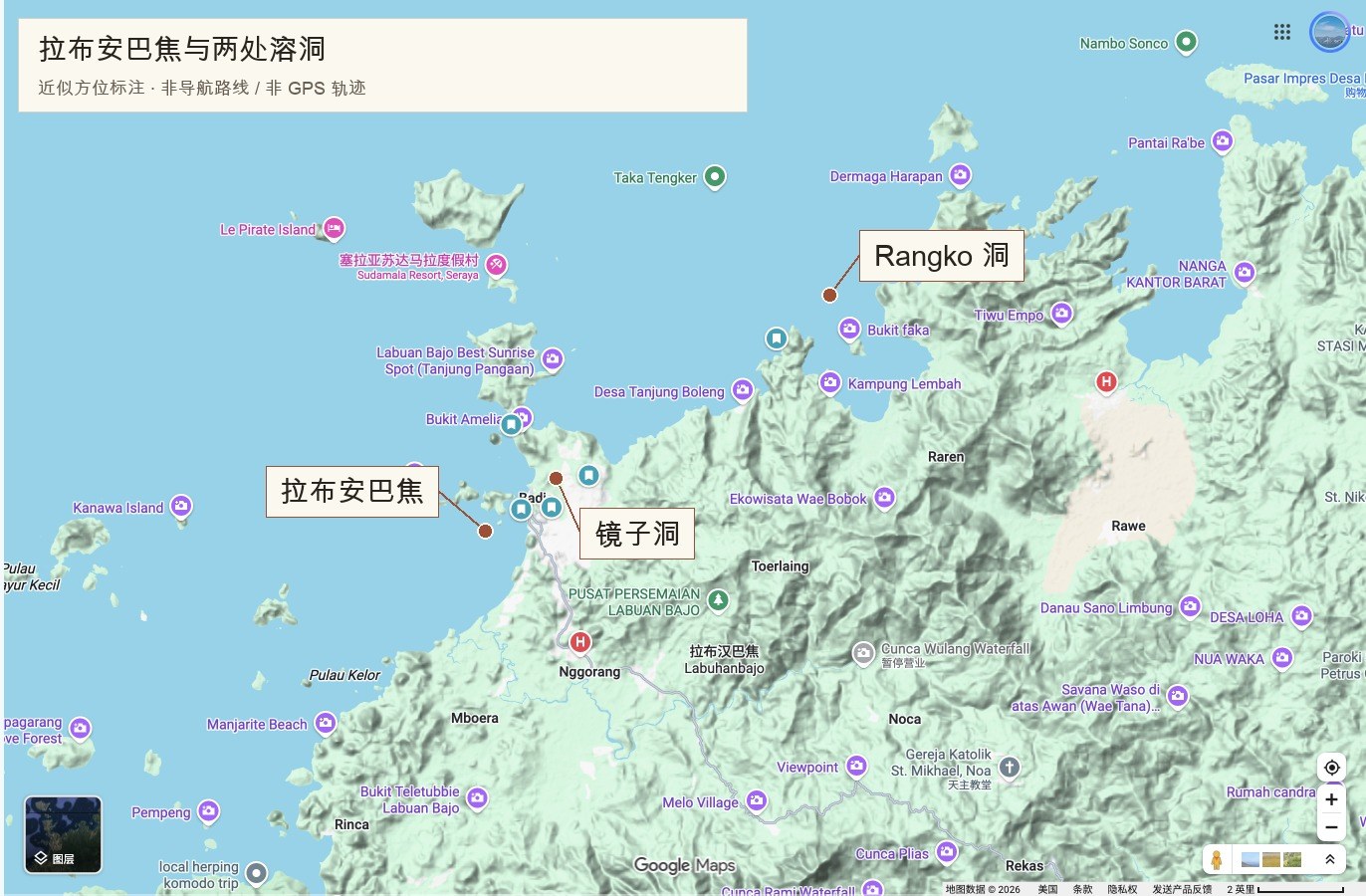
For the half-day when you’re not out on a boat, there are two natural caves near Labuan Bajo well worth visiting:
- Batu Cermin (Mirror Cave): a drive of just over ten minutes from town. At midday, sunlight passes through gaps in the limestone to the cave floor, casting unusual reflected light and shadows on the walls. Inside it’s cool and slippery, and helmets are issued at the entrance.
- Rangko Cave: drive to the fishing village, transfer to a small local wooden boat, then walk a short woodland trail to the cave. At the bottom is a natural underground seawater pool with high salinity. The strong buoyancy makes it easy to float on the cool, deep-blue water, and swimming there is a lot of fun.
You can comfortably see both by hiring a local driver for half a day. If you have a flight that afternoon, make sure you tell the driver in advance when you need to collect your luggage and reach the airport.
Nusa Penida: Separate East and West—Please Don’t Do It as a Day Trip!
Food, Drink, and Accommodation in This Area →
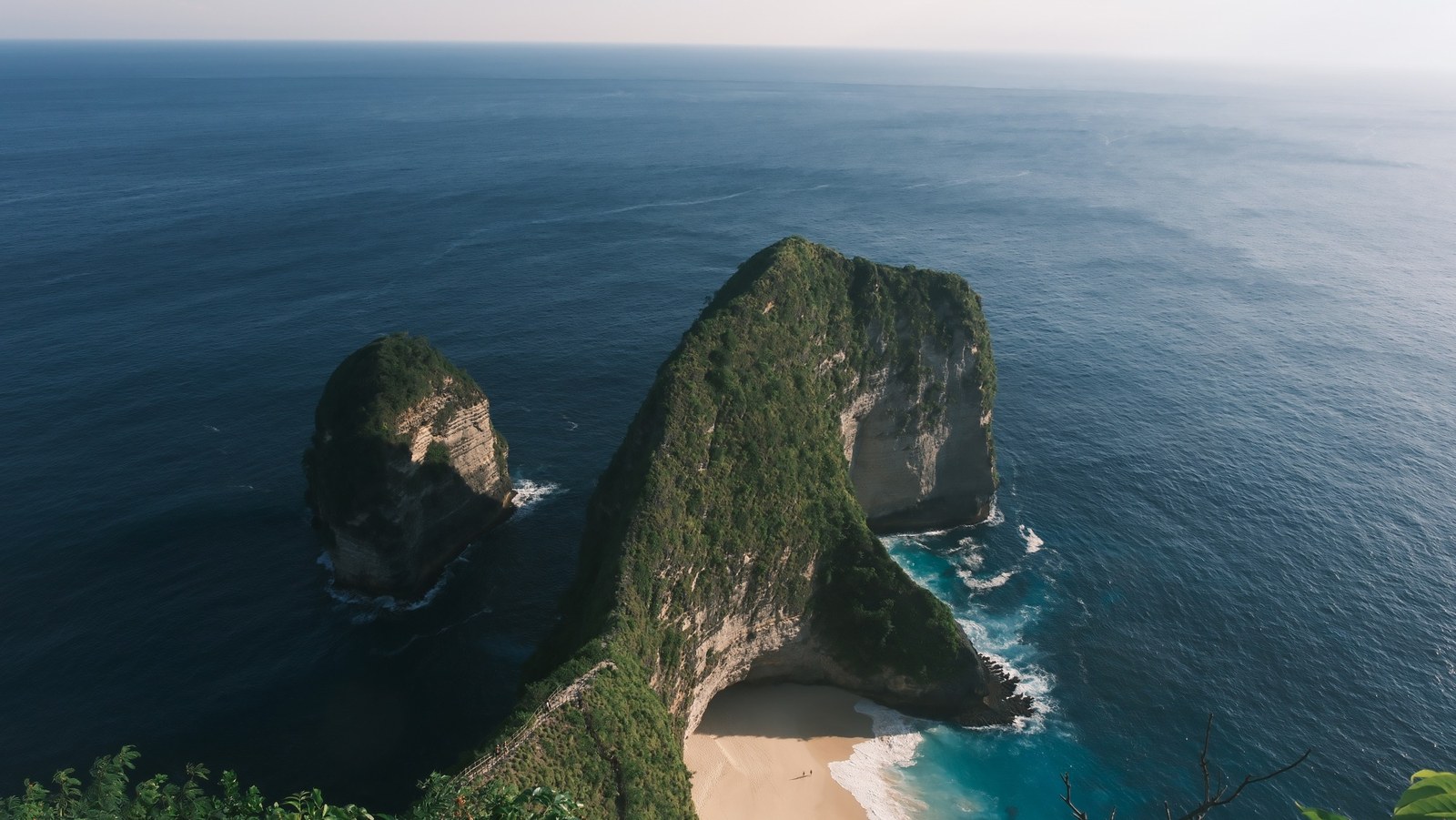
Give the western cliffs and eastern beaches separate days. Don’t combine them.
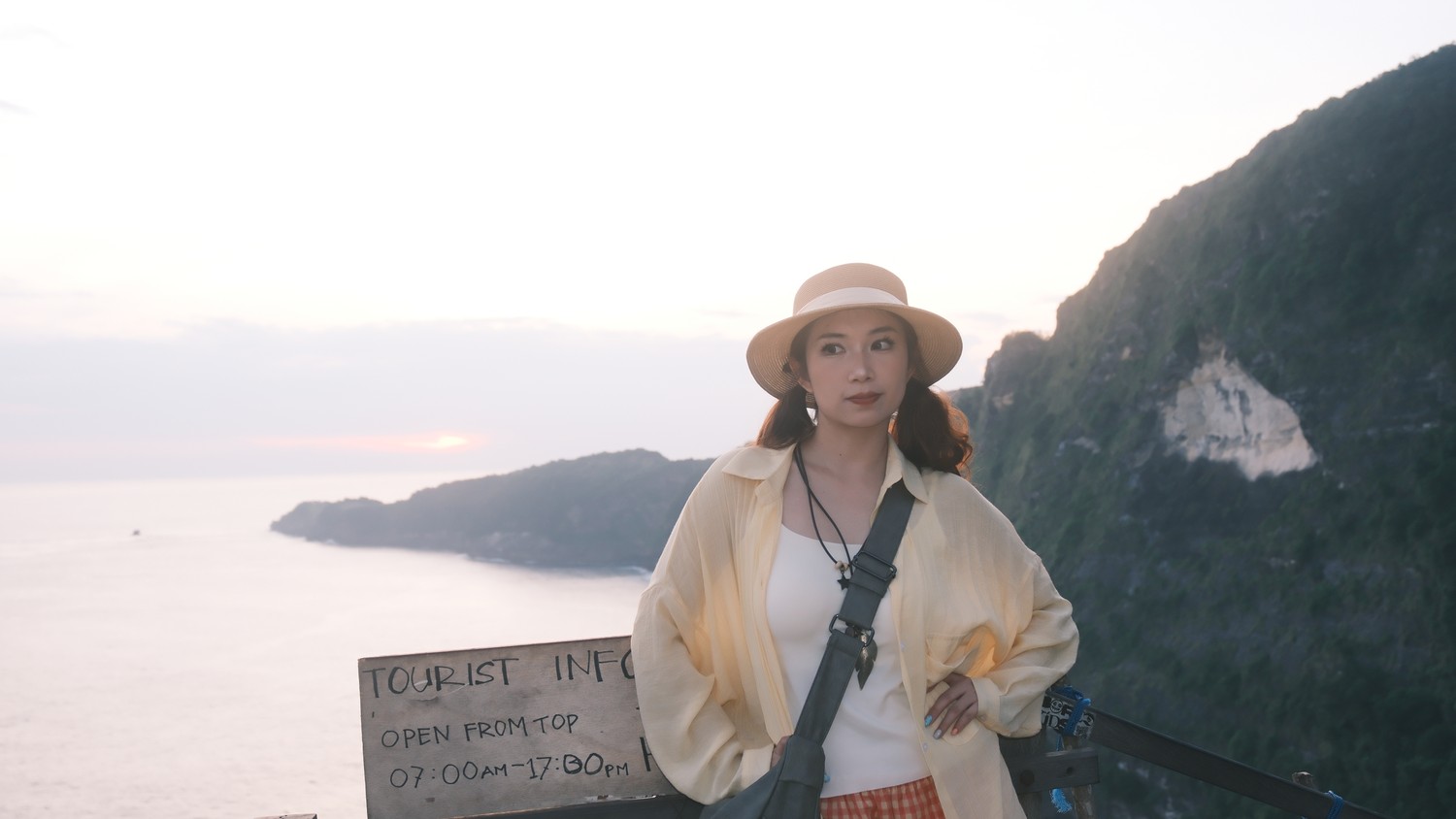 Evening at the Sea Cliffs
If your trip focuses on the islands—Bali, Nusa Penida, and Lombok—Nusa Penida is often the most visually striking stop. But it’s also the easiest place to have a miserable time. The internet is full of punishing “day trips from Bali” that try to cover both the east and west in a single day. Please don’t do this.
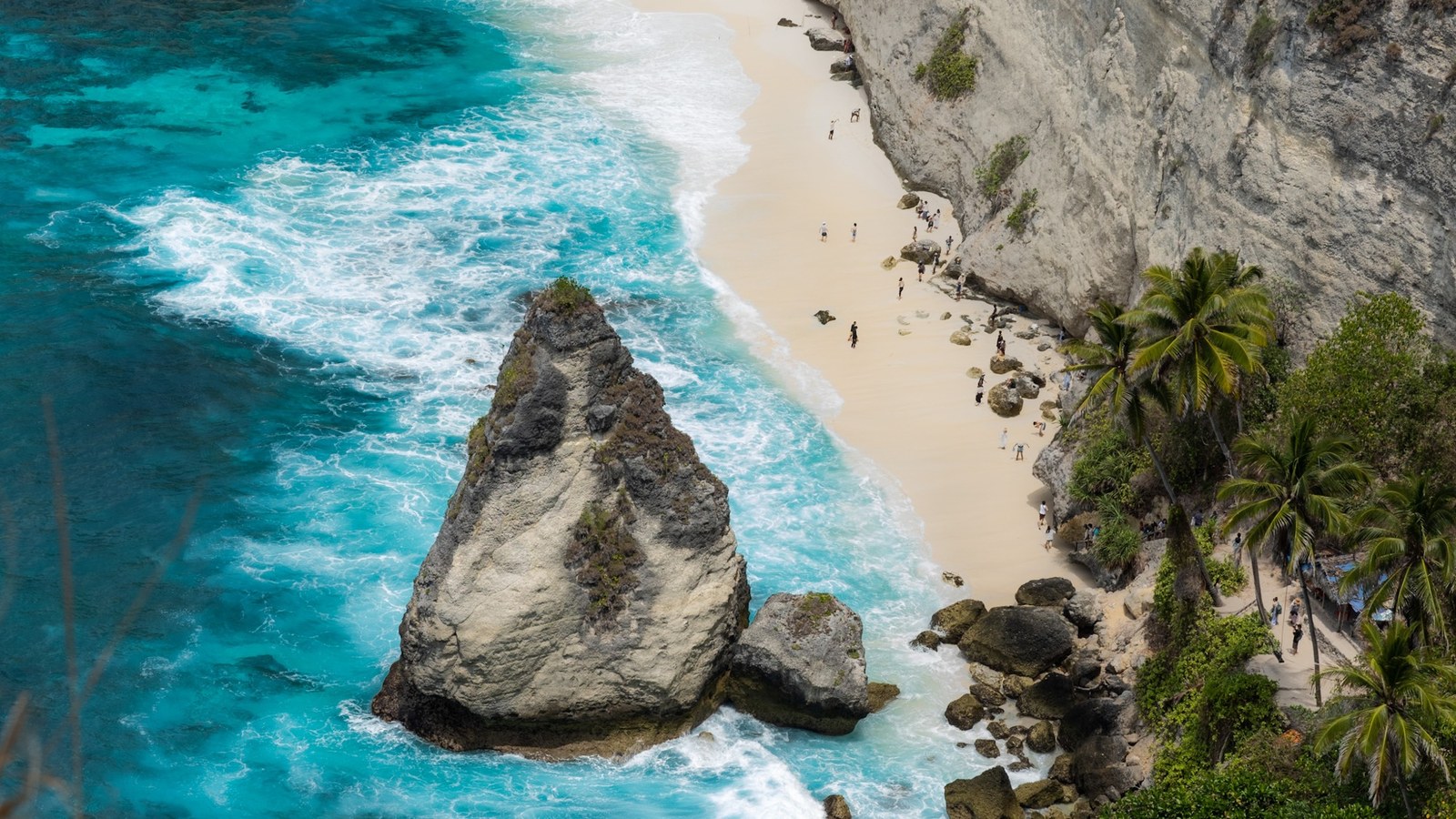
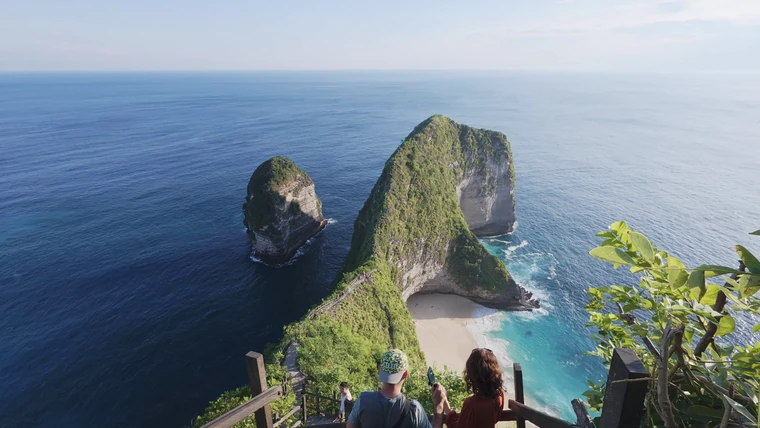
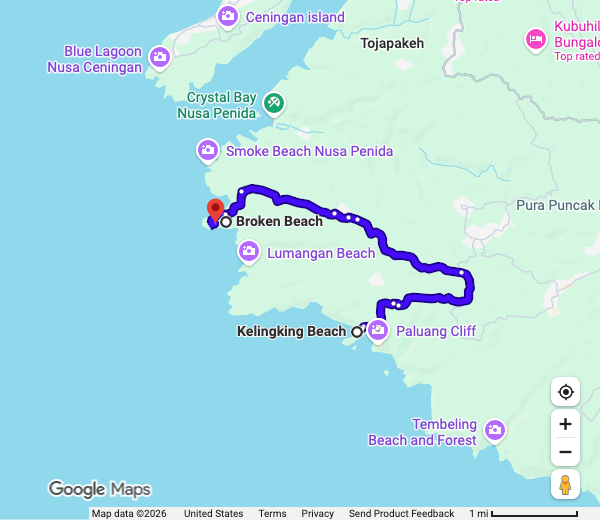
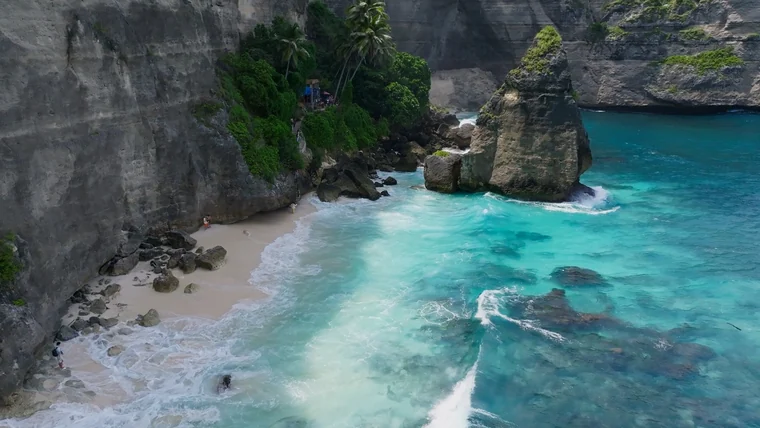
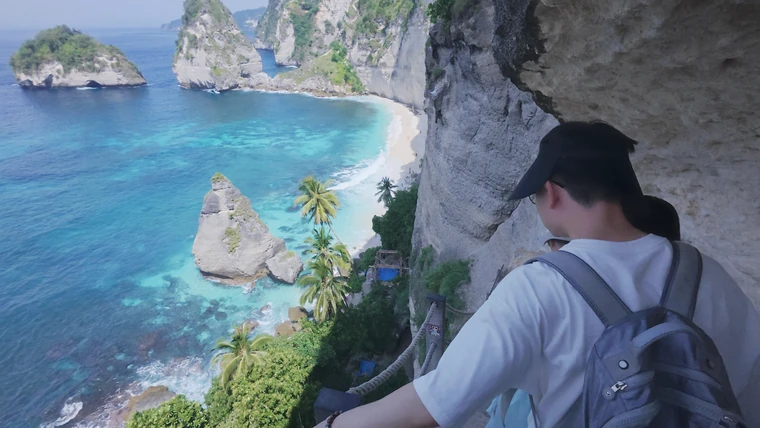
Nusa Penida’s iconic Kelingking Beach is on the west side, while Diamond Beach is on the east. The whole island is hilly, with narrow, winding concrete roads, and driving from one side to the other takes nearly two hours one way. Try to cover both in a day and you’ll spend almost the entire time suffering in a jolting car, with no chance to stop and really enjoy the scenery.
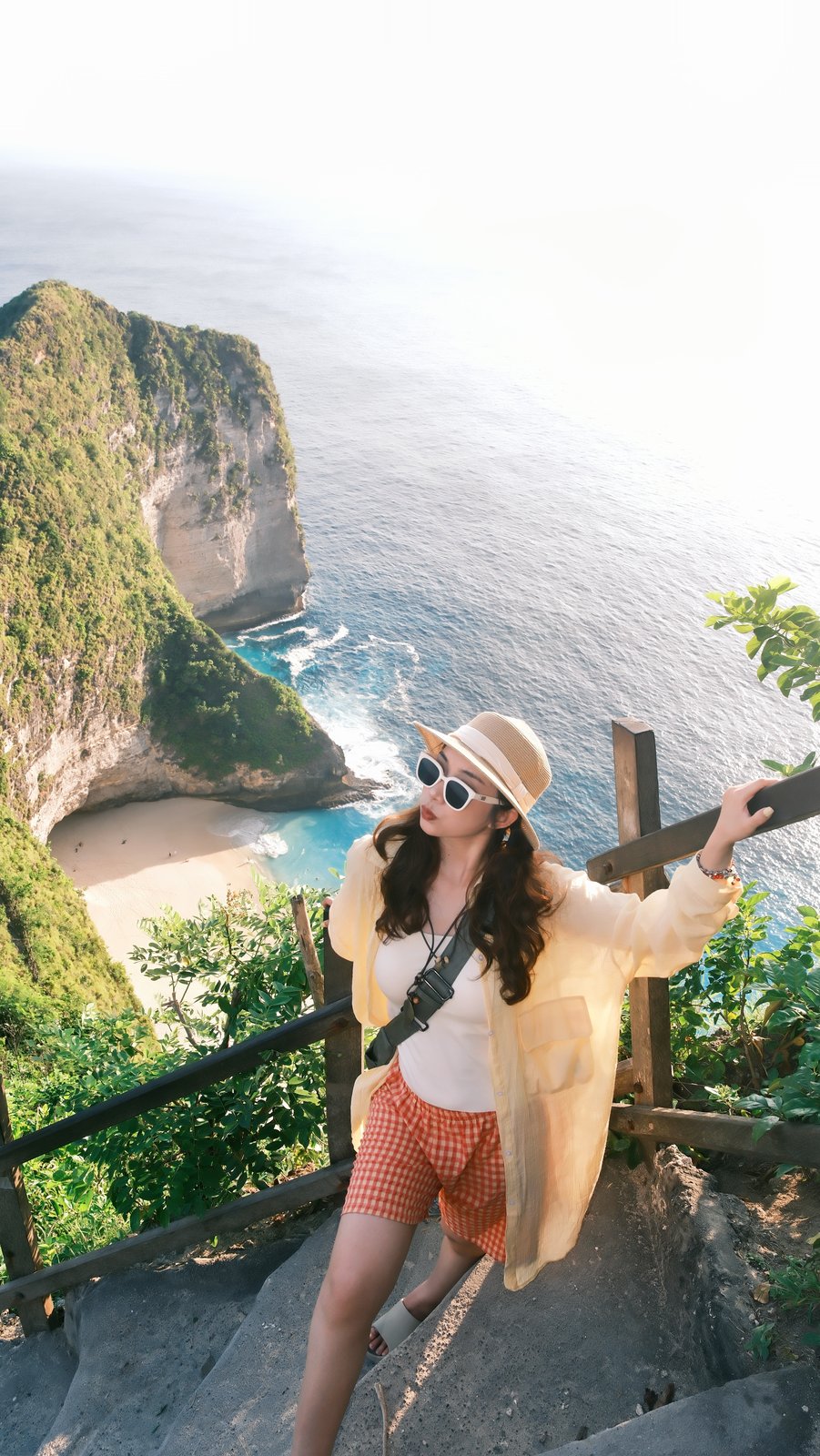
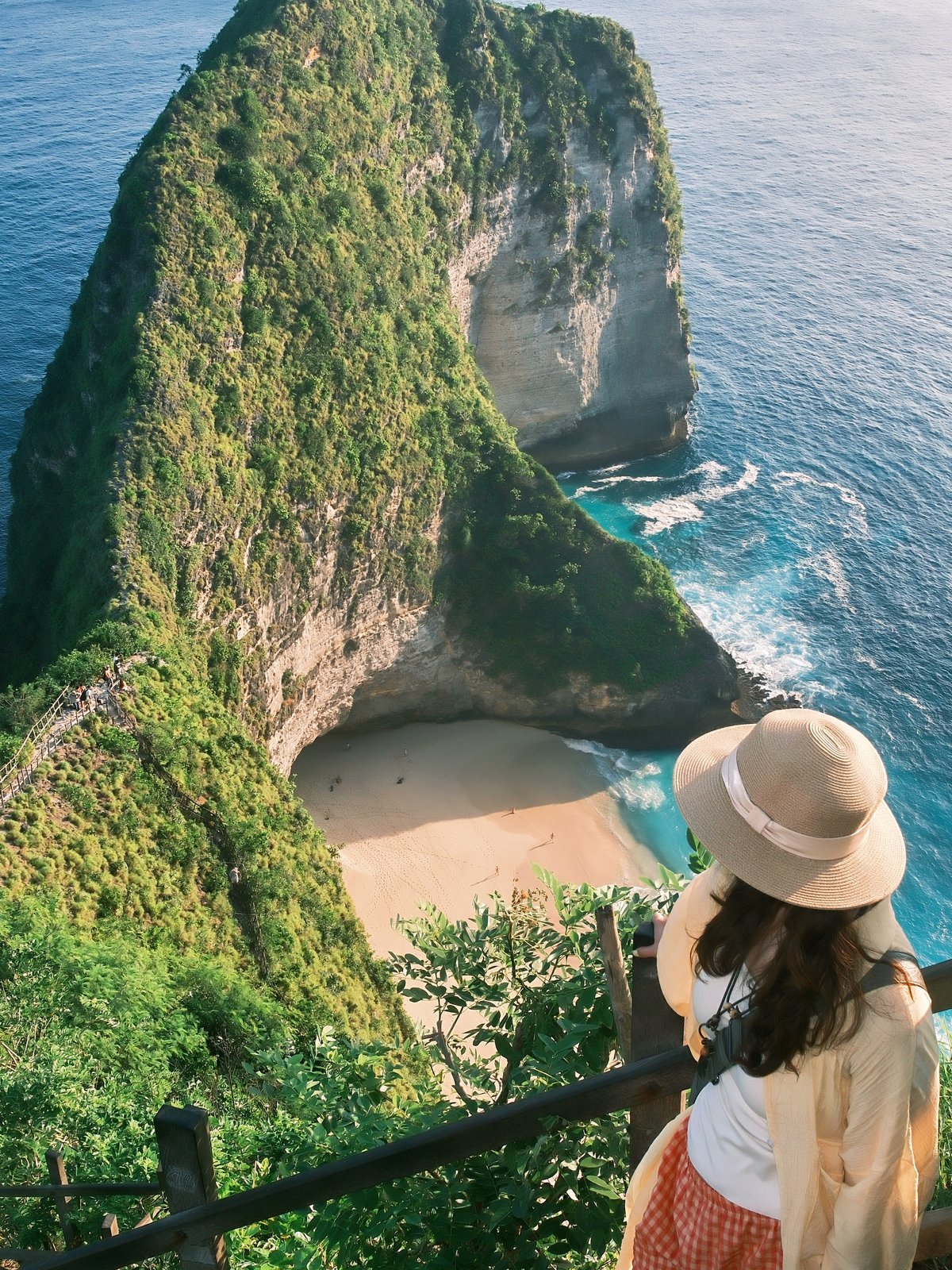
The smarter plan is to stay two nights on the island and keep the east and west sides completely separate.
Nusa Penida: Give Each Side Its Own Day
Choose this side for one day; the last two stops are optional if time allows.
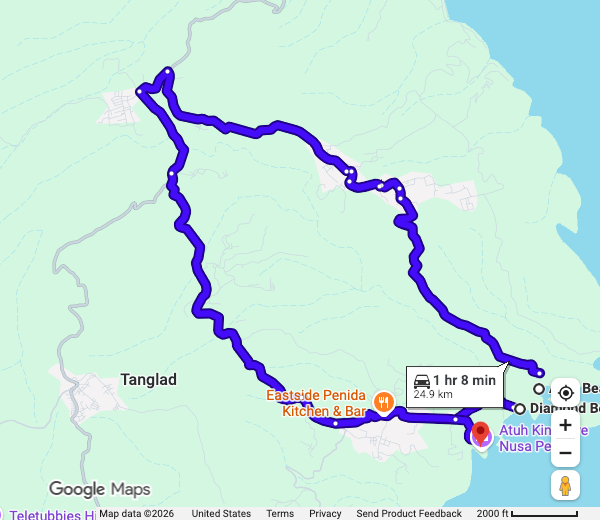
Check the port on your ticket; not all boats stop at the same place.
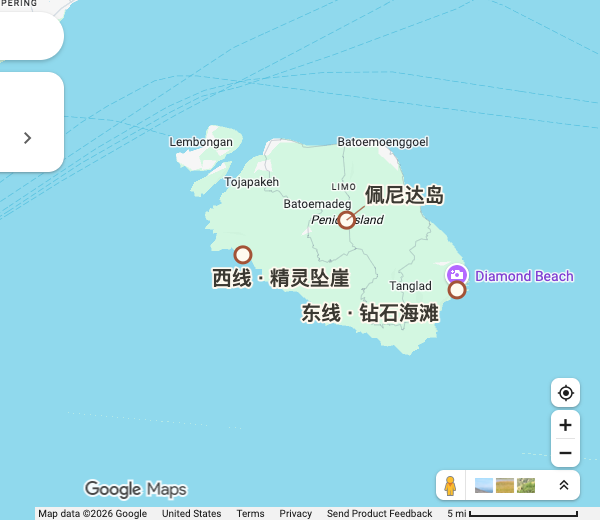
Activities and transfers shown schematically, not to scale. Click place names to check locations; these do not indicate direct services or actual road tracks.
A three-day, two-night schedule:
Meet your pickup at the port and head west: see Kelingking, then Broken Beach and Angel’s Billabong if time allows
Arrange a private car at the port in advance and leave your luggage in it. The west side is prone to traffic; return to your accommodation for dinner and rest in the evening
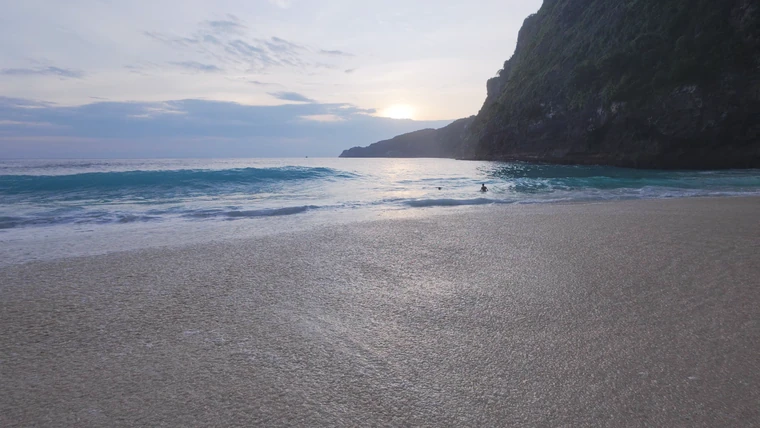
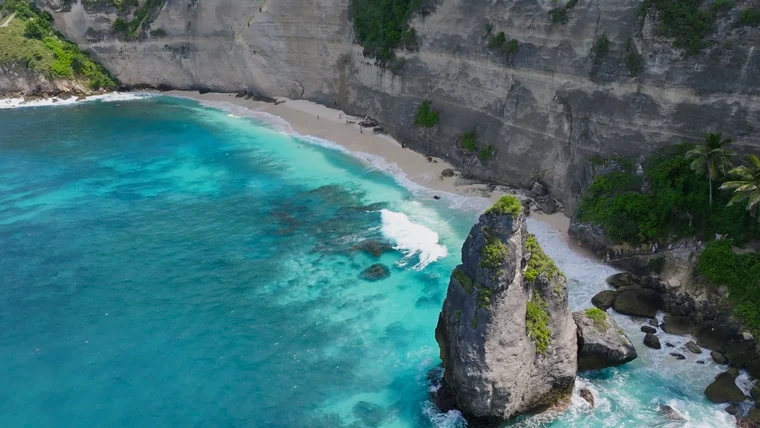
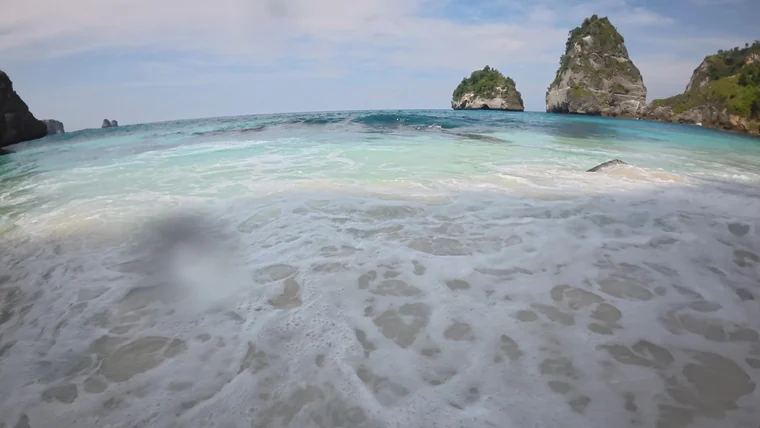
Focus on the east: Diamond Beach and Atuh Beach. Look down at sea stacks and waves from the cliffside paths, and stop at the treehouse viewpoint along the way
Spend the whole day on the east side at an unhurried pace, without shuttling back and forth across the island
Have breakfast, check out, and head to the port
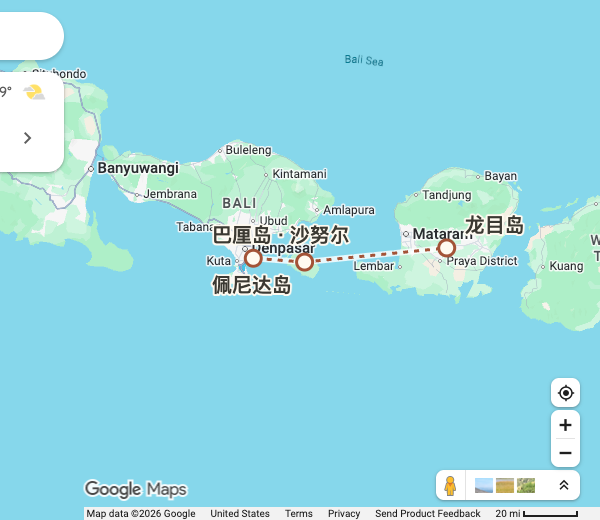
Take your booked fast boat back to Bali’s main island, or connect to a boat for Lombok
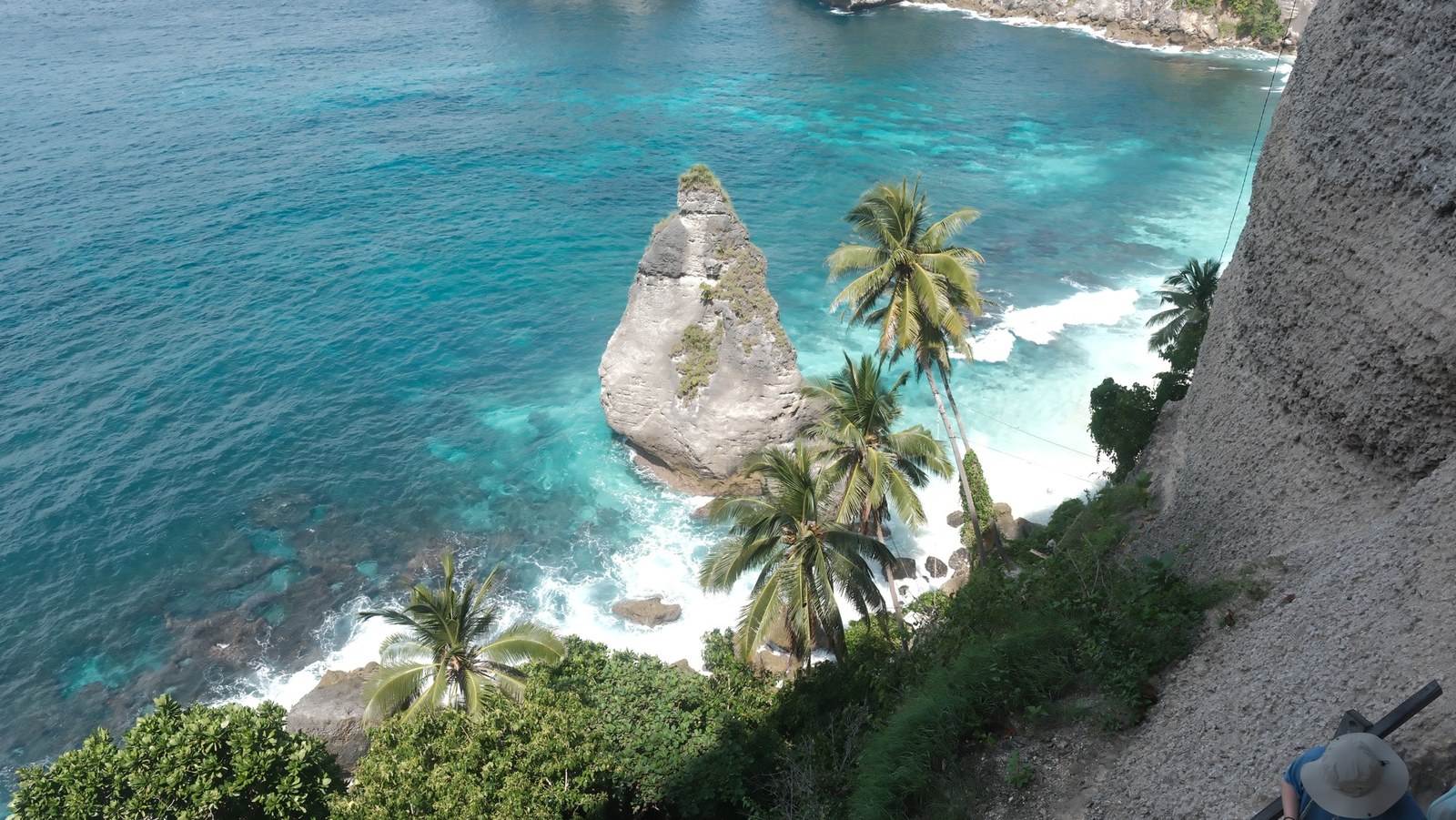
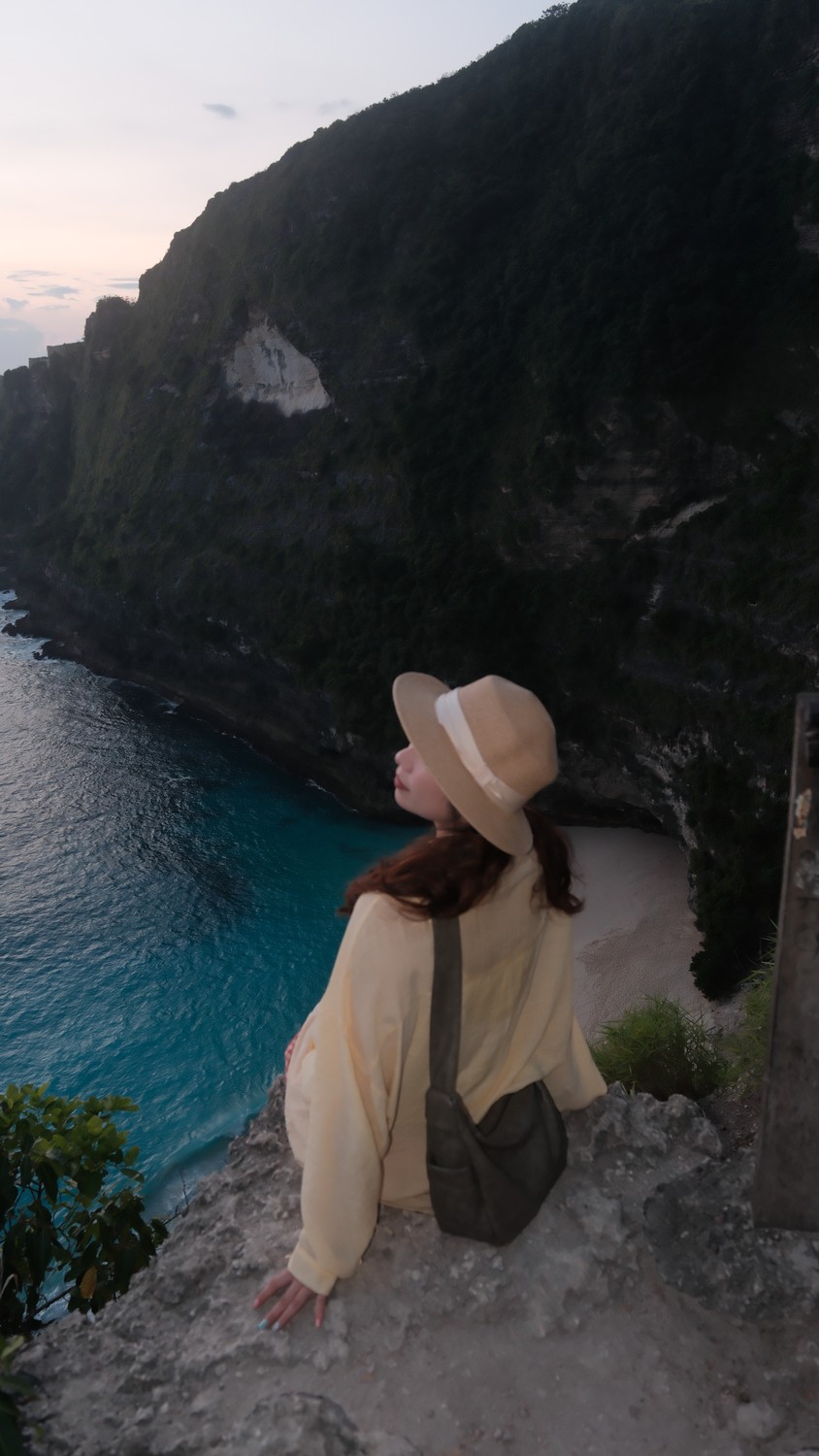 Diamond Beach · View from the Cliff Edge
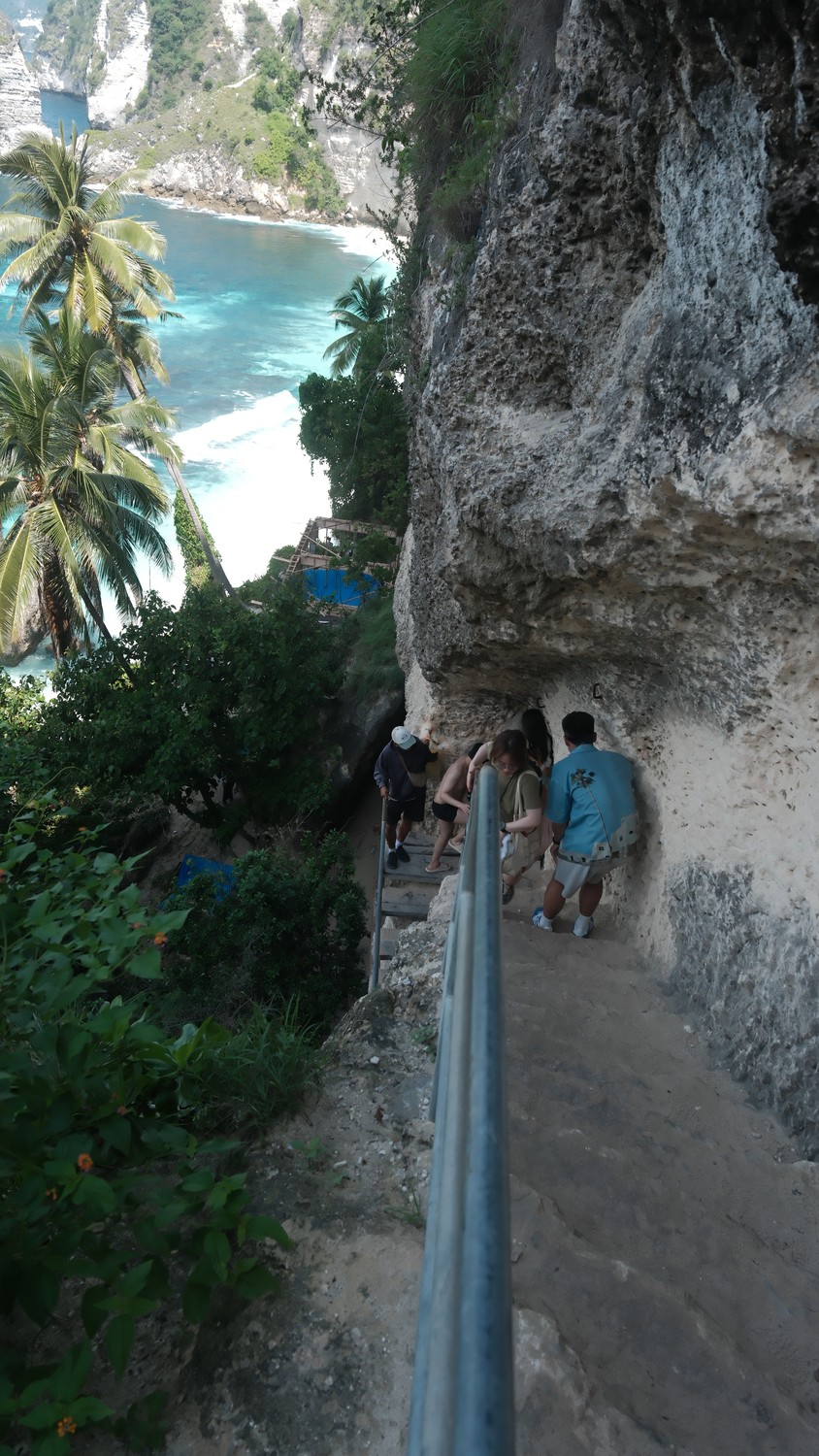 Diamond Beach · Cliffside Path
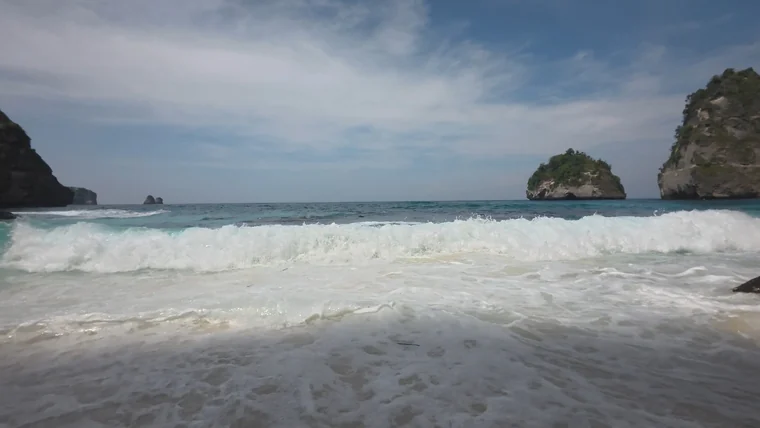
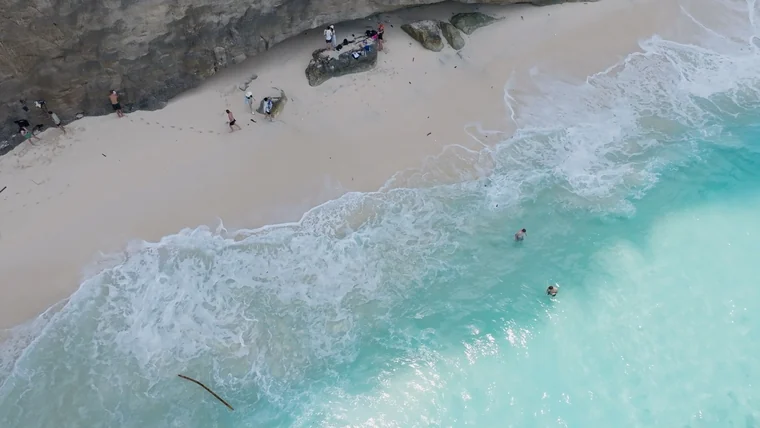
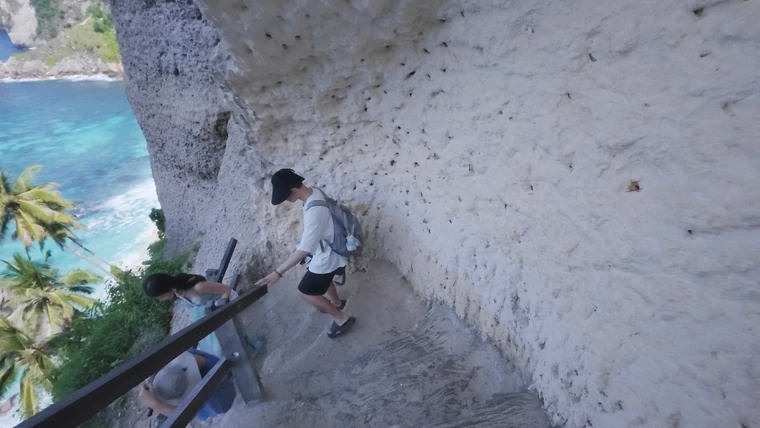
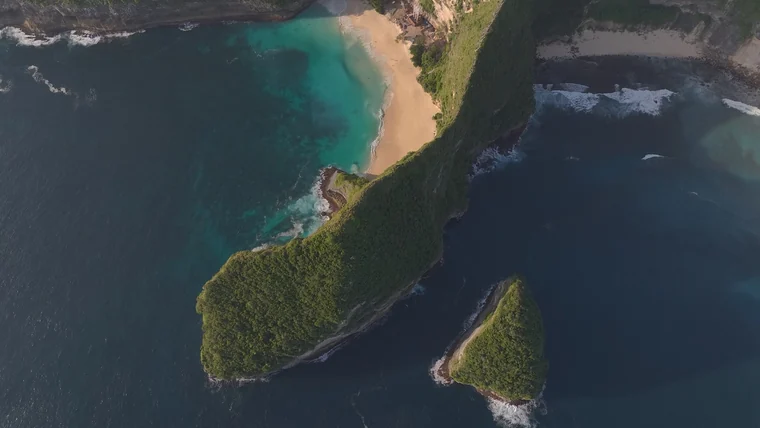
I found the descent to Kelingking Beach even more tiring than climbing Ijen. The path is so rudimentary that in many places you have to grip makeshift wooden handrails and ropes and inch your way down, then climb back up the same way. But the moment you actually reach the beach, it all feels worth it.
Since you’re already there, I still recommend going down if you have the stamina, proper non-slip shoes, and conditions on the path and the weather allow it. You really can’t get that feeling just from photos or other people’s accounts. Don’t push beyond your limits, though, and don’t casually go into the sea once you’re down there. The waves are fierce.
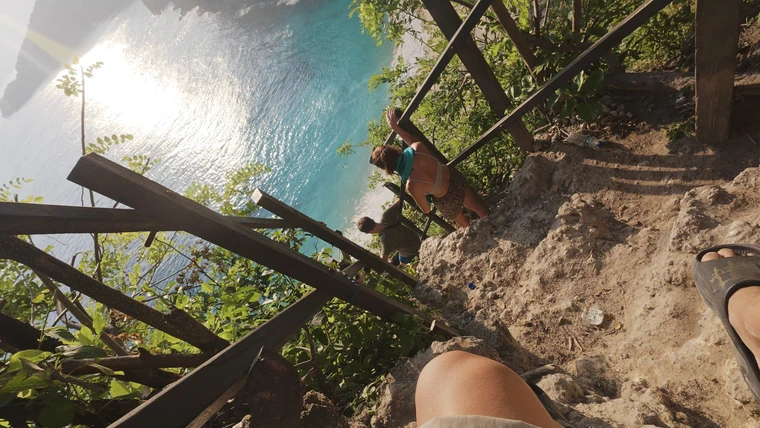 Descent · Inching down with the wooden handrail
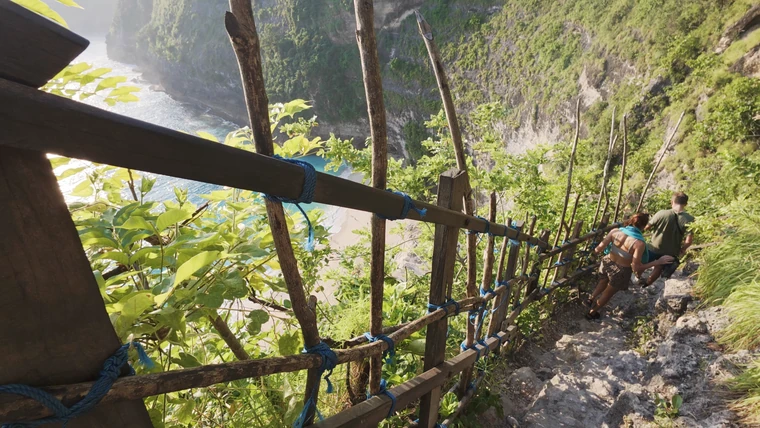 Descent · Loose stones and steep steps underfootReaching the Beach · Action Camera ViewBeach below the Cliffs · Aerial View
There are a few transport lessons worth remembering for Nusa Penida: Boats from Bali usually leave from Sanur (check schedules on the Eka Jaya Official Website or 12Go). Boat companies are strict about check-in: exchanging bookings for paper tickets starts 1 hour before departure, and check-in closes 30 minutes before sailing. Morning traffic in Bali’s urban areas can be appalling, so leave plenty of extra time. On our third trip, traffic made us just a few minutes late. We watched our booked boat leave and had to pay extra at the port to change to available seats. Also, make sure you return to Bali’s main island the day before flying home. Weather has a major impact on the Lombok Strait, and fast boats can be suspended without warning when wind and waves exceed safe limits. Never schedule your return from Nusa Penida on the same day as your international departure: getting stranded can ruin the whole trip. Transport on the island depends on your experience. If you’re a confident motorcycle rider, renting a bike and riding along the cliffs in the sea breeze is the most exhilarating option; you simply don’t get that wild sense of freedom in a car. But if you rarely ride or lack mountain-road experience, a car with a local driver and air-conditioning is the safer choice. The island’s roads are narrow enough for only one car, with sharp bends and plenty of loose gravel that makes slipping easy. For accommodation, I recommend the area around Toyapakeh port, which is easiest for meals and port transfers.
Lombok: Surf and Sea in the South, Island-Hopping in the Northwest
Food, Drink, and Accommodation in This Area →
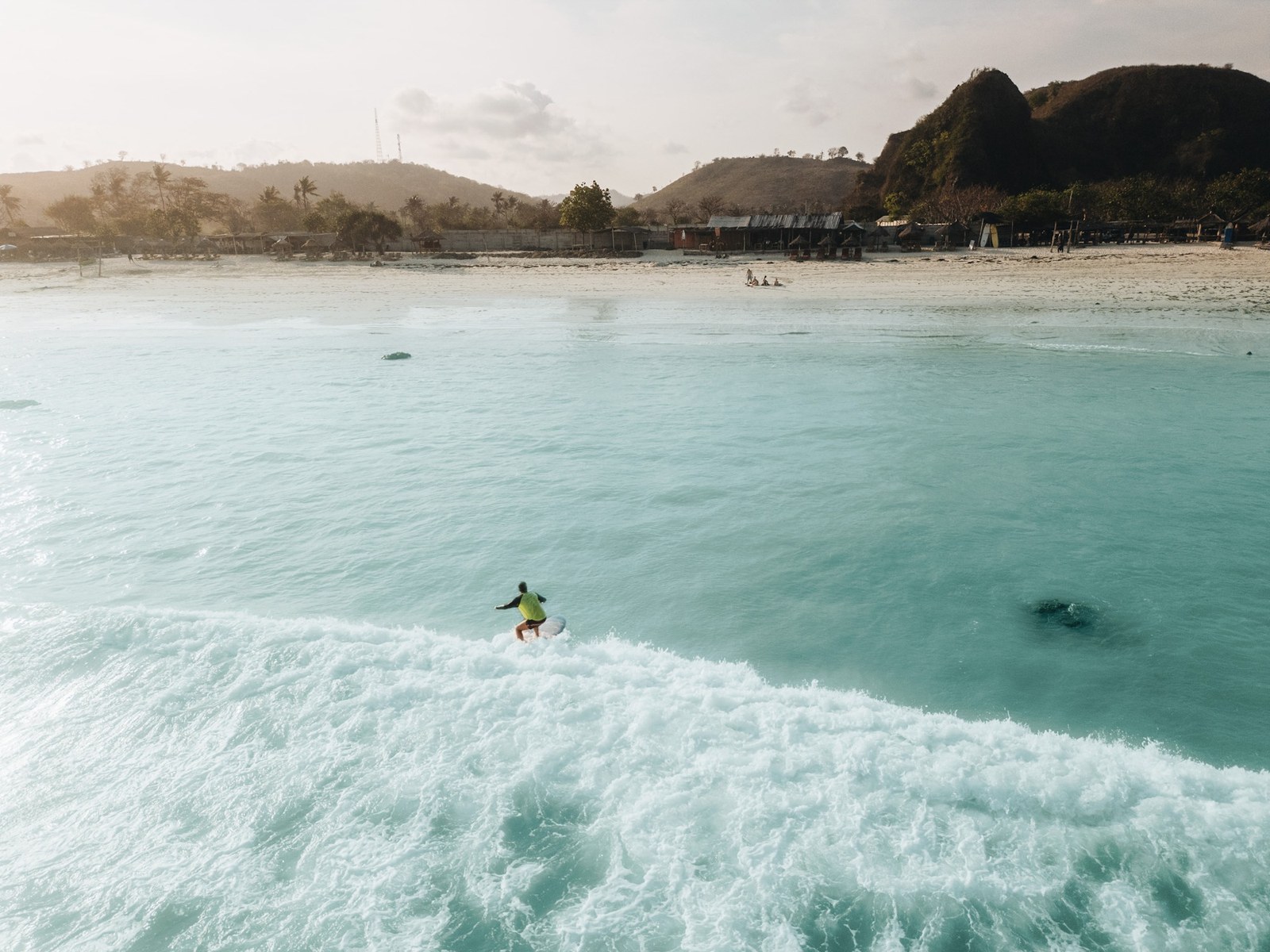
Waves on the south coast, sea breezes, and sunsets. Less time on the road is the point.
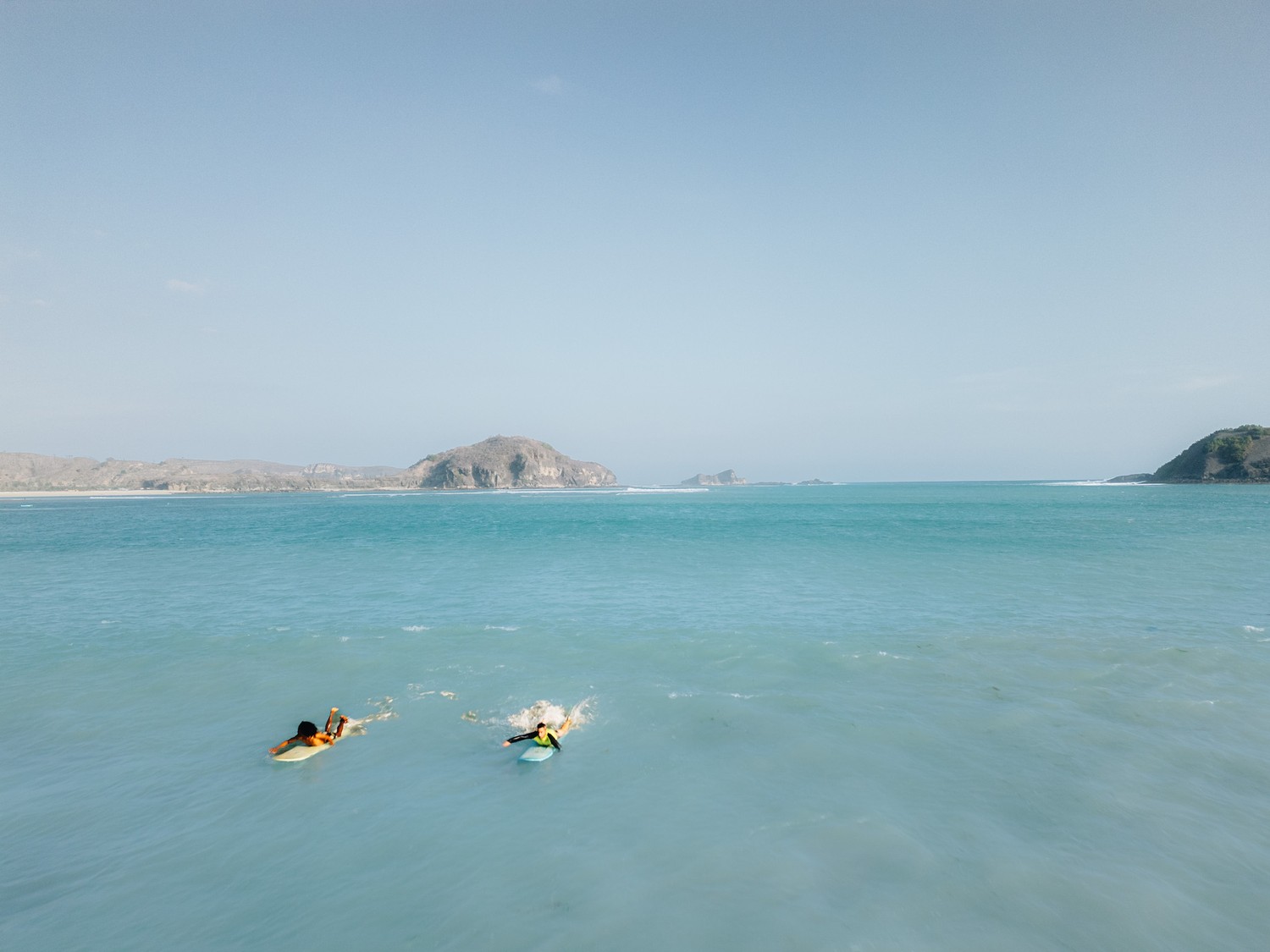 Coastline and Surfers
You can take a fast boat directly from Nusa Penida to Lombok. The islands are neighbors, but their character is completely different: Nusa Penida is all dramatic cliffs, while Lombok is roughly the same size as Bali but far less commercialized, with fewer tourists. The key is understanding its regions: in the south, Kuta Lombok and Tanjung Aan Beach are for surfing and the sea; in the northwest, Bangsal port serves the three Gili Islands, while Senggigi has a concentration of resorts.
Driving from south to north takes more than two and a half hours one way. Pay close attention to place names when booking: Bali has a Kuta, and southern Lombok has Kuta Lombok. Don’t accidentally book on the wrong island.
Lombok: Choose Which Side to Stay On First
Focus on the south coast and stay in the same area.
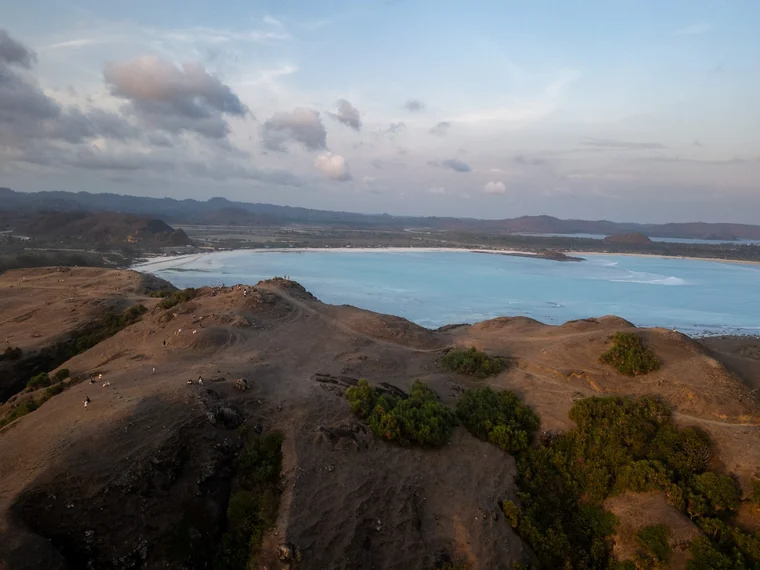
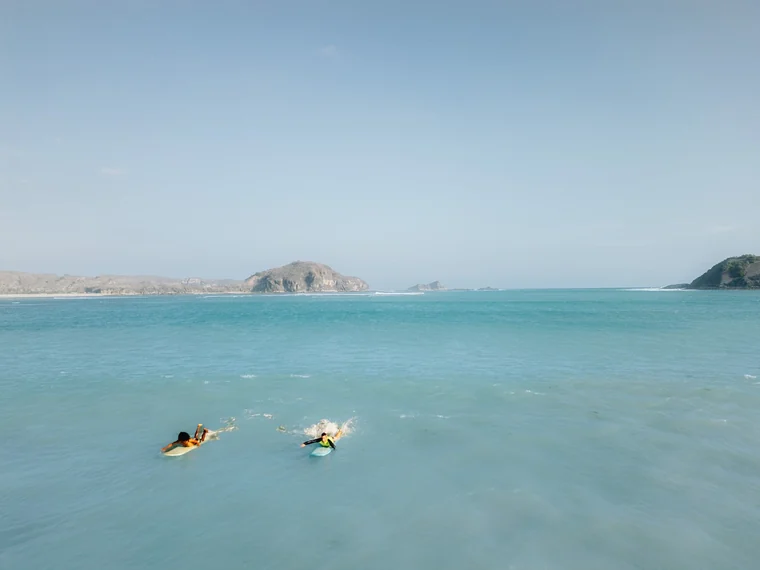
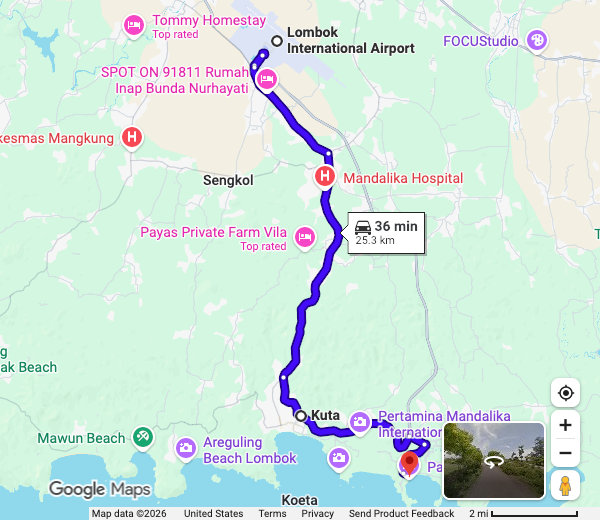
An alternative set of options, not a route the author personally completed in full.
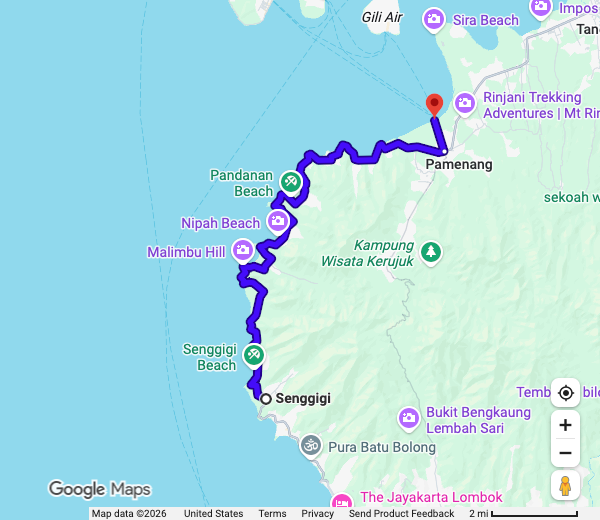
Activities and transfers shown schematically, not to scale. Click place names to check locations; these do not indicate direct services or actual road tracks.
Pick one side based on the holiday you want, rather than shuttling between north and south:
- For surfing, beach time, and sunsets, stay in the south (allow 2–3 nights): base yourself in Kuta Lombok and head east to nearby Tanjung Aan Beach, with its wide, fine-sand shore and clear water. There’s a range of surf conditions, including gentle breaks well suited to beginners. In the evening, head to the nearby hillside viewpoint for the breeze and sunset colors. It’s wonderfully relaxing.
- For snorkeling with turtles or a demanding volcano trek, stay in the northwest or on the three Gili Islands: stay in Senggigi, or go straight to the Gili Islands—Gili Trawangan, Gili Meno, and Gili Air. They have no motor vehicles at all, and the chances of seeing turtles while snorkeling are high. If you plan a full-kit trek on the active volcano Rinjani, arrange a reputable guide and porter team in advance. Don’t treat it as a casual sightseeing stop to drop into along the way.
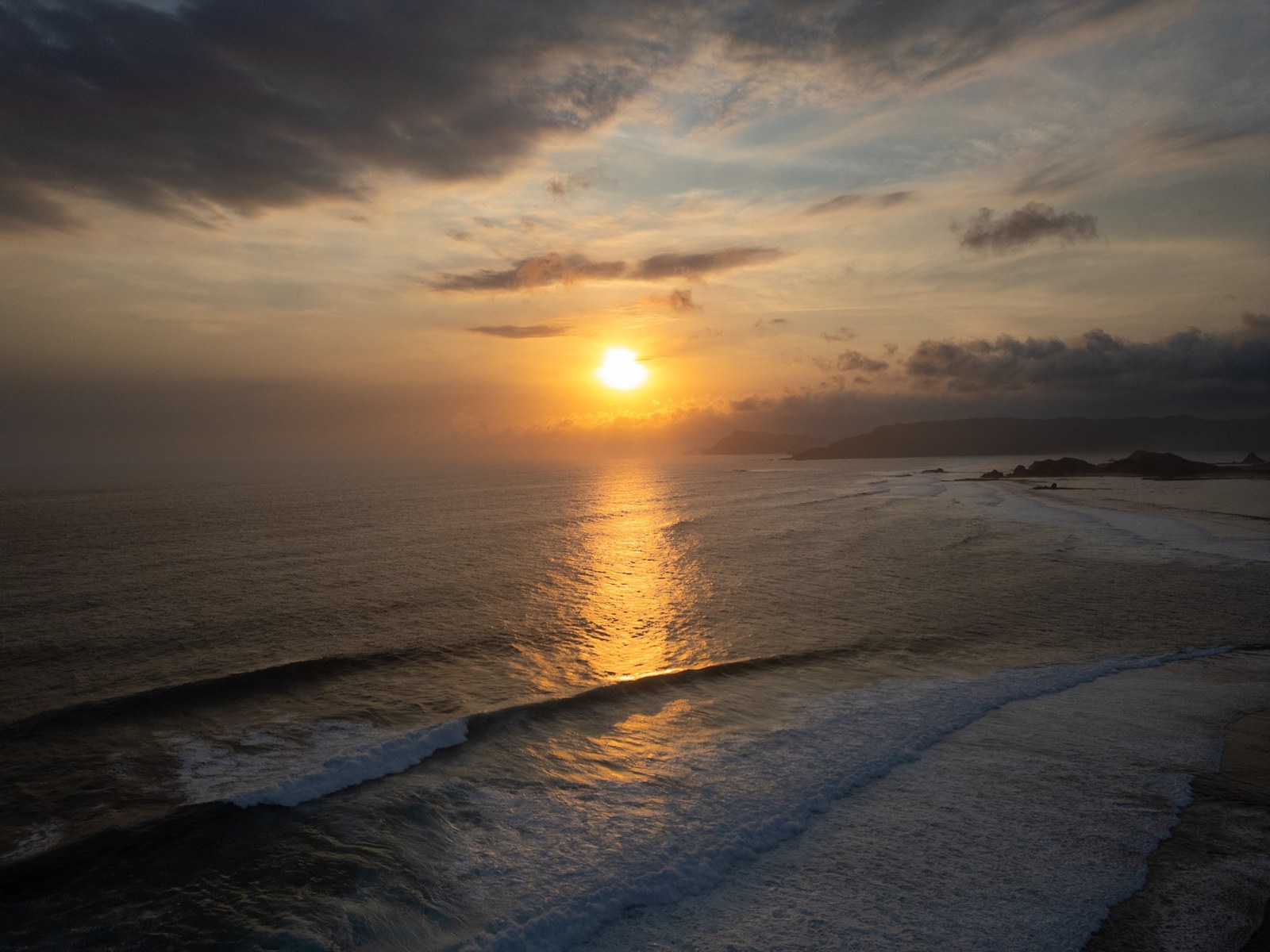
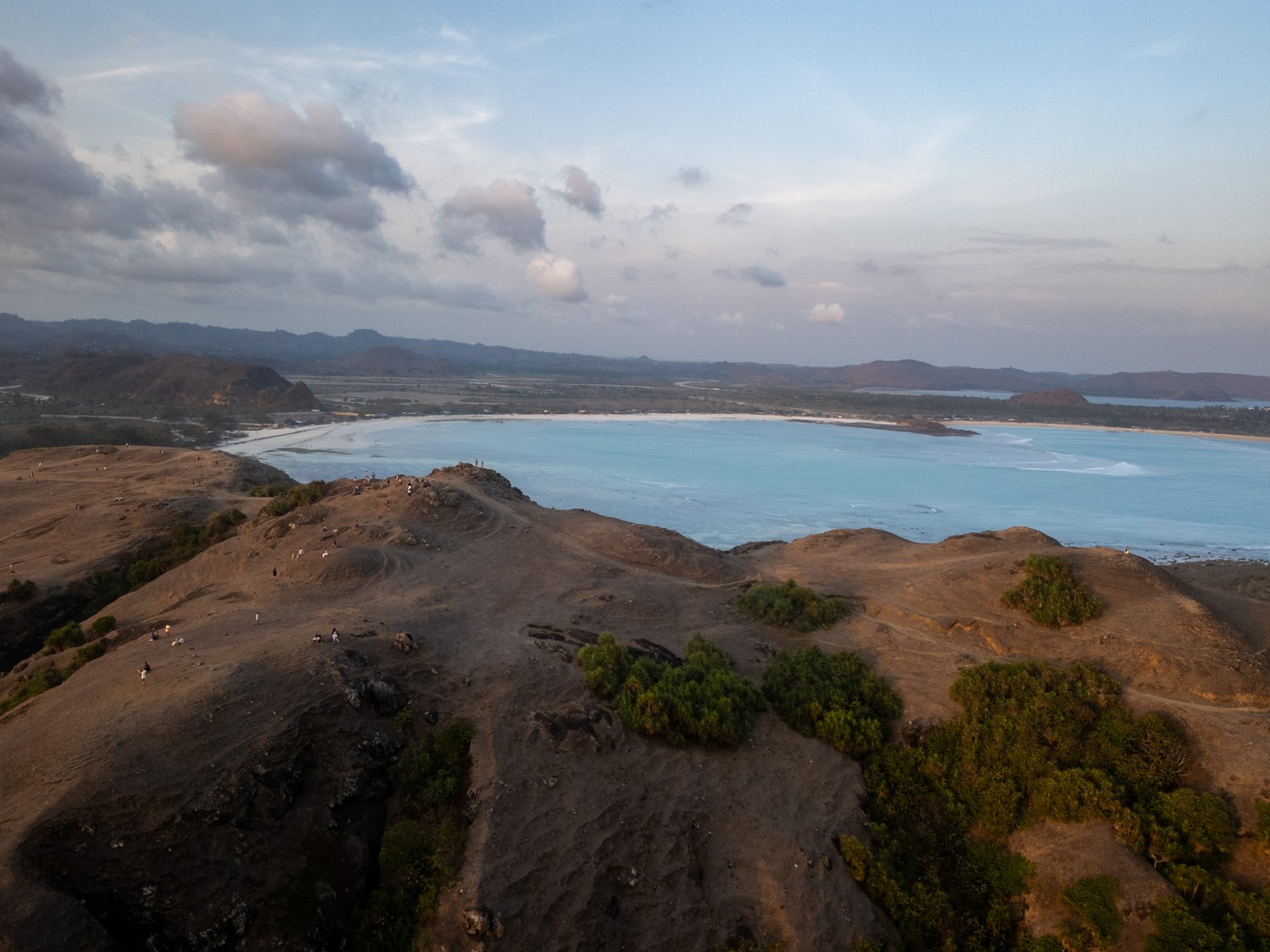 Lombok · Coastline
One more detail about port transfers: when arriving from Nusa Penida at Bangsal on Lombok, you may be surrounded by locals enthusiastically touting rides or grabbing luggage to carry for tips. Before disembarking, save screenshots of your booked driver’s license plate and meeting point. Once ashore, walk straight to the agreed spot and ignore unsolicited approaches along the way.
Bali: Stay by Area and Avoid Backtracking
Food, Drink, and Accommodation in This Area →
Whether you’re only visiting Bali and Nusa Penida or returning by boat or plane from a loop through Lombok, your base will ultimately be Bali’s main island. Bali isn’t enormous, but its roads are narrow and traffic is persistently heavy. Change hotels constantly or cross between areas all day, and most of your time will go on the road. The most practical approach is to stay in each area for its part of the trip: Sanur, near the port, before and after Nusa Penida; Ubud for rice terraces, rainforest, and cafés; Uluwatu in the south for clifftop sunsets; and a dedicated trip north to Lovina if you want to see wild dolphins at dawn.
Bali: Areas and Inter-Island Connections
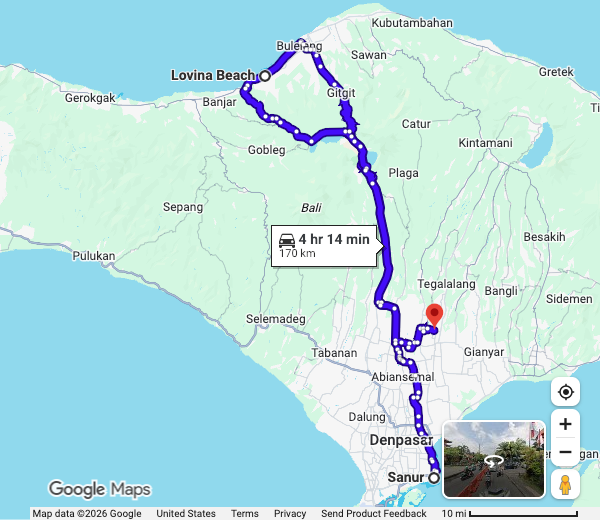
Pickup around 3 a.m., service until 13:00; if you don’t want a sleepless night, stay in the north the evening before.
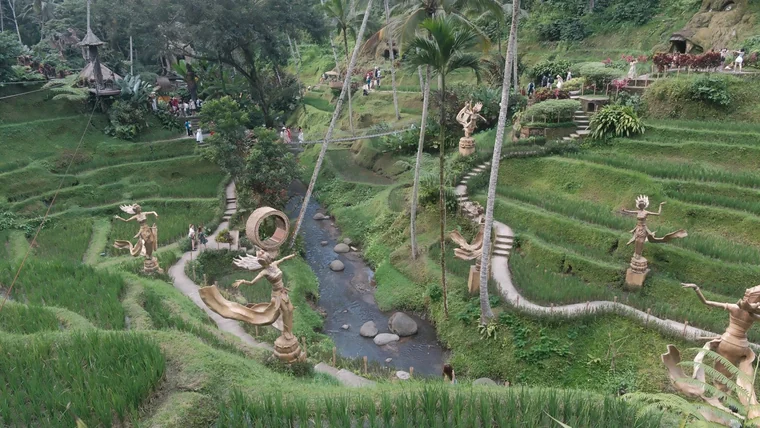
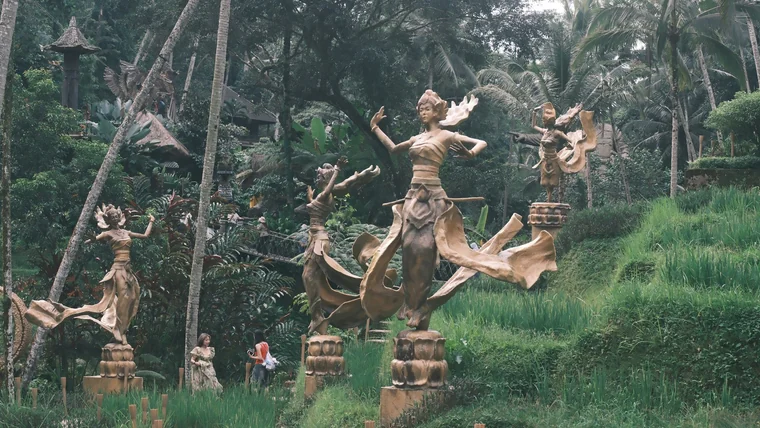
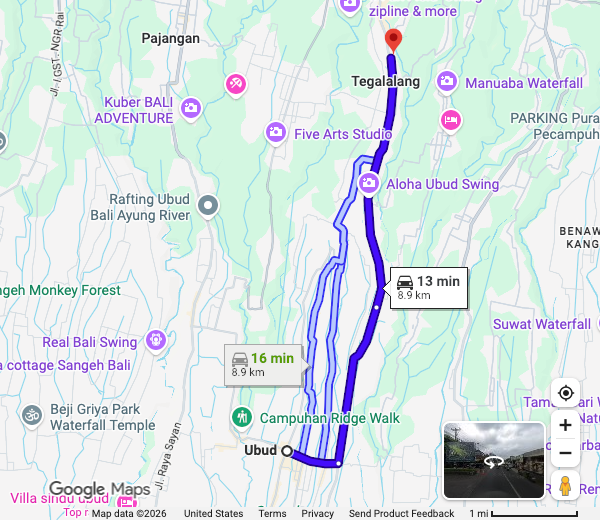
Visit the rice-terrace park while staying in Ubud.
Set aside an evening for the sea cliffs and performance; plan your flight transfer separately around your actual departure.
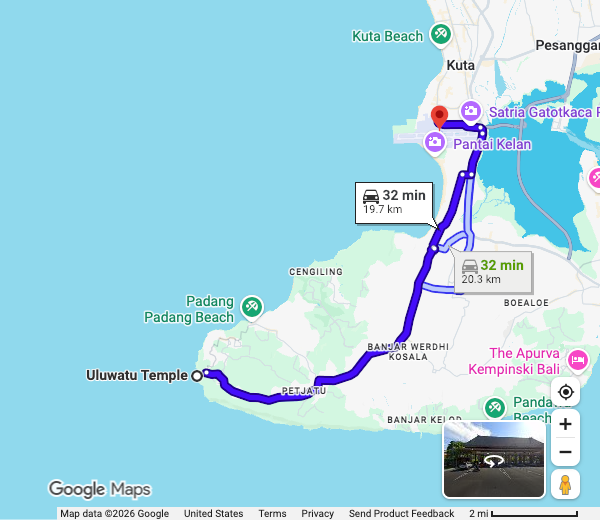
A common departure option; check your ticket for the actual port.
Activities and transfers shown schematically, not to scale. Click place names to check locations; these do not indicate direct services or actual road tracks.
Lovina
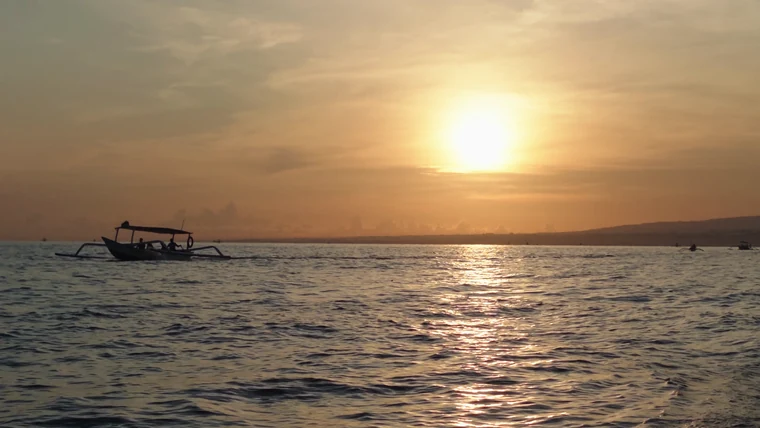
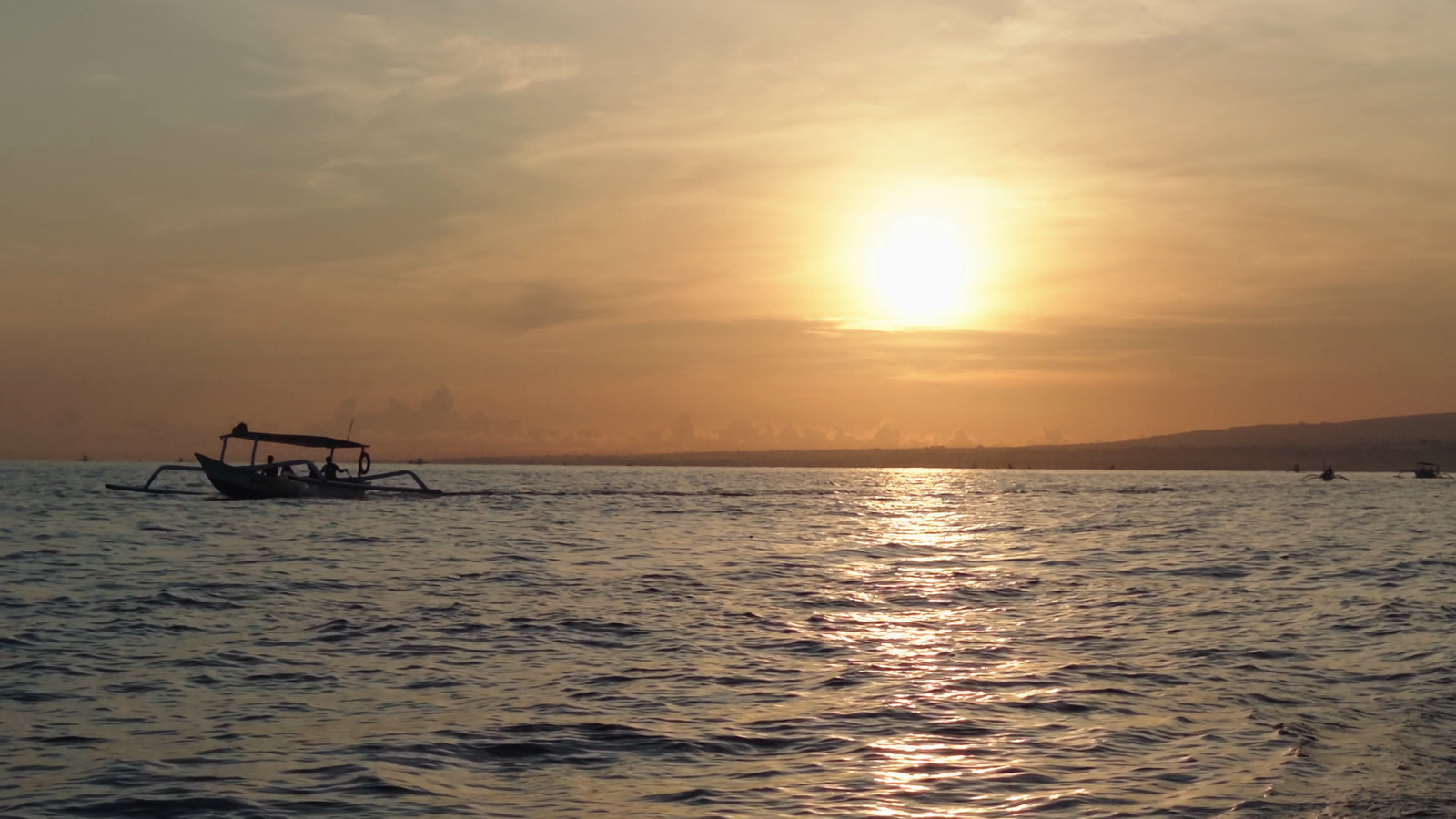
Take an outrigger boat at first light to watch dolphins leap from the sea. Stay in the north beforehand to avoid the exhausting journey.
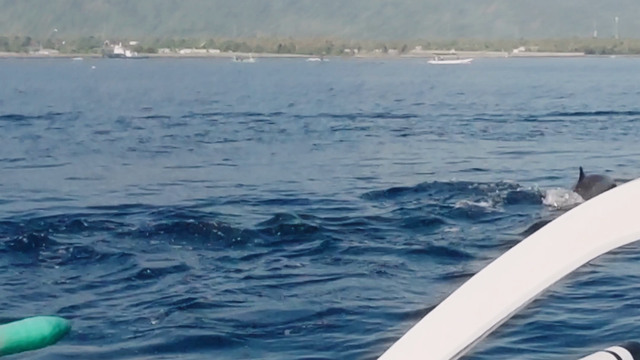 Dolphins Surfacing · Short Loop of Actual Footage
Lovina is at Bali’s northernmost end. Its signature experience is taking a traditional outrigger boat—a narrow wooden boat with stabilizers on both sides—out at daybreak to look for wild dolphins.
The main question for Lovina is timing. For comfort, stay a night on the north coast: take a leisurely private-car transfer the afternoon before, then go out early the next morning. If time is tight and you don’t want to move your luggage, you can push through as we did on our third trip: stay in Sanur in the south, take a private car over the mountains at 3 a.m., see dolphins at dawn, and transfer straight to Ubud later that morning. It saves a night’s hotel move, but leaves almost no chance to sleep in the first half of the night.
Before booking a dolphin boat, make sure the captain confirms it’s a private charter. Dozens of outrigger boats sit on the early-morning sea with their engines off, waiting quietly; when a few dolphins suddenly leap out, the delight is very simple. Finding a pod depends entirely on luck that day. Watch from a distance rather than asking the boatman to rev up and chase or surround them. Give the animals some peace.
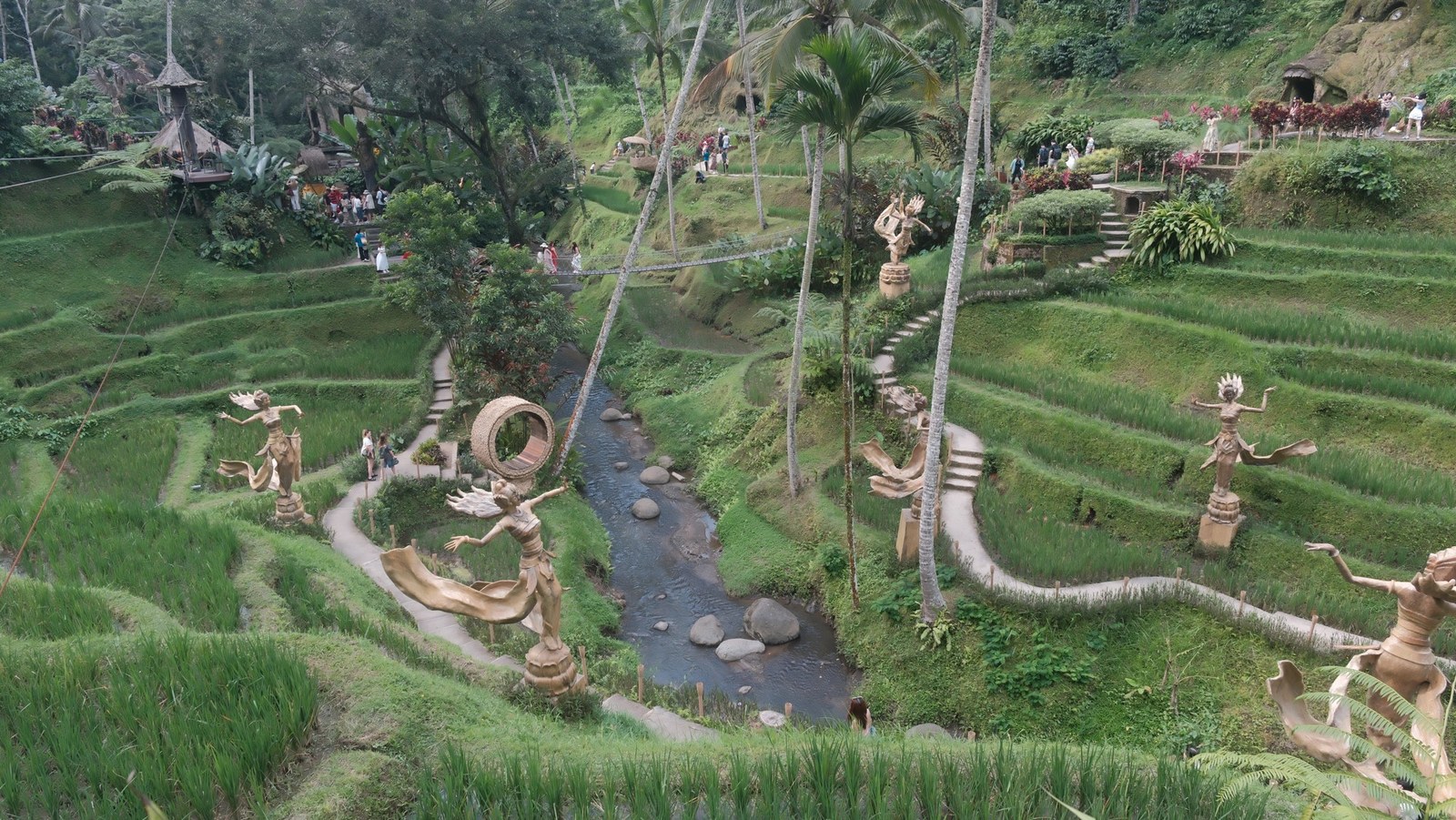
Ubud
Rainforest, layered rice terraces, and cafés. Leave at least half a day to take a break.
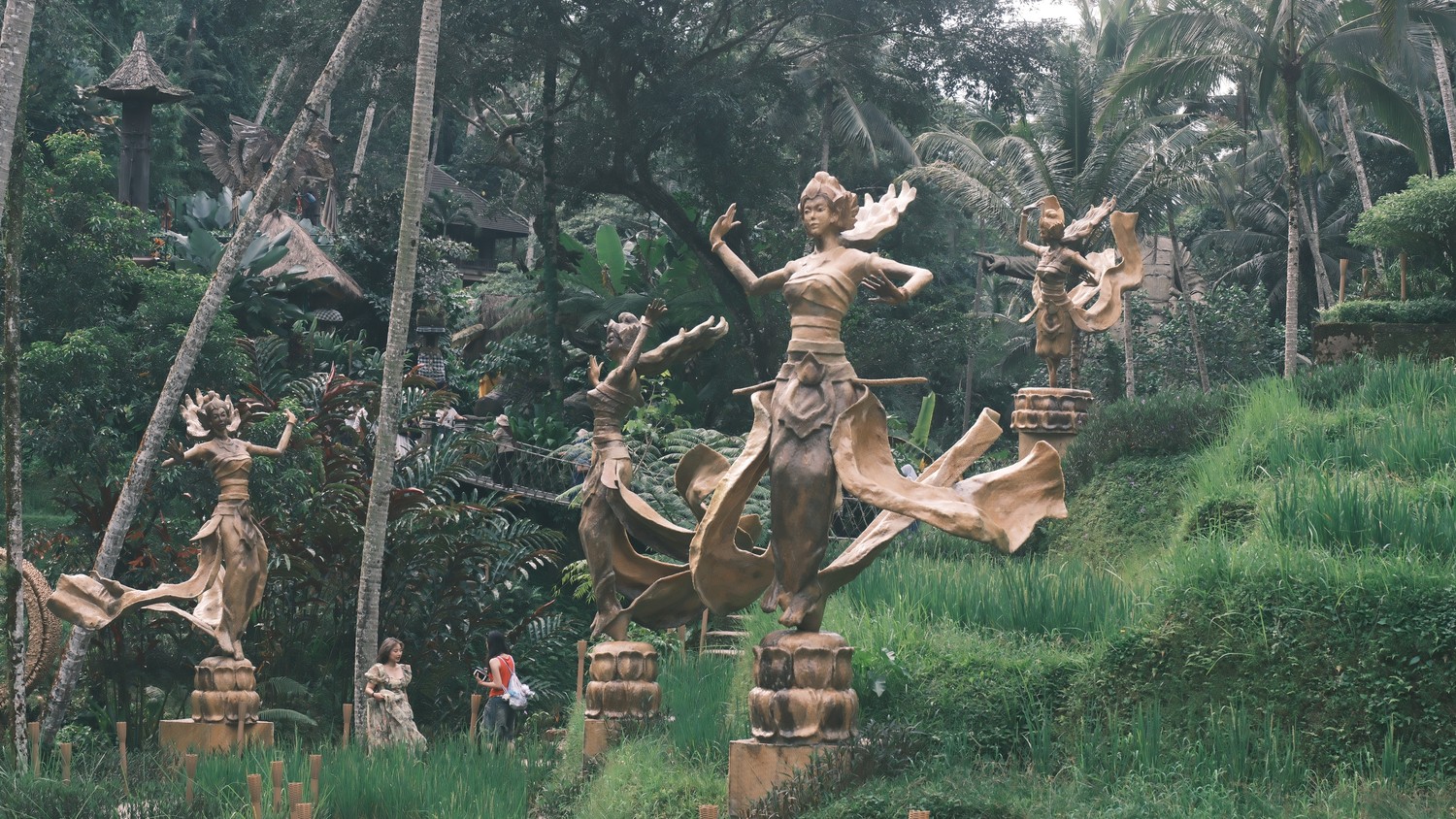 Sculpture in the Alas Harum Grounds
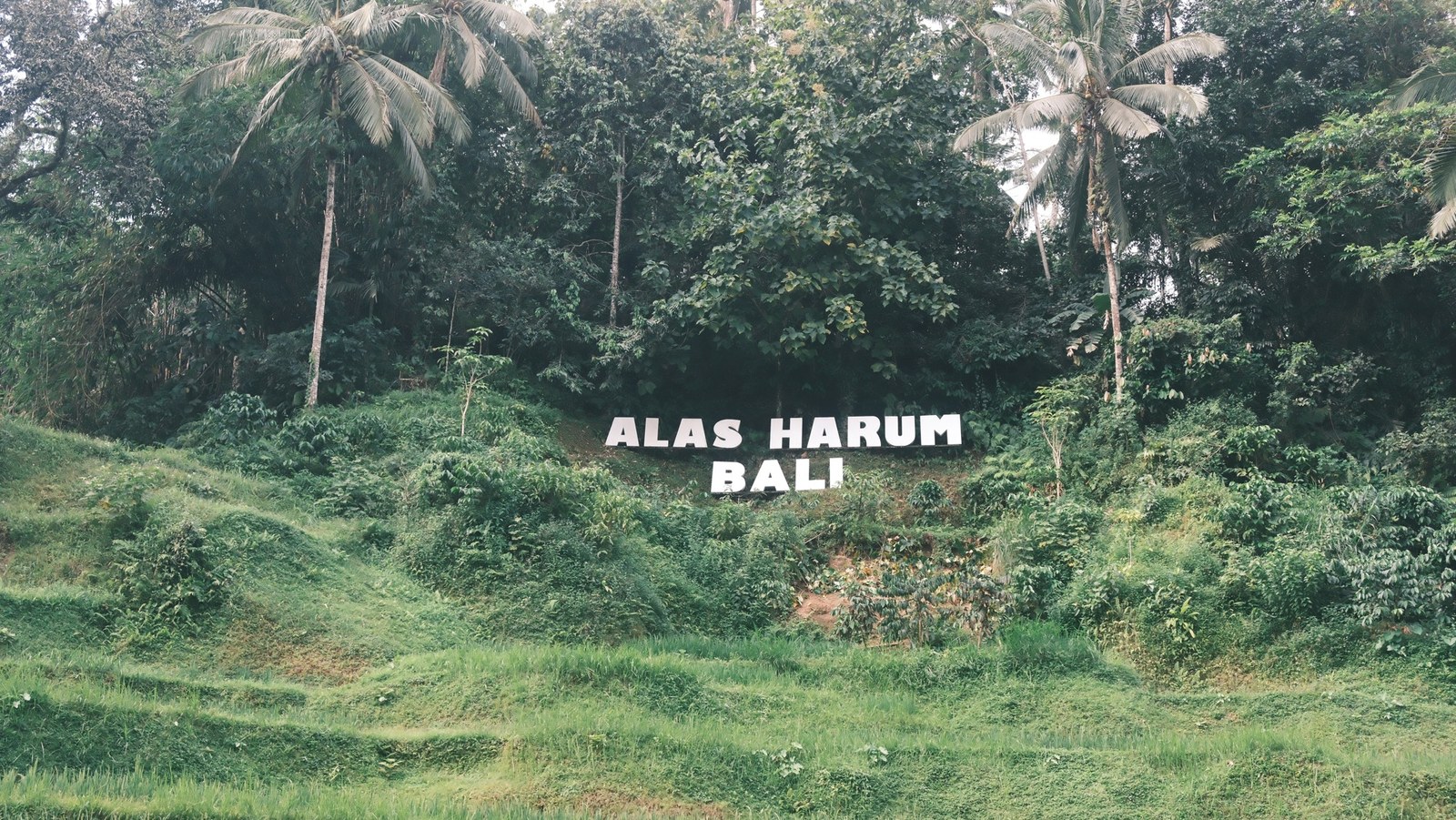
Ubud means tropical rainforest, rice terraces, and streets full of cafés. If you want to see rice terraces, Alas Harum alone is enough; you don’t need to run all over the place. Beautiful walking terraces follow the hillside here, along with the classic giant jungle swing and the lively Cretya pool club below.
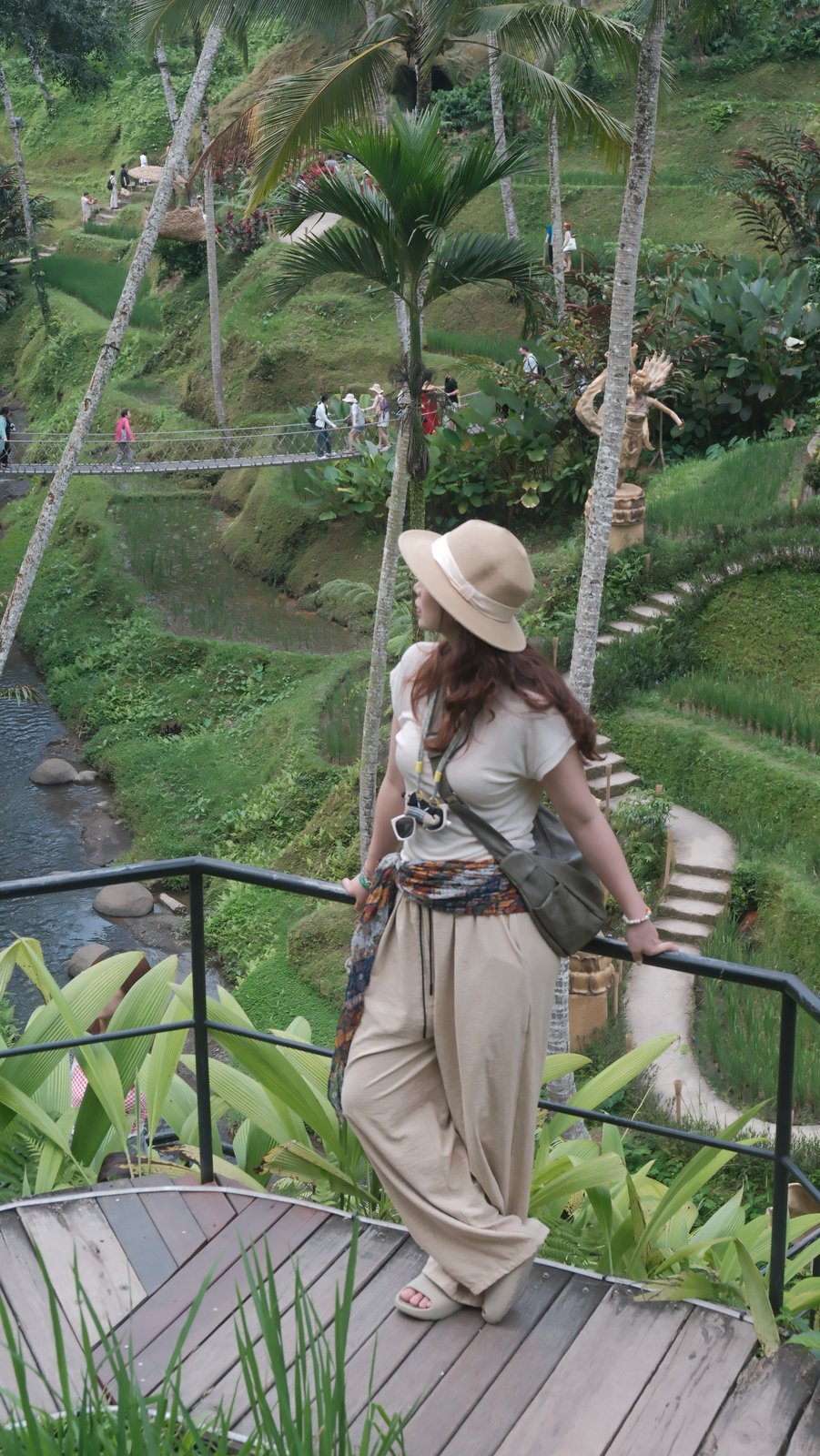
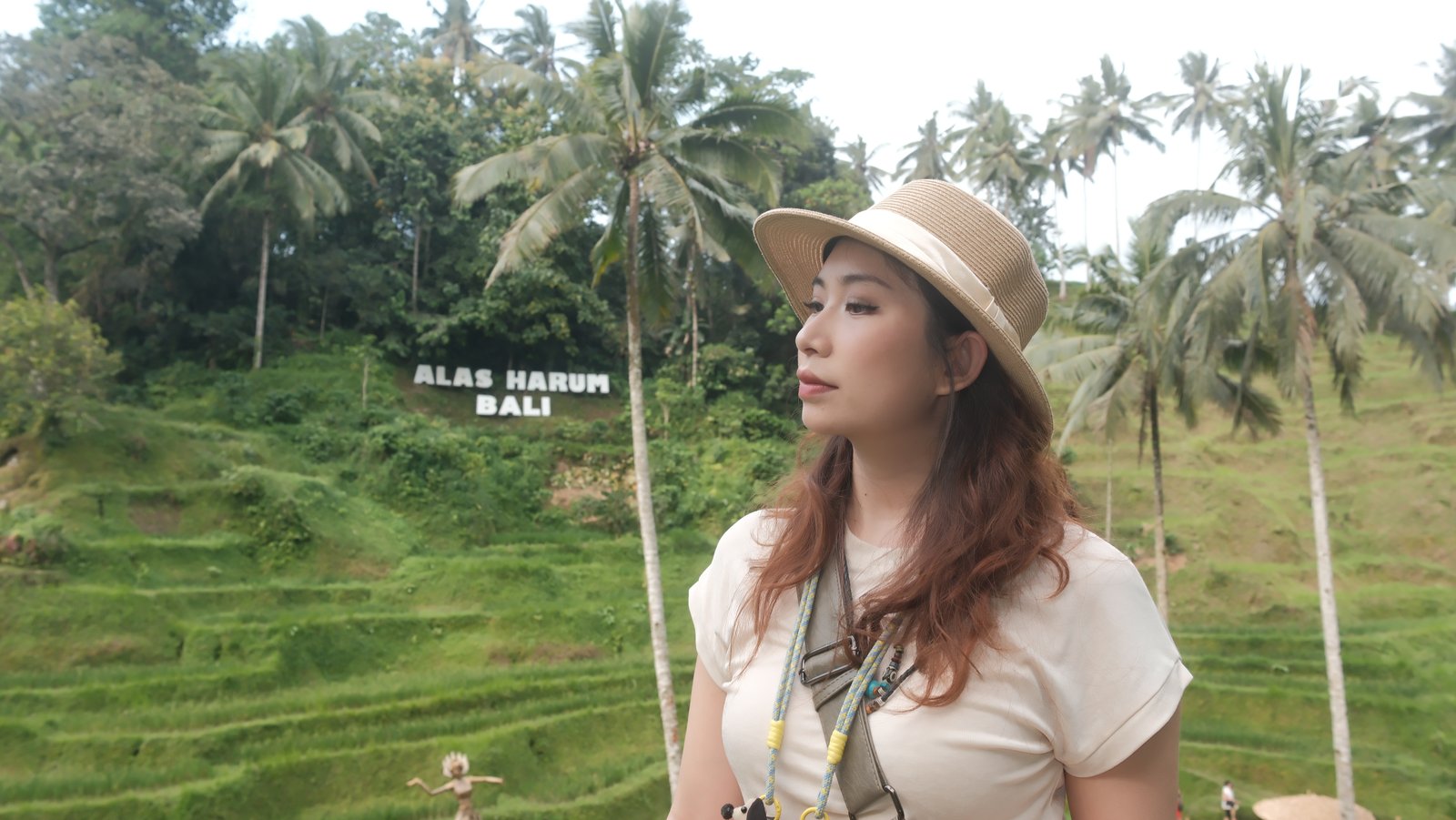
You can spend as little or as much as you like here: basic admission is inexpensive, but the high swing and pool seating are charged separately. You can check the price list on the Alas Harum Official Website first, then choose activities on arrival according to your mood. Leave most of half a day; sitting beside the rice fields with an iced coffee and a breeze is lovely enough.
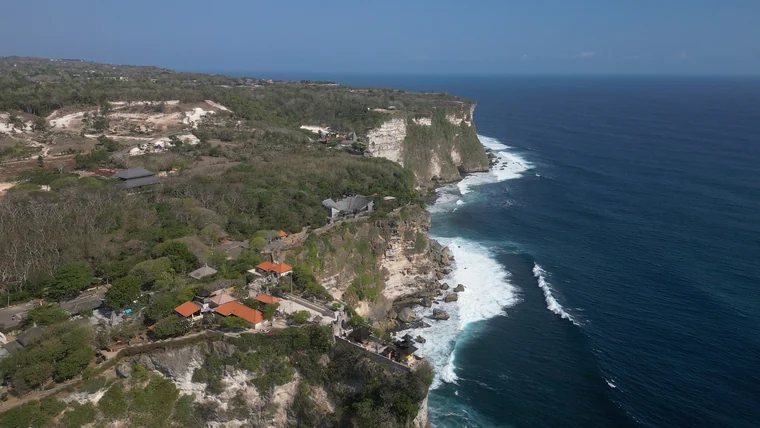
Uluwatu
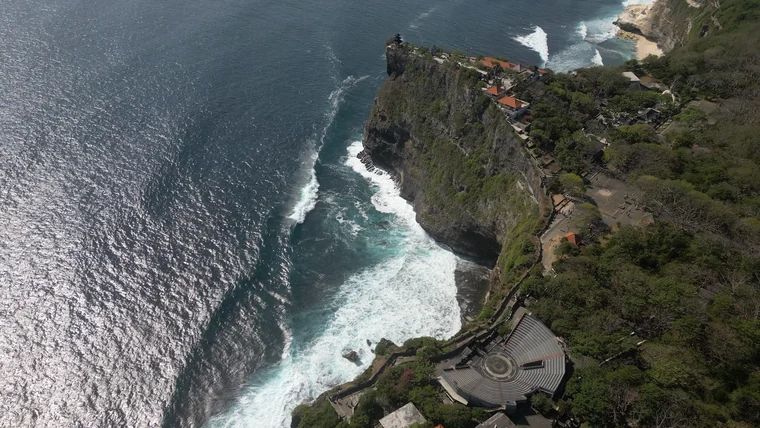
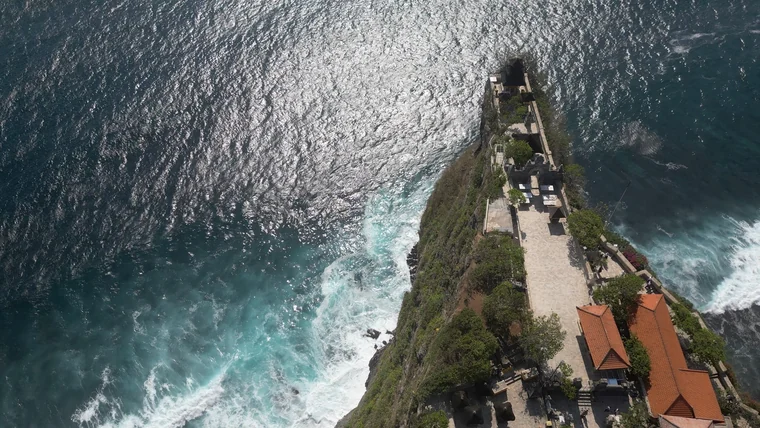
Indian Ocean waves against hundred-meter cliffs; sunset colors and the Kecak fire dance make a perfect pairing.
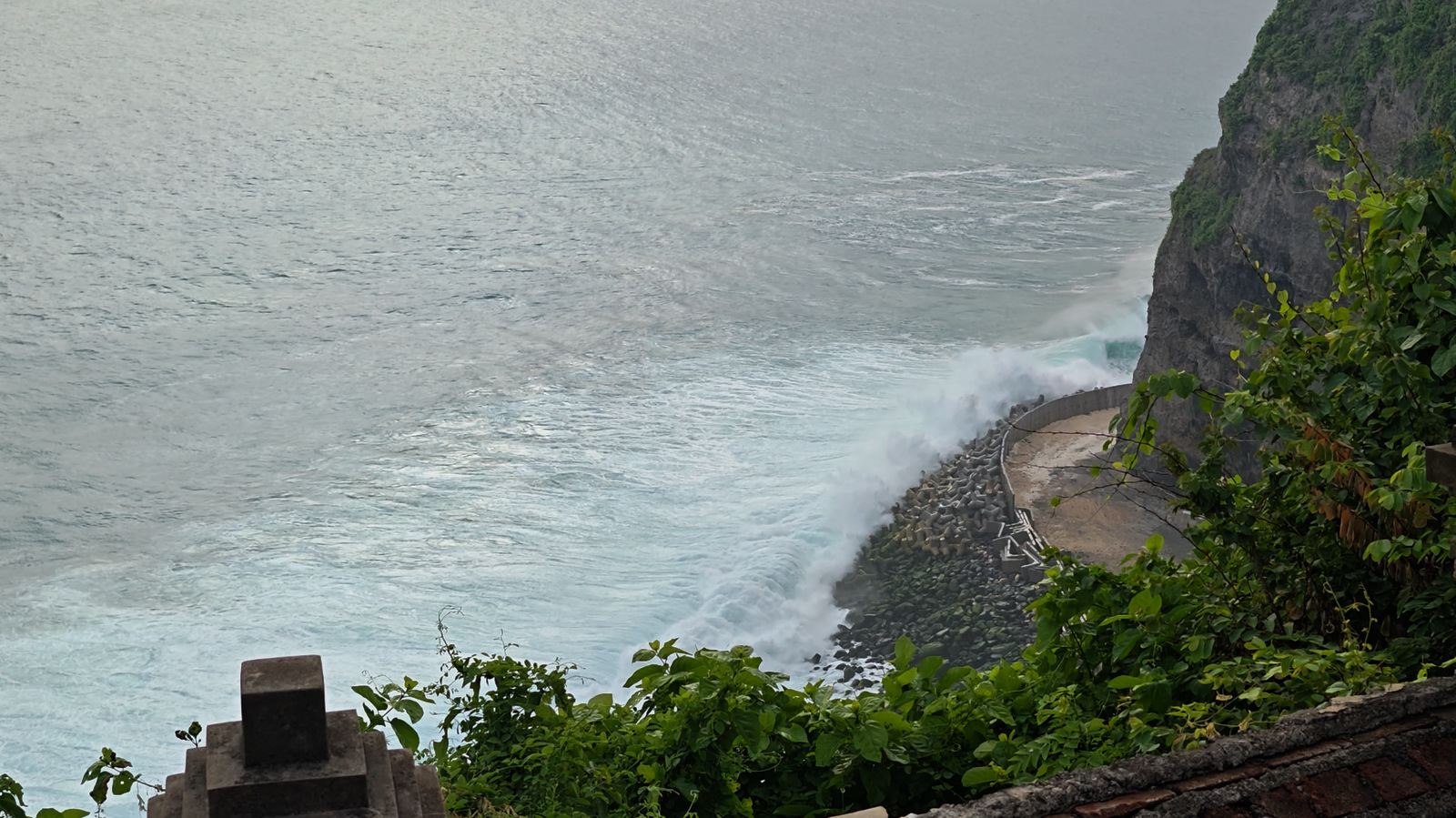 Third trip · Waves below the sea cliffs
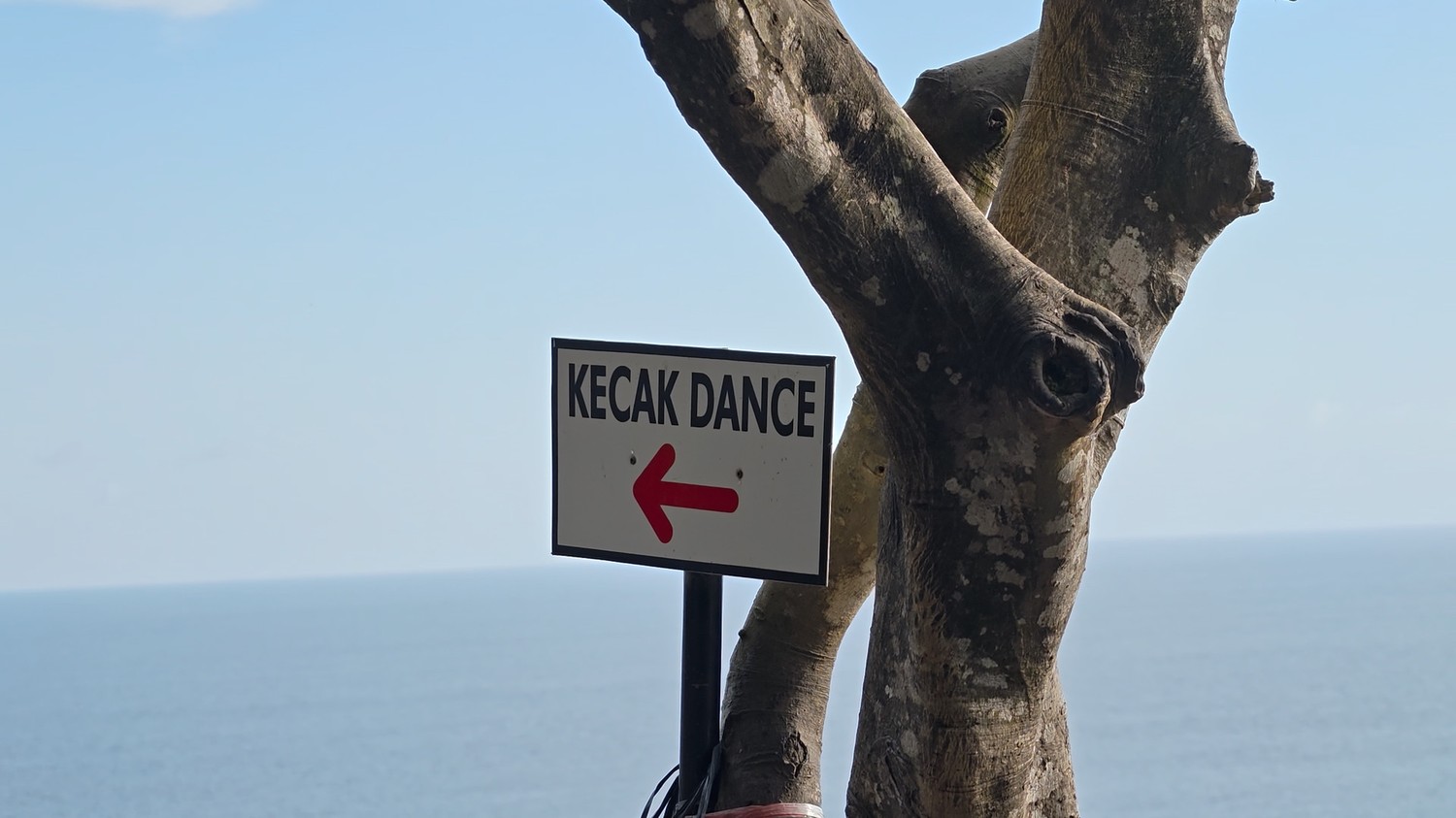 The Way to the Kecak Performance
Uluwatu Temple stands on sheer cliffs nearly a hundred meters high at Bali’s southwestern corner, facing the vast Indian Ocean.
During the half-hour when the sun sinks into the Indian Ocean, the famous Kecak fire dance is performed in the open-air clifftop amphitheater. Dozens of bare-chested men sit in a circle, using no instruments at all, just their voices chanting overlapping, rhythmic “cak-cak” sounds. Fire flickers in the gathering dark, with pink-purple sunset colors and the roar of huge waves behind them. The atmosphere is infectious.
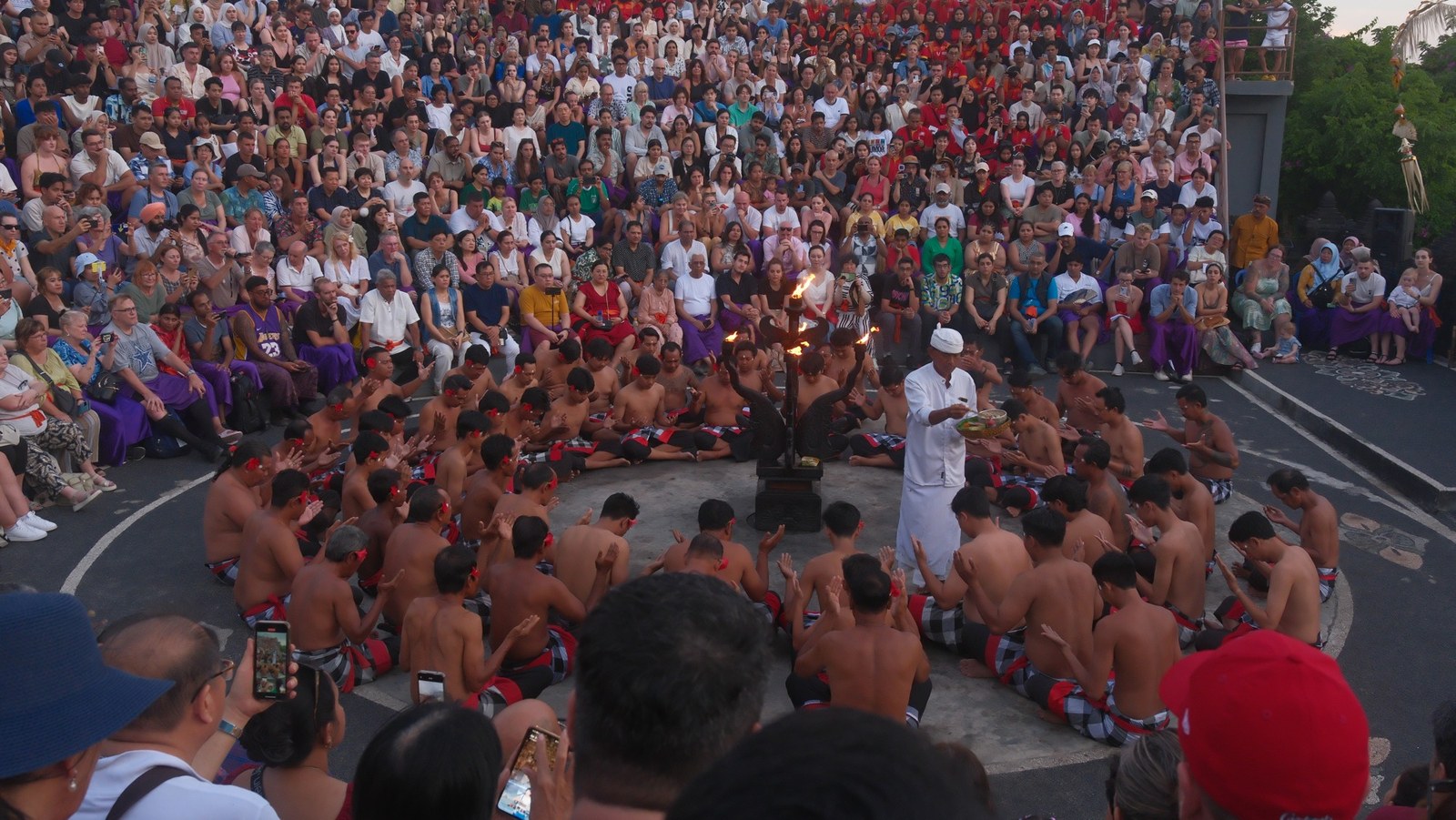
A few on-site details are essential for the Uluwatu fire dance: Tickets are consistently in high demand, so book your session online in advance. Evening traffic on the roads in the south is intense. I suggest setting off at least an hour and a half early; arriving early gives you a chance to find a good, unobstructed spot midway up the amphitheater steps. The fire-dance ticket and temple entrance ticket are separate. Buy the temple admission at the ticket office and tie on the free purple sarong provided at the entrance. Most importantly, watch out for monkeys. The wild monkeys here are experienced thieves, especially of sunglasses, hats, and phones. Before entering the temple, put anything they could pull off into a zippered bag. Hold your phone firmly with both hands when taking photos. Don’t carry plastic bags or snacks, and don’t rummage in your bag in front of them.
Booking Order and Actual Spending
For independent travel, book flights, boats, hotels, and private cars in order. Don’t start by locking in nonrefundable hotels:
- 1. Book Your Main Return Transport First (International Flights): compare fares on Skyscanner, then book on the airline’s own website. For domestic inter-island flights, check particularly whether the legs are on separate tickets, allow enough time for connections, and check whether checked baggage is included.
- 2. Confirm Boat Schedules before Booking Island Hotels: establish the fast-boat schedules between Bali, Nusa Penida, and Lombok first, with buffers for weather and traffic. Once the sailing times are fixed, secure your island accommodation so a change of plan doesn’t waste money on room charges.
- 3. Book Accommodation by Area, Preferably with Free Cancellation: use Booking or Agoda for well-rated rooms with free cancellation. On nights before a pre-dawn volcano hike or dolphin outing, ask reception at check-in whether they can pack a simple breakfast box.
- 4. Agree on Private-Car and Speedboat Details in Advance: confirm every line of the quote for local services such as volcano transfers, four-wheel-drive jeeps, and Komodo speedboats. Pay only after receiving a confirmation that specifies the driver’s name and phone number, pickup and drop-off points, and which tickets and equipment are included.
Search Flights on Skyscanner · Book Rooms on Booking · Compare Prices on Agoda · Klook · Activities on GetYourGuide · Check Transport on 12Go
Per-Person Costs
| Item | Per Person |
|---|---|
| Hong Kong–Surabaya return flight (Cathay Pacific promotional fare) | About RMB 1,700 per person |
| Two volcanoes + Komodo local package (quote for a group of 4) Includes private car, jeep, volcano tickets, guide, speedboat, and three nights’ accommodation; national park fees paid separately. | RMB 2,908 per person |
| Surabaya airport transit hotel (two rooms split between 4 people) | RMB 122.50 per person |
| Lovina private dolphin boat + private car (6 people) Pickup in Sanur, drop-off in Ubud afterward. | RMB 240 per person |
| Ubud rice-terrace admission | IDR 50,000 per person |
Rupiah prices often include a K, meaning thousand (kilo): 200K, for example, is IDR 200,000. For everyday bills, remember this quick mental shortcut:“Drop the last 3 zeros, then divide by 2”. For example, a price of 200K becomes 200 after dropping three zeros; divide by 2 and it’s roughly RMB 100. It’s an easy way to estimate prices at a glance when reading menus or paying bills.
Food, Activities, and Places to Stay, by Destination
Food, coffee, supplies, and accommodation are grouped by destination so you can find something nearby wherever you are. I’ve also put several hotels I’ve stayed at, with good locations and surroundings, under their respective destinations. Compare the map locations first when choosing an area to stay.
Bali
Things to do: See dolphins in Lovina, explore rice terraces and cafés in Ubud, and visit the sea cliffs and fire dance in Uluwatu. For downtime at a hotel and by the sea, consider Nusa Dua. Detailed Guide →
Food, Drink, and Supplies
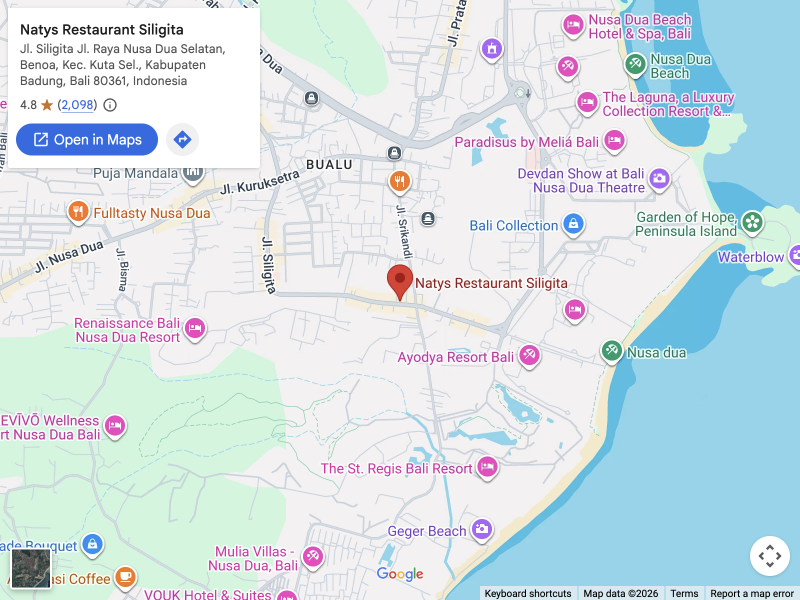
Natys Restaurant Siligita
In the Siligita area. A meal option when staying in Nusa Dua, without making a special trip across areas just to eat.
Where to Stay
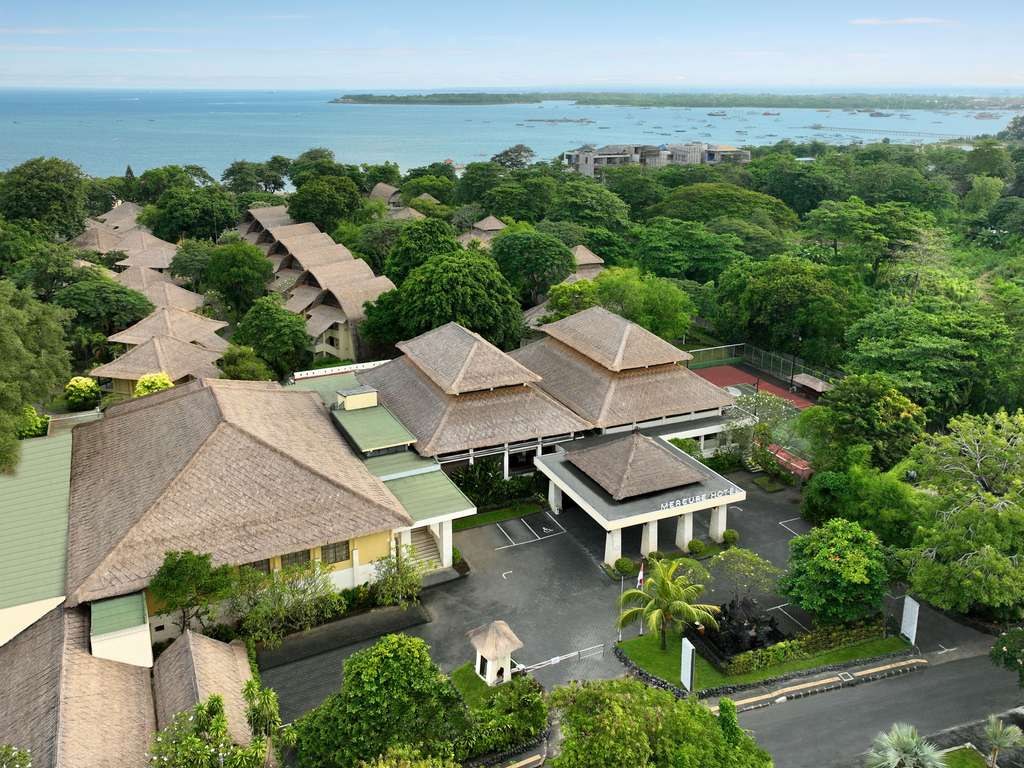
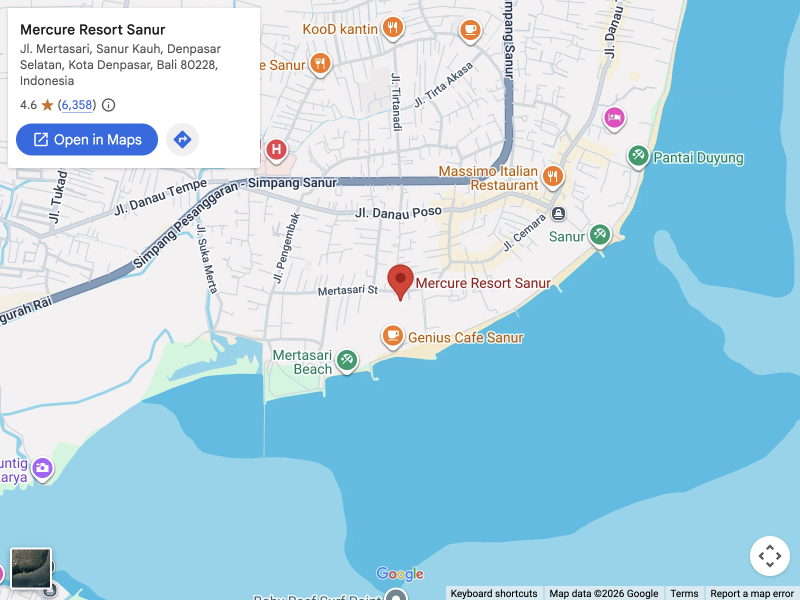
Mercure Resort Sanur
In Mertasari, in southern Sanur. Using Sanur as your Bali base before and after Nusa Penida makes the connections straightforward.
The hotel is not beside the port; you still need to allow transfer time to Sanur Harbour on your sailing day.
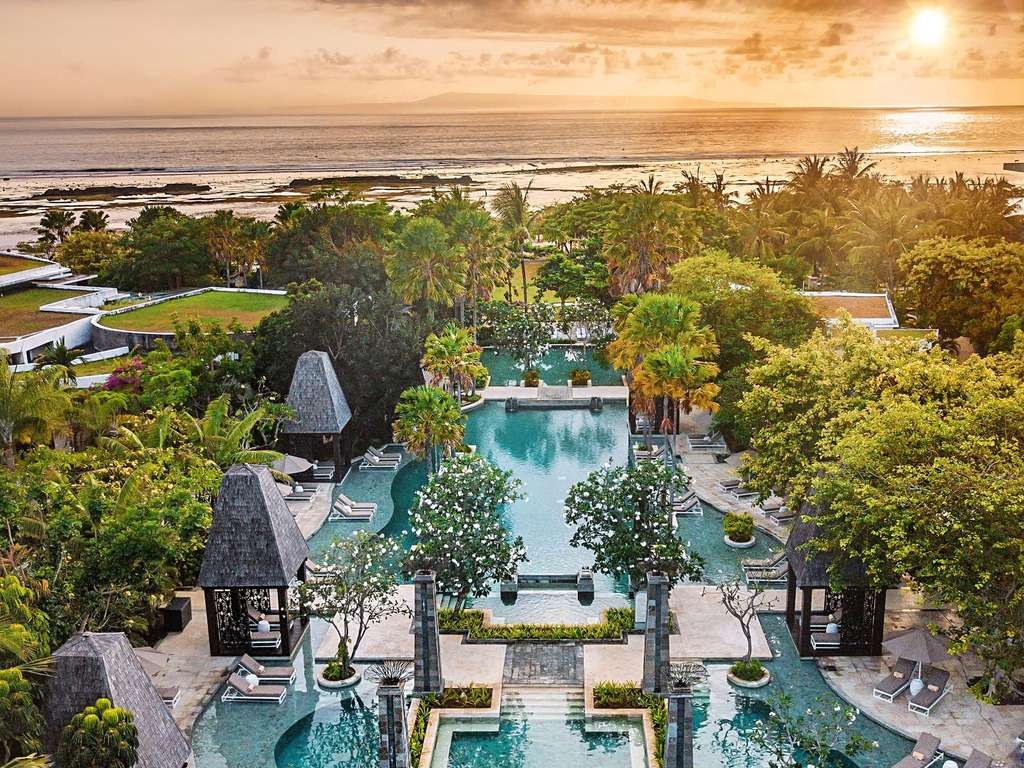
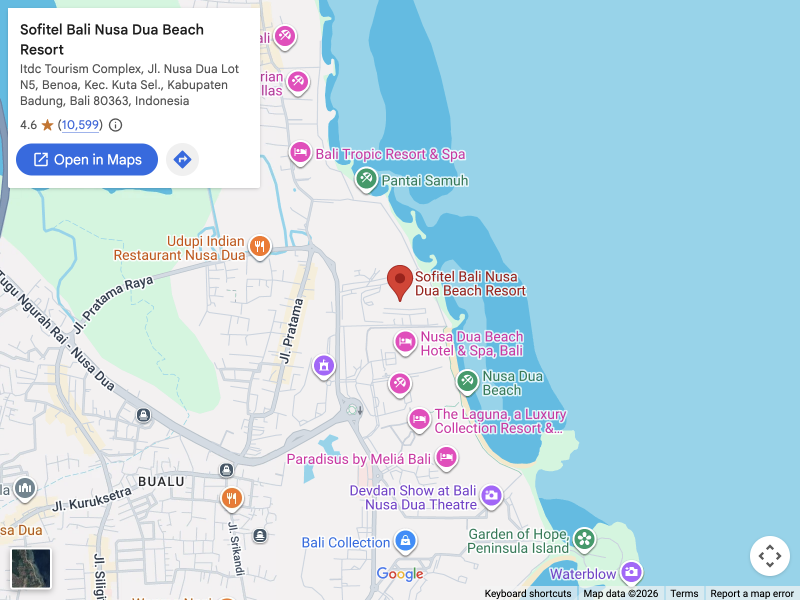
Sofitel Bali Nusa Dua Beach Resort
On the Nusa Dua beachfront. After several days on the road and out on boats, setting aside a final stretch to switch off at the hotel and by the sea makes a good ending.
This is a different area from Sanur; don’t treat them as the same location when calculating port transfers.
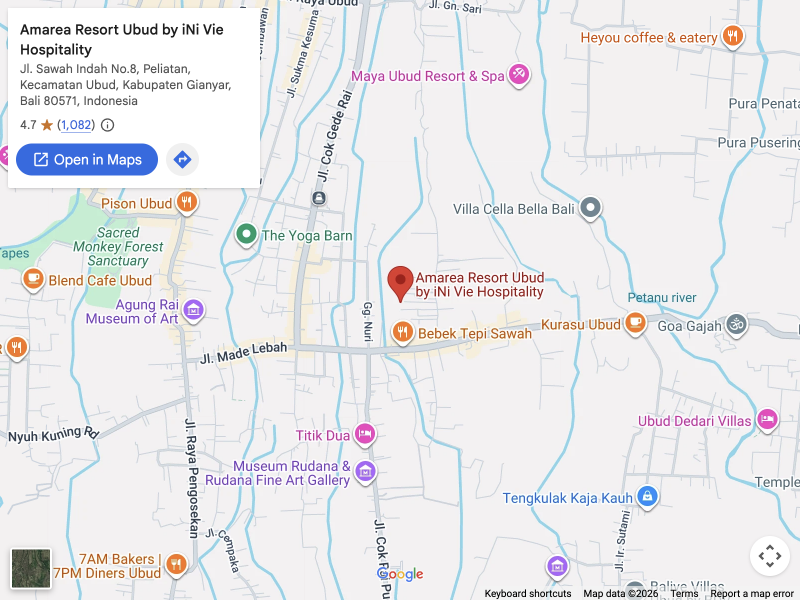
Amarea Resort Ubud by Ini VIE Hospitality
In inland Ubud, not on the beach. Consider it alongside your Ubud plans if you want rice terraces, rainforest, and cafés.
Lombok
Things to do: Kuta and Tanjung Aan in the south are good for surfing, sea views, and sunsets; for snorkeling and the three Gili Islands, plan around the northwest. Choose the south or west coast separately rather than doubling back between north and south every day. Detailed Guide →
Food, Drink, and Supplies
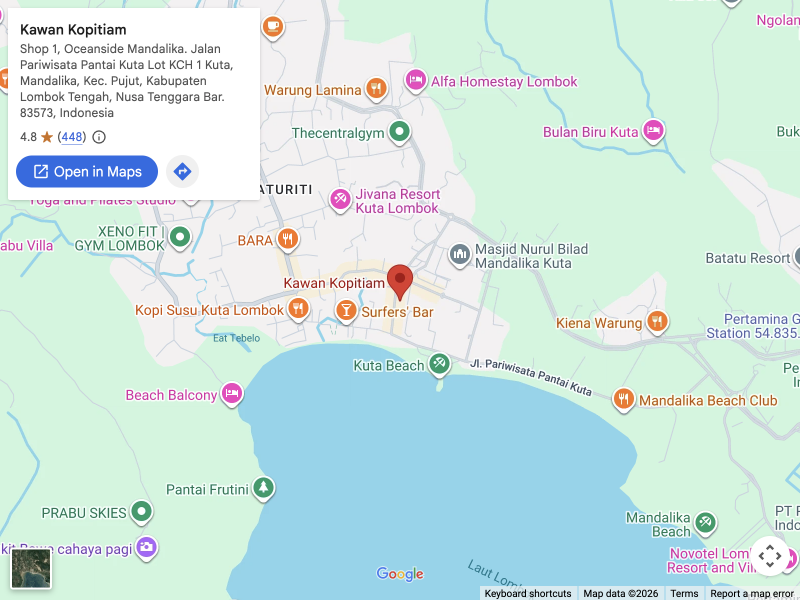
Kawan Kopitiam
A Malaysian-style coffee shop. An option along the way when staying in southern Lombok; don’t confuse this Kuta with Bali’s.
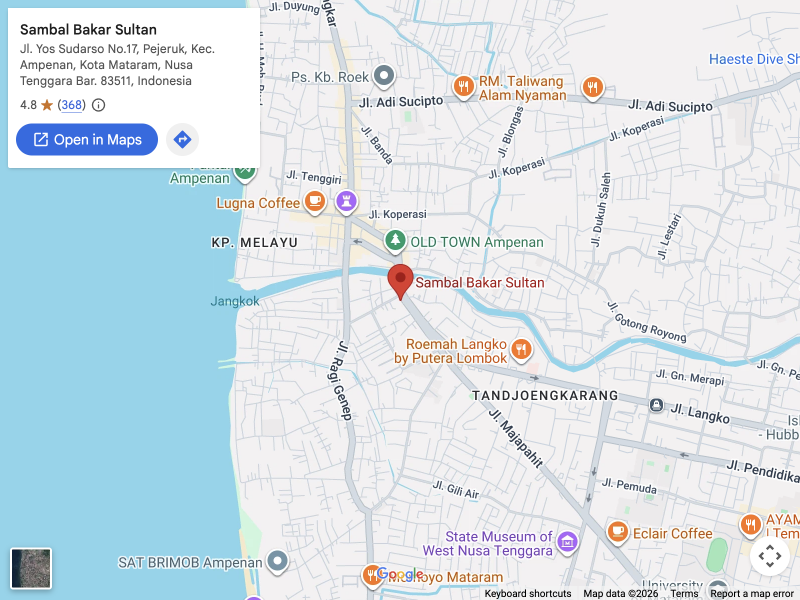
Sambal Bakar Sultan
In Ampenan, Mataram, not southern Kuta. Consider it when traveling along the west coast toward Senggigi; don’t go back and forth between north and south for a meal.
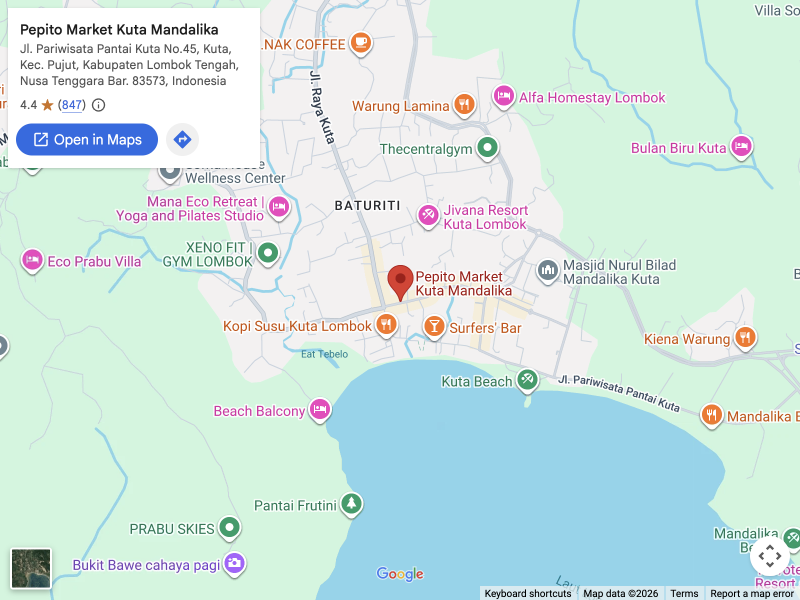
Pepito Market Kuta Mandalika
A supermarket stop in southern Kuta. Pick up water and snacks around check-in or departure.
The saved place Tanjung Aan Resto showed as “permanently closed” on Google Maps when checked this time (October 19), so it is not included among the normally operating options.
Where to Stay
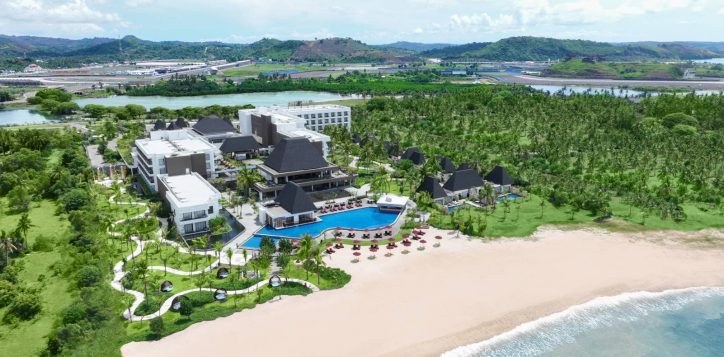
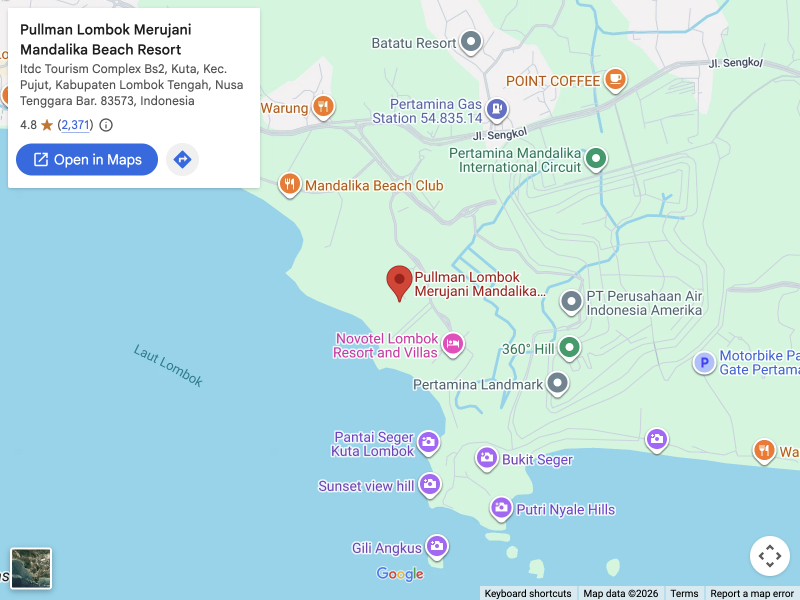
Pullman Lombok Merujani Mandalika Beach Resort
On Mandalika’s south coast. If you want to combine beach time and rest at the hotel, staying here avoids daily trips north.
Plan around Kuta and Mandalika’s southern beaches from here; this is not the Senggigi side.
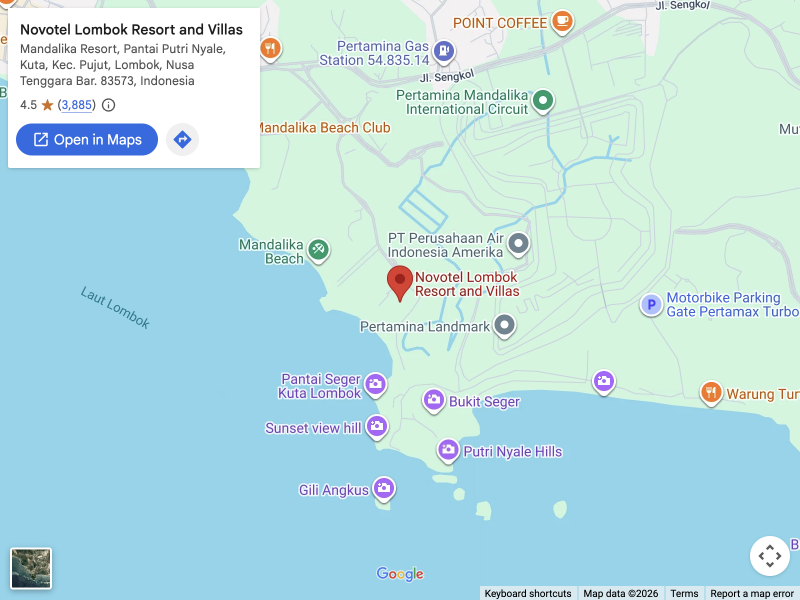
Novotel Lombok Resort and Villas
Also on Lombok’s south coast, near Pantai Putri Nyale. If you’re focusing on southern beaches and want to slow down for two nights, compare it with the Pullman.
Choose based on room type and the surroundings you prefer. There’s no need to add a journey just to change hotels.
Nusa Penida
Things to do: Put Kelingking on the west-side day and Diamond Beach on the east-side day. Choose which side to stay on first, then arrange separate private-car days for east and west. Never cram both into a day trip. Detailed Guide →
Food, Drink, and Supplies
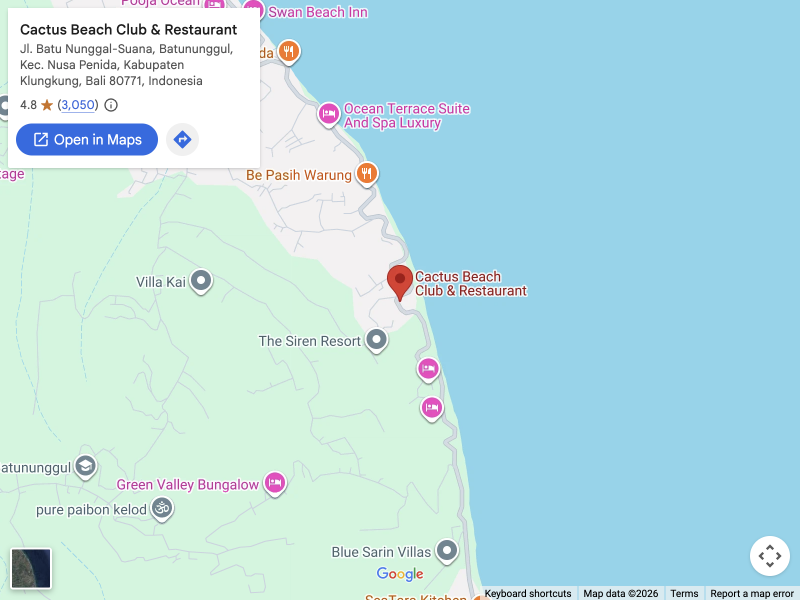
Cactus Beach Club & Restaurant
A seaside restaurant with pasta and pizza on the menu. Better suited to a half-day of rest than squeezing in another distant attraction.
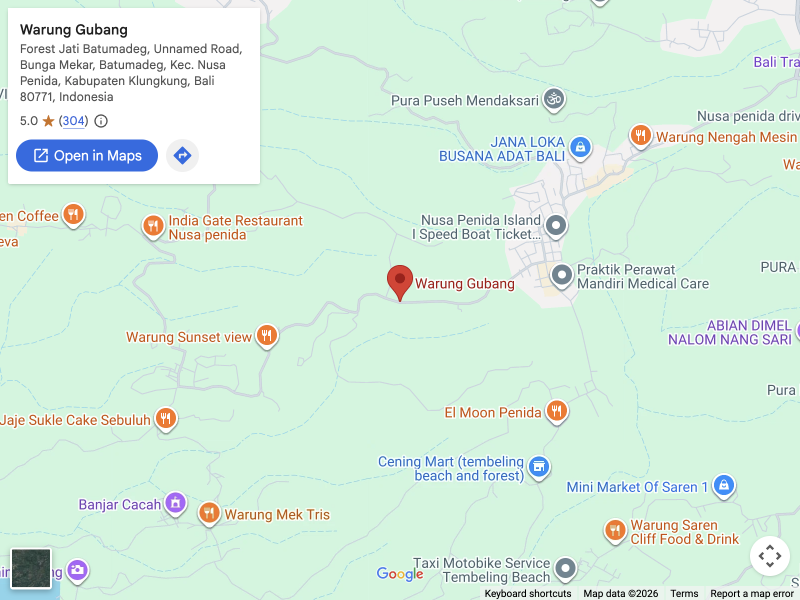
Warung Gubang
A small rice-meal restaurant in Batumadeg. When planning the west-side Kelingking route, check whether it fits naturally along your day’s journey.
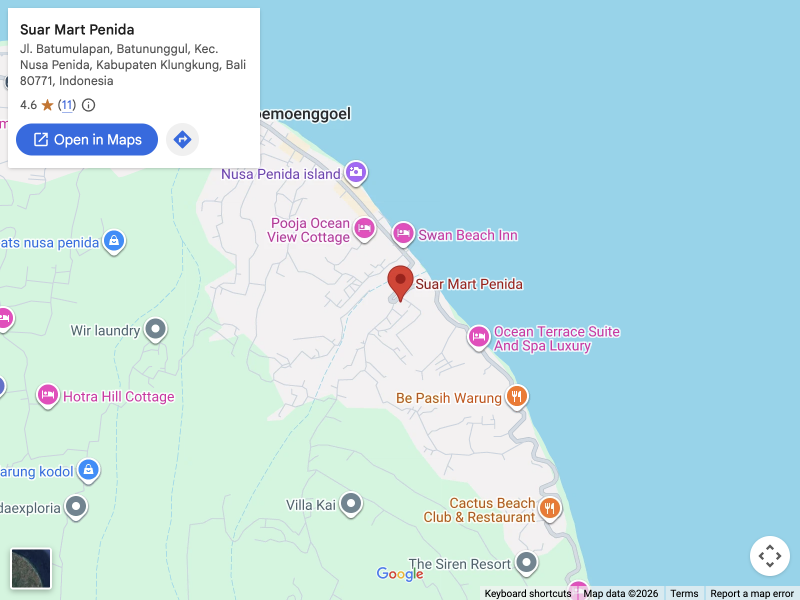
Suar Mart Penida
A convenience store in the Batununggul area. Stock up along the way if you’re staying nearby; no need for a special detour.
Where to Stay
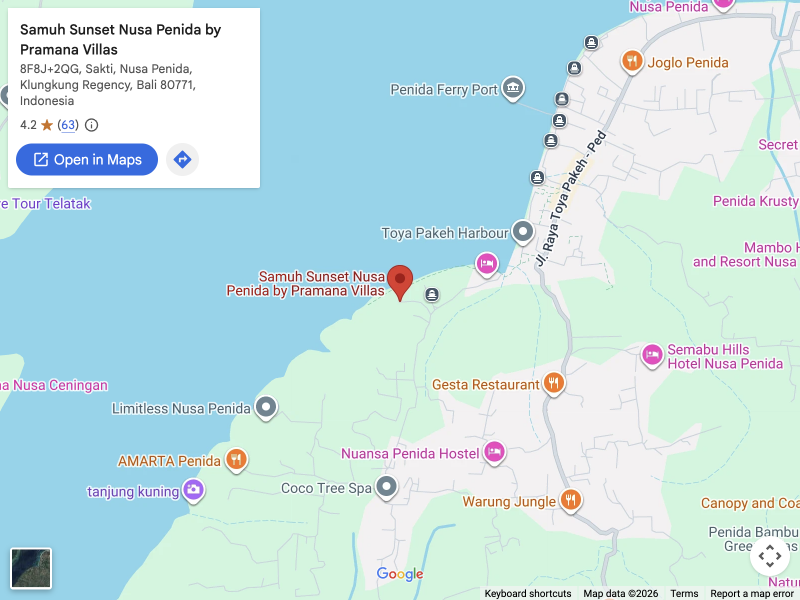
Samuh Sunset Nusa Penida by Pramana Villas
In Sakti on Nusa Penida’s west side, so consider it with your west-side plans. If you want sea views and rest near the hotel, check its location on the map first.
The east side still needs a separate car arrangement; don’t change accommodation every day just to rush between sights.
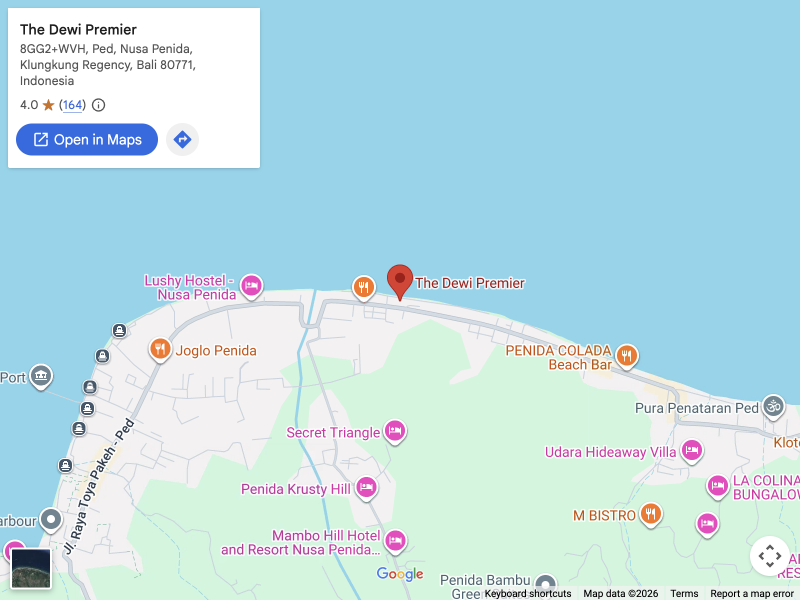
The Dewi Premier
In the Ped area on the north coast. An option if you want a north-coast base with separate private-car outings to the east and west.
Don’t assume a “north-coast base” is close to both sides. Splitting them over two days is still more relaxed.
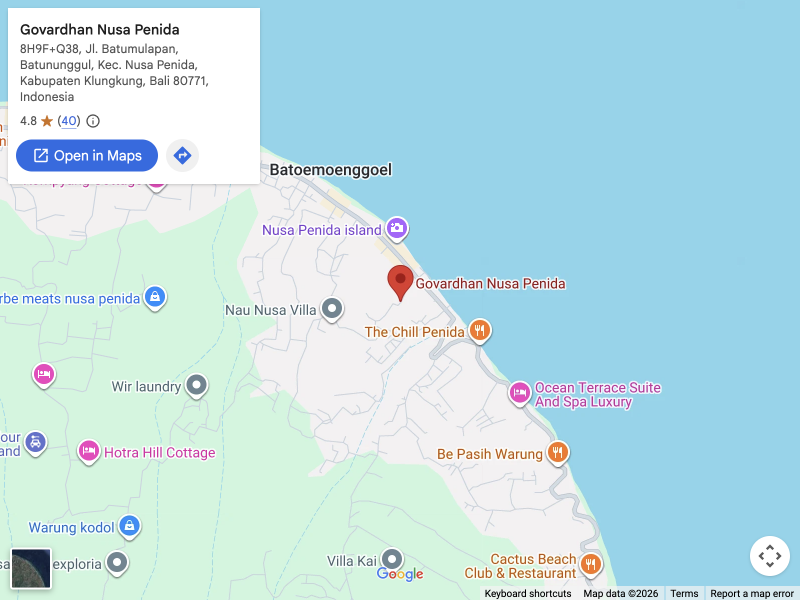
Govardhan Bungalow Nusa Penida
Another accommodation option on Nusa Penida. Compare it on the map with west-side and north-coast choices, focusing on port transfers and convenience for that day’s private car.
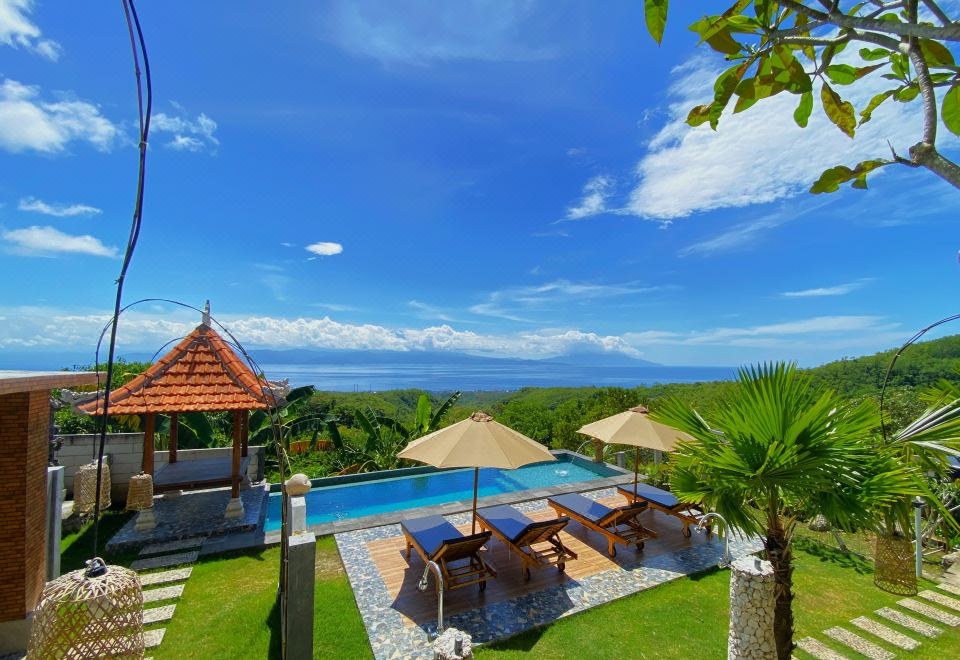
Mere Sea View Resort and Spa
An accommodation choice made by a travel companion on Nusa Penida, in the Buyuk–Kutampi area. Staying on the island lets you give east and west a day each, without rushing back to Bali by boat the same day.
The image on the right shows the hotel surroundings. The map link searches by hotel name; use the location sent by the hotel for the exact pickup point.
Labuan Bajo and Komodo
Things to do: Take a speedboat from Labuan Bajo for island-hopping and Komodo dragons; before and after the boat trip, leave some time for meals in town and rest by the sea. Detailed Guide →
Food, Drink, and Supplies
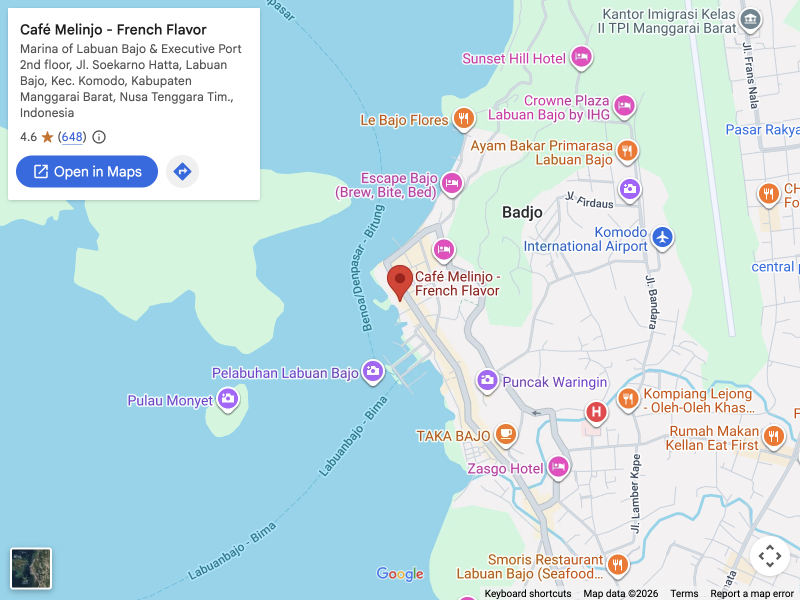
Café Melinjo - French Flavor
French-style baking and coffee. Set aside a breakfast or afternoon tea while you’re in central Labuan Bajo.
Where to Stay
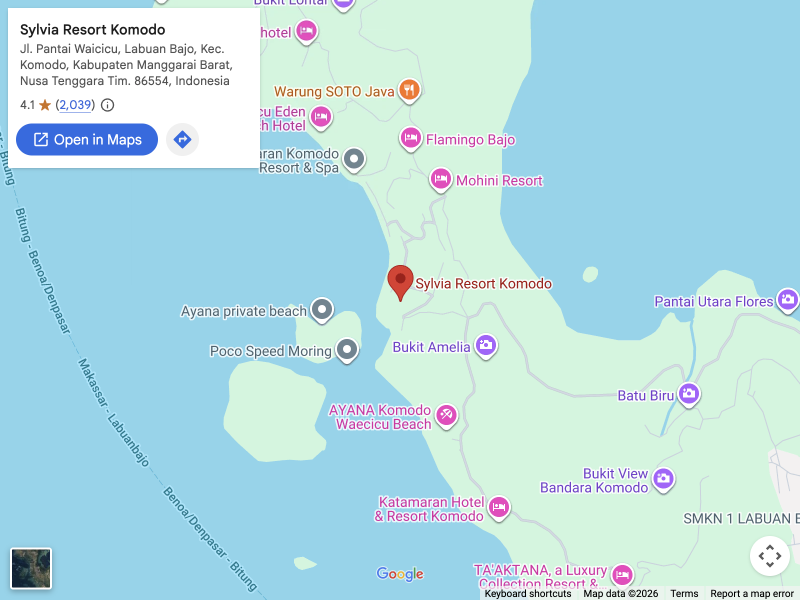
Sylvia Resort Komodo
On the Waicicu beachfront. An option if you want time to rest and look out to sea before or after your boat trip.
It is not beside the port. Send the hotel’s location to the boat operator when booking island-hopping and agree on transfers in advance.
East Java: Surabaya and Bromo
Things to do: Use Surabaya for airport connections, and plan the Ijen night hike and Bromo sunrise separately. Choose food and accommodation based on the route into the mountains, the return journey, and airport transfers. Detailed Guide →
Food, Drink, and Supplies
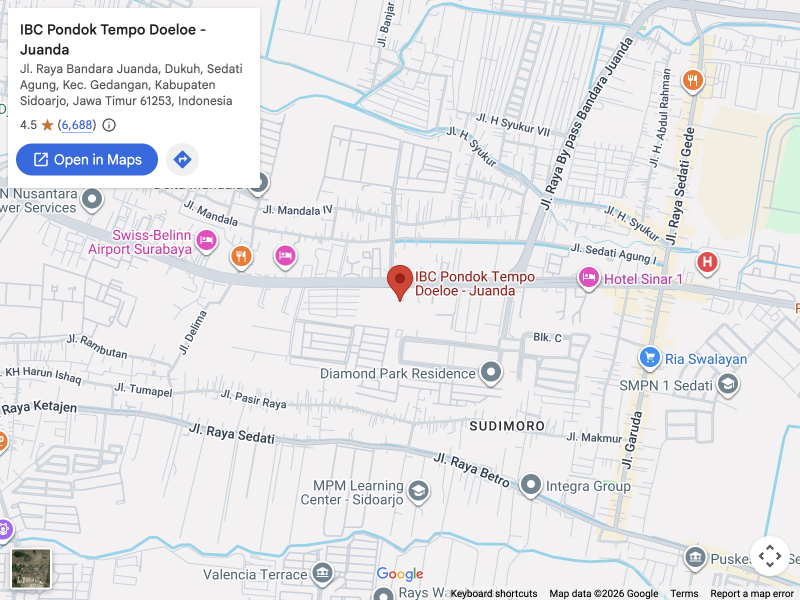
IBC Pondok Tempo Doeloe - Juanda
A grilled-fish restaurant. A meal option around a Surabaya airport transfer if you have spare time.
Where to Stay
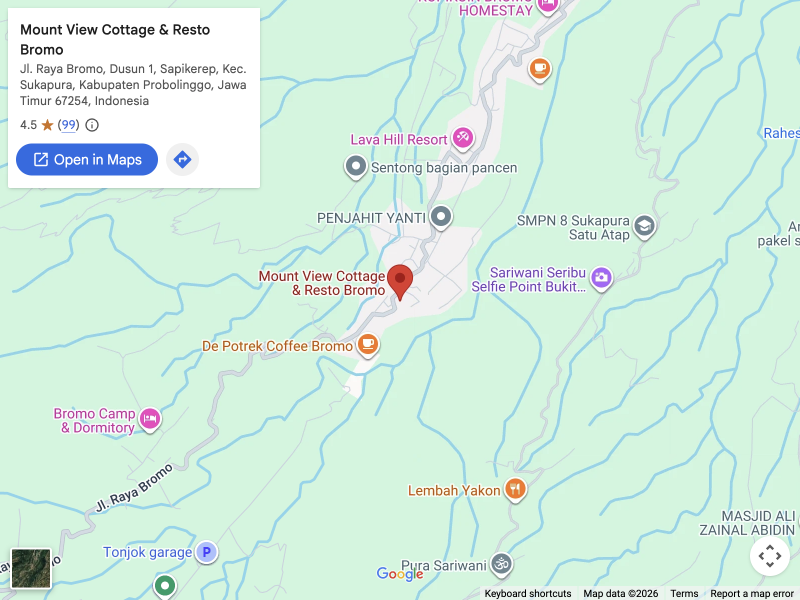
Mount View Cottage & Resto Bromo
In Sapikerep, along the approach to the mountains. Stay here for the volcano leg and arrange the pre-dawn jeep pickup around your accommodation.
For accommodation along mountain approaches like this, confirm the pickup point with your driver first. Don’t go by straight-line distance alone.
premier hotel · Surabaya airport area
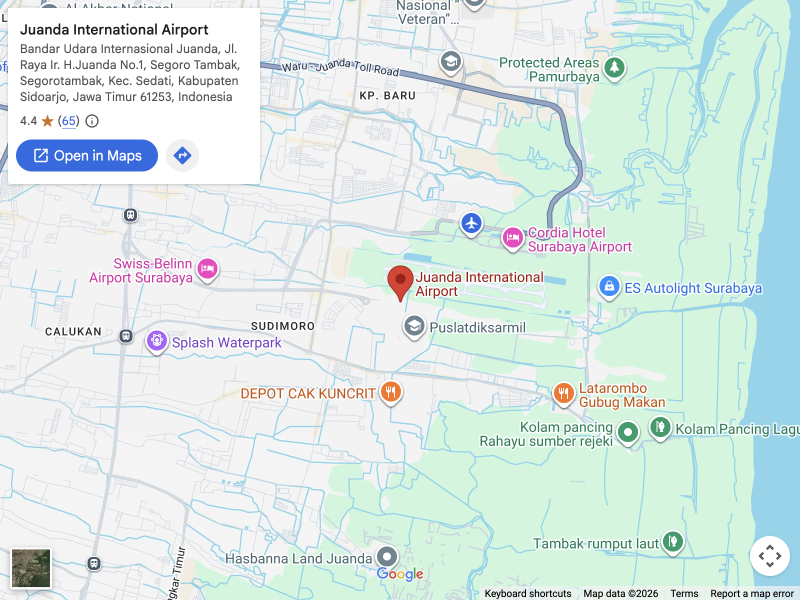
If you’re connecting through Surabaya after the volcano leg, consider a transit stay near the airport. The original itinerary records it as premier hotel; the specific hotel has not been confirmed.
The map on the right marks only the Surabaya airport area as a reference for choosing accommodation, not an exact hotel location.
Before You Go: Documents, Connectivity, and What to Carry
Spend half an hour sorting out documents, connectivity, and what to carry before departure, and you’ll save yourself trouble on the road:
-
Documents, E-Visa, and Arrival Declarations
- Electronic Visa on Arrival (e-VOA / B1): for ordinary tourism, go directly to the B1 Page on the Indonesian Immigration Website or Official E-Visa Platform to apply and pay in advance. The official fee is IDR 500,000 (about RMB 230), allowing a 30-day stay, with one online extension to 60 days. With an e-visa arranged beforehand, you can use automated immigration gates on arrival and clear immigration in a few minutes. Your passport must have more than 6 months’ validity; keep your onward or departure flight itinerary on your phone.
- All Indonesia Electronic Customs Declaration: within the 3 days before arriving in Indonesia, visit the Official All Indonesia Declaration Website to complete the electronic declaration. Save a screenshot of the generated QR code on your phone after submitting, then scan it at customs after collecting your luggage.
- Bali Tourist Levy: travelers flying into Bali should visit the Love Bali Official Website before departure, pay the IDR 150,000 per-person tourist levy (about RMB 70), and keep the receipt. If you visit Nusa Penida or Lombok during the trip without leaving Indonesia, you don’t need to pay again when returning to Bali; show the existing receipt.
- Immigration and Entry Checks: entry procedures at Surabaya and Bali airports are now properly run. Don’t believe the old online rumors about slipping a tip into your passport. Arrange your e-visa in advance, scan your passport and face at the automated gates, and you can clear immigration yourself in a minute or two. No tip is needed.
-
Connectivity, Maps, and Mobile Payments
- Local SIM Card: choose a Telkomsel data SIM for the best coverage and relatively reliable service around volcano foothills and offshore islands. Enable international roaming on your Chinese number so you can receive bank messages and verification codes.
- Essential Apps: WhatsApp is the standard local communication tool in Indonesia, used to confirm plans and share live locations with private drivers, guides, and boat captains. Grab and Gojek are excellent for rides and food delivery in Southeast Asia. You can link a foreign-currency credit card, with upfront prices that prevent overcharging.
- Offline Backups: many mountain and offshore areas have no signal at all. Download Google Maps offline maps for your destinations before departure, and save screenshots of all hotel confirmations and electronic flight itineraries in your photo library.
- Bring Enough Cash: bring a debit card that works at overseas ATMs or a multi-currency credit card, plus enough Indonesian rupiah cash. Many small island restaurants, fruit stalls, and island-entry ticket offices take cash only.
-
Packing Advice: Useful Kit, Less Dead Weight
- A Few Practical Essentials:
- Proper thick-soled water shoes: many Komodo beaches have no jetty, so speedboats stop offshore and you wade on and off over dead coral. These shoes protect your feet from broken coral in the water and can be worn straight up Padar’s steps once ashore.
- Gas mask with two chemical filter cartridges: essential against Ijen’s intense sulfurous acidic fumes. Ordinary masks are completely ineffective.
- Windproof shell + warm fleece: volcano temperatures before dawn are only around 10°C, with very strong summit winds. Wind protection and warmth are essential.
- Long-sleeved, two-piece rash suit: physical sun protection while snorkeling, plus protection from plankton, scrapes, and bumps in the water.
- Lightweight headlamp: lights the Ijen night hike and leaves your hands free for trekking poles.
- German-standard two-round-pin plug adapter, high-capacity power bank, and your usual stomach medicine.
- What to Bring Less of, or Leave Behind:
- Light-colored or white sneakers: volcanic ash is extremely fine and practically impossible to wash out once it gets in. Old, dark shoes that don’t show dirt are the easiest option.
- Drone reminder: don’t go out of your way to ask guides or locals whether you can fly; asking often leads to a fee under one pretext or another. If you do want aerial footage, find an open, quiet corner, take off and land quickly, and pack up promptly afterward. Keep away from crowds and the central areas of temples.
- A Few Practical Essentials:
-
Food Hygiene and Supplies along the Way
- Try to drink only sealed bottled mineral water throughout the trip, such as the ubiquitous local Aqua. Avoid unboiled water and ice of unknown origin from roadside stalls.
- Before a pre-dawn volcano hike or boat trip, arrange a packed breakfast with your hotel. The evening before, stock up at an Indomaret or Alfamart on drinking water, bread, chocolate, and other high-energy snacks to keep yourself fueled on the road.